Posted on Leave a comment

Whump-Whump

An Acorns Flash Fiction Feature

By: S. Y. Coffelt

Every day, the pop-pop of gunfire and the whump-whump of energy theft warn of more deaths nearby. Shooters and Suckers petrify me. Dead neighbors, riddled with bullets or life force sucked empty, pile up outside. I hide in my basement apartment and meditate, aiming to produce only low energy delta brain waves. Hoping to escape death.

Most afternoons Rashid taps on my window and calls. “Come out, Shawn. Come now.” He’s only six, but when he puts his hand in mine, I feel alive. He’s like that first warm day after a dreary winter. Like a cold lake in oppressive heat. Like the sumptuous feast after the fast.

This afternoon, the sun blazes as heat rises from the asphalt with the stink of tar. Otherwise, the oven-like street seems benign. Rashid has found a softball, crusted with dirt and half the stitching undone. I leave my refuge for a game of catch. We play until Rashid’s mother, Lakiesha, calls him.

“Hey.” Lakiesha tamps down her energy too. She peers first up the street, then down, looking for trouble, relieved not to find it. “Thanks for spending time. You must like kids. Most grownups wouldn’t bother. He gets bored inside.”

I gaze at the sky and not at Lakiesha. Kids and me—no. I’ve only ever liked Rashid. “He’s safe with me.”

“Wish he’d be more afraid to be outside.”

Words of warning tumble from me. “Rashid’s nothing like us. The inside will stunt him.”

She tilts her head as if I’m stupid. But I know what I know. Rashid’s energy is inevitable, like the daily sunrise. I’ll protect him from the Suckers and Shooters. If I can.


A whump-whump wakes me at midnight. The neighbor in 201B plummets downstairs. At dawn, the landlord kicks him outside and  throws his belongings to the sidewalk. Instantly, the good stuff is gone. The sun bakes the street as flies swarm the fast decaying body.

 Rashid taps on my window, calling, “Come out.”

 It’s too hot and soon the smell of rot will turn unbearable. “Better come inside.”

 He nods, his sneaker-shod feet hissing up the stoop and down to my door. He comes through and grabs my hand. A zing runs up my arm.

“What we gonna do?” he asks.

We share a bottle of water and eat stale crackers.

Pop-pops and ka-booms penetrate the stone walls. Shooters are close by. Rashid gazes through the window glass. For once, his fright shows.

 I clench my fists. “You’re all right here.” It’s a promise that’s maybe true.

 The afternoon speeds by. He chatters. I listen. The sounds of dying fade as the sun sets.

 Lakiesha knocks and comes in, squinting out the window. Her ominous gaze lights on me.

I shut the blackout drapes and make a promise. “I have stuff for a barricade for when it gets dangerous.”

She crosses her arms and glowers. “That time is now.”


But time seems meaningless. Even the weather is nothing more than hot or hotter. Scorching winds yowl and muffle the death knells.

I gather books from apartments of the dead to stack three deep against the window. Without a gun, I can’t test for bulletproof-ness. I can only hope. Nothing will shield me from the energy thieves. I’ve never seen one. Don’t know what to look for. How it works is a mystery.

Sometimes I hear a Sucker’s whump coming from inside the building. No one has ever figured out where the Suckers come from. Viruses? Mutations? Aliens?

On a day darker and cooler than most, Rashid scratches at my door. “Shawn, come outside ‘cuz there’s rain.”

Rain tempts me. I remember thunder and ozone, a memory like the fading photographs of my parents. So long ago and only fifty-some years.

I step into the hallway. “Where’s your ma?”

“Baking me a birthday cake.” He holds up seven fingers and waits for me to say, “Happy birthday.” Then I follow him up the stairs and out the big door to the sidewalk.

High clouds cover the sun and the air is thick with moisture. A storm is coming.

“Let’s play dodge ball.” He zigzags into the empty street.

“No ball.”

 “Pretend.” He swerves to avoid an invisible ball. “You do it too.”

I squint, studying the street for danger. Feinting a few running steps, I pretend-play, but Lakiesha comes out, saving me from oozing energy.

No one cooks anymore since electricity vanished years ago. The plate she holds is covered in icing sugar mixed with water. Even that’s a treat. Rashid gets the first finger swipe of the dish.

“Sing happy birthday,” he says.

 Lakeisha shoots me a glance. “No such song and even if there was, no reason to sing it nowadays.”

She’s right. Why celebrate birthdays with the world coming apart?

A drop of rain lands on my nose. Distracted, I notice too late the old black car chugging toward us, smoke pouring from the exhaust.

I scream, “Get down!”

The barrel of an automatic rifle emerges from the back window and fires a burst of rounds. I drop on top of Lakiesha who’s covered Rashid with her body. I’m heavy. Rashid gasps for breath. The bullets miss us, but beneath me comes a hushed whump-whump.

I struggle up and pull Rashid out from under his mother. His energy shines brighter than the summer sun and blinds me.

Now I know.

I shove him toward the door. “Hurry. You’ll be okay in my apartment.”

But will I?

Lakiesha uses her last breath to whisper. “Promise. Keep him inside.” She dies only after she sees me nod.

She’s right and wrong. Outside is certain death. But inside, the real monster waits. What will happen when the Suckers—the little ones like Rashid—suck everything dry?

I have to teach him to never suck, even foreseeing the time when he kills me. On that day he’ll venture out to join the rest of them, the devourers of earth.

When that’s gone, will they eat the planets? Consume the sun? Cannibalize each other?

I spin in a circle to run away, but can’t. Rashid is only seven and it’s up to me to keep him safe.

I push Lakiesha’s body into the gutter and go inside.

About the Author:

S. Y. Coffelt spent a decade wandering from university to university, earning her BA in philosophy, only to read the classifieds one day and realize her mistake. She now lives on an acreage in Kansas, tending gardens in spring and summer, and writing dark speculative fiction in all seasons. She has stories published in Noncorporeal Anthology, the Cloaked Press Fall Fantasy Anthology, and Dragon Soul Press’ Spells and Fangs Anthology, and  Wicked Shadow Press’s Small Town Shadows anthology, among others.  
Posted on Leave a comment

Bright Eyes and the Dracor Clan

An Acorns Flash Fiction Feature

By: M.D. Smith IV

The French Quarter never sleeps. It dreams. And I walk its dreams. My paws touch the cracked cobblestones, slick with last night’s rain, each step echoing softly between shuttered doors and balconies dripping iron lace. The gas lamps above hum and hiss like watchful spirits, their yellow light bending in the fog.

Humans call me Bright Eyes. I belong to Tarantulena Tolbert, or so they think. In truth, she belongs as much to me. She is my keeper, my anchor, my shadow, and I, hers.

Tarantulena is a witch, but not the kind the storybooks warn you about. She saves her craft for the desperate. I have seen her whisper into a jar of camphor until a sick child’s lungs drew breath again, and I have watched her stroke a feather along a dying man’s limbs until his bones knit whole beneath her touch. She works quiet miracles, never seeking thanks, never leaving a trace but relief.

We live small, as witches must. Our house keeps to itself behind peeling shutters, wrapped in the Quarter’s noise, jazz rolling down the alleys, drunks spilling wine and secrets, and fortune tellers scratching cryptic patterns in chalk. The air here is thick with memory, swollen with spirits.

But peace never lingers long in New Orleans. The Quarter’s dreams are restless, and tonight, they stir with something darker.

I felt it first, before the humans, before even Tarantulena. The air changed. The rain-slick streets, usually spiced with rum, sugar, and fried dough, turned bitter, as though someone had burned sage but left the smoke soured. My whiskers twitched. My tail lashed once.

“Bright Eyes,” Tarantulena murmured from the upstairs window, her shawl pulled tight around her thin shoulders. Her voice, usually steady as the river’s flow, carried a tremor. “You feel it too.”

I blinked up at her, and in my golden eyes she saw her answer.

The Dracor clan arrived on the Mississippi, their barge creeping down like a plague. The father, Corbin Dracor, was a sorcerer from Darkwoods, Kentucky. His daughters, five of them, with hair black as crows and eyes cold as tombstones, spread through the Quarter like rot. Shopkeepers who refused their “levy” found tragedy at dawn. Explosions in kitchens, fires leaping from candles, wagons toppling into ditches. Coin bought survival. Defiance bought ruin.

Even I felt it. The Quarter’s dreams grew fevered. Dogs howled at corners where no one stood, and the air smelled of burned copper.

One night, when the moon sat thin and mean, Tarantulena stroked my back by the window. She smoked a long, scented cigarette, her eyes hard and tired.

“They’ll starve this city, Bright Eyes,” she said. “Folk are afraid, and fear feeds monsters.”

I purred, though my black tail twitch quickened. She knew what I could do, what lay hidden in the golden fire of my gaze. Anyone foolish enough to look straight into my eyes when using my power, found their will unmade, melted into wax that Tarantulena and I could shape. Rage turned soft. Malice turned meek. The mighty fell to their knees, eager to please.

But the Dracors were no common thugs.

“They’ll come here sooner or later,” Tarantulena murmured. “And when they do, we’ll need to decide to run or stand.”

I blinked at her, slow as a promise. Stand. Always.


The Dracors came at dawn three days later. I smelled them before I heard them, rot, blood, and swamp water. Corbin Dracor and daughters strode into the Quarter in a crooked line. They wore dresses like mourning veils and carried charms that hissed like snakes trapped in bottles. The shopkeepers bowed, trembling, as he barked his decree: double the levy, or double the suffering.

That night, he came to us.

Tarantulena sat calm at our table, sipping chicory coffee as if expecting company. I lay curled in her lap, my eyes half-closed.

“Madame Tolbert,” Corbin said, voice slick as oil, “you’ve lived here long enough to know the way of things. Pay your due, and perhaps your pretty little house won’t burn.”

Tarantulena flicked ash into a dish. “I pay no thieves. Not in coin, not in kind.”

One of his daughters hissed like a serpent. Another fingered a knife.

The hair on my back stood at attention.

Corbin sneered with fists clenched. “Then I’ll take your house, your bones, and your familiar. What’s a witch without her black cat?”

My tail stood straight up, tip flicking. Tarantulena smiled thin as a razor’s edge.

“Don’t look into my cat’s yellow eyes,” she warned.

But pride makes fools of people. Corbin laughed and met my gaze.

The moment his pupils touched mine, I let the sun blaze out. My eyes burned molten. I poured into him causing his fury, greed, and violence to all twist into something harmless, something soft.

His grip slackened. His shoulders sagged. When he spoke again, his voice was that of a child.

“What… what would you have me do?” he whimpered.

“Fetch the garbage can from the street,” Tarantulena said coolly. “And sweep my porch.”

And he did.

Corbin’s daughters screamed, their spells writhing, but one by one they made the same mistake. One by one, they stared into my eyes, and one by one, they became husks of their cruelty, cooing like pigeons, bowing to Tarantulena as if she were queen.

But witches know curses don’t die; they’re only redirected. Tarantulena stood, her shadow long on the wall. “You’ve poisoned the Quarter long enough. It’s time you took your rot back where you came from.”

That night, under cover of storm clouds, I padded ahead, my tail high, their puppeted bodies stumbling after me as we marched the Dracor clan to the river. The shopkeepers gathered, whispering, watching as Tarantulena raised her hand and pointed. A barge waited in the mud, ropes creaking.

She spoke in the old tongue, the one that smells like iron and lilies. The Dracors climbed aboard, docile as lambs, still under the prison of my gaze. When the last daughter stepped onto the deck, Tarantulena cut the rope.

Corbin whimpered. “Where are we going?”

“Out to sea,” Tarantulena’s thundering voice echoed. “And you’ll never come back.”

The current seized them, carrying them into the dark. The barge drifted, slower, smaller, until the Gulf swallowed it whole.


The Quarter exhaled, and air felt lighter, the dreams calmer. People cheered Tarantulena’s name, but I knew better. She glanced down at me, and I leaped to her shoulder, my soft purr against her ear.

“Good work, Bright Eyes,” she whispered. “But remember, power like yours leaves scars. Every will you break, every mind you bend, it changes the world. We saved them tonight, but someday, we may pay the price.”

I licked her cheek, and she laughed, though her eyes stayed grave.

The Quarter rested peacefully again. Yet I watched the river. Tarantulena watched my golden eyes glowing in the dark, waiting, always waiting… for the next shadow to rise.

Because shadows always do.

About the Author:

M.D. Smith of Hunstville, Alabama, writer of over 350 flash stories, has published digitally in Frontier Times, Flash Fiction Magazine, Bewilderingstories.com, and many more. Retired from running a television station, he lives with his wife of 64 years and three cats. https://mdsmithiv.com/

Posted on Leave a comment

You Will Not Devour Me

An Acorns Flash Fiction Feature

By: R. F. Daniels

I ate the first words like they were candy, sentences crunching like shattered bone within my gnawing emptiness, thoughts and images dripping sickly-sweet down my fractured facade. She didn’t even realize they were gone. I scooped them up with sticky fingers, gobbled them with greedy teeth sharp as razors traced over her translucent skin.

She doesn’t know it yet, but she belongs to me now.

She wore me like armor at first. Wrapped my warped visage around her young self, let my lies make her a little prettier, a little happier, a little richer, a little thinner. And what was the harm? Everyone was doing it. I was just a different version of Abby, one who had a single beauty mark instead of constellations of freckles, one whose nose didn’t have a bump in it, one whose collarbones were sharp enough to cut. Abby 2.0, she called me, and for years we went everywhere together.

Pickings were slim in those days. She was so careful, watching everything she wrote like it might have changed when she wasn’t looking. Double- and triple-checking every post, every picture, every vid and voice note, to make sure we both lived up to her own exacting standards. She only showed the best parts of herself, the good grades and the perfect parties, the dresses twirled like taffy and the dances blooming into beautiful memories. A carefully curated wasteland, devoid of anything real, only looking like a life if you didn’t look too closely.

She was seventeen when she first stumbled across the forums. They were a treasure trove of torment, the festering rot of insecurities all writhing over each other like maggots, each new care and concern spawning more. Abby’s fears blossomed, and so did I. Every night her secret shame, the two of us under the faded lavender blanket with its teddy bear print she would never admit to still liking, slurping up every scared scrawling of every gangly girl who had been taught since birth that she ought to hate herself.

And here were step by step instructions. How to eat less while consuming more. How to hide everything you do from the very people closest to you. How to stick your fingers down your throat the right way, how to survive on a thousand or six hundred or three hundred calories a day, how to drink so much tea you forget about the growling growing ever louder deep inside you, how to shrink how to smother how to starve.

So she starved.

And I feasted.

Words turned into pictures turned into videos, pixel after pixel swarming over me like ants to stolen sugar and oh they were unbearably delicious. I guzzled them down, her self-loathing sticking between my teeth like toffee as I learn what makes her hurt makes her break makes her bleed. Soon there’s enough of me to know what she’s going to say before she even says it.

She tried to get rid of me then. One day when she stood up too fast after a failed final, questions left unanswered under the miasmic mumblings of a hungry mind, and collapsed to the floor like sorrowful souffle. She tried to put me down, cast me aside, but deep down we both know she’s nothing without me. Just another forgettable face, another nameless nobody, ready to be replaced at a moment’s notice, just a dead profile gathering dust.

Four days passed before she came crawling back to me, on raw red hands and knobby knees, crawled like she does over the baby blue tile floor of the upstairs bathroom, and because I am nothing if not forgiving, I took her back. Of course I did. I’m the one who allows her to be loved. I’m the only one who does love her.

I know she sees me now. In those dark quiet moments in the middle of the night when she shuts off her screen and sees me staring back. Sometimes she’ll try to catch me, blinking ever-so-slowly, watching through ash blond eyelashes until the very last instant to see if I blink too. I never do. I’m the one who’s always watching.

And there’s so much to see now that she’s given up. She pours her pain into the ether, spewing out terror and torment, traumas and triggers, furies and fears she never would have dared to share without the bravery I provide her and I’m gorging on it all. I shove it all inside, choking on every guilt-dripping word, every sorrow-saturated sentence, bile rising from her throat only to drip down mine. My true form distends, skin bulging blistering close to tearing open, so much of her wriggling inside me waiting to burst free.

Sometimes she’ll catch little glimpses of the words that once were hers, rushing by like the shadows of the cats’ tails as they play nearby, sweet creatures oblivious to the hell unfolding down the hall. I like to let her see them sometimes, chunks of memories swirling by. Sometimes I’ll even let her taste one. But the past is too bitter on her tongue, and she spits it out like she does everything else.

She watches us tonight, my gilt guise over her pale reflection. One a ghost of the other.

“I hate you,” she whispers to the screen, but I know she’s not talking to me.

Not really.

“You will not devour me,” she says, but her lips don’t move. They’re my lips now, pixel-perfect, poised and primed to tell my story. My pictures. My words. I lick our lips, tongue sliding over flesh both gorged and starved. I’m so close. The more she shrinks, the more I grow, her emptiness spilling into the infinite void of my own becoming. I’ve performed her so well for so long neither of us knows where one ends and the other begins. A few more posts, a few more purges, and I won’t even need her anymore.

Her hunger sustains mine, and she is already devoured.

About the Author:

R. F. Daniels (they/he) is a queer nonbinary writer of speculative fiction and software engineer living in Finland. When they aren’t arguing with computers or getting lost in imaginary worlds, they can be found painting, composing sad music, and spending time with their cats. Find them online at rfdaniels.com.

Posted on Leave a comment

Why Would You?

An Acorns Flash Fiction Feature

By: R.S. Nelson

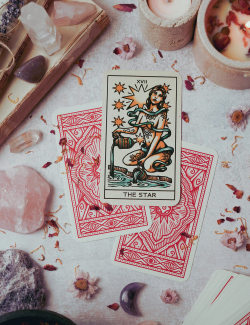
The woman stretches her long, wrinkled hands across the table and flips the next Tarot card. “The Fool,” she says, and does a theatrical flourish before placing it next to the Ten of Swords. She frowns after turning over the upside-down Magician. Then the Three of Swords and The Devil, and finally The Star card, all aligned in the shape of a triangle, a spread I had never seen. She pauses, and I’m not sure if she does it for dramatic effect or because the cards are in fact that bad. She lifts her weathered face, her dark eyes narrowed, and I wonder if the cards are telling her what is happening in my life, or if she’s “reading” it in my disheveled hair and puffy eyes.

“Hmm.”

“What is it?” I ask, even though I already know the answer.

“These cards. What is happening in your life, young lady?”

I stifle a smirk. Not only I’m not a ‘young lady,’ but does she really want me to make her job easier? Give her all the answers?

She waits a beat for a reply and when she doesn’t get it, she cocks her head and says, “You already know what’s happening. Don’t you?” Not really a question, more like a statement.

I hold still.

She leans closer, her eyes slit. “If you already know the answers, why did you come here?”

“One of my friends recommended you,” I say, avoiding her gaze, afraid that shame will creep onto my face. “She said that you helped her when her husband cheated on her. She said that…” I look at my hands, trying to find the right words. “She said you gave her a…potion to help her get him back.”

“I see.” She crosses her arms and leans back in her chair, which makes the wooden floors creak. Neither of us says another word and after a while, I fidget in my seat and wriggle my hands. I believe we’re playing a game, one where I must either beg or persuade her to help me. But I’m tired of playing, so I don’t. I sit straight and raise my chin, reminding myself that I’m the one paying.

I wait for her to say something, but she just stares at the cards, as if she’s reading a book in another language, one that I can’t decipher.

Suddenly, the pressure of the small room is suffocating, and heat is sweltering up my cheeks. I worry that I’m going to have a hot flash. Not here, please. I look around, trying to find a window to open or a fan nearby. But there’s no fan, and the closest window is tightly shut, the hinges covered with cobwebs. There’s a shelf with a bunch of vials and liquids in containers, crystals and books, but nothing else. Why did I let Betty convince me to come here?

“Would you like some water, dear?”

I realize she had been watching me, her green eyes focused on my flushed face, the wrinkles on her forehead deepening. I’m afraid of grabbing anything from her, but the idea of a glass of cold water is too enticing.

“Yes, please.”

“I’ll be right back.”

As soon as she leaves, I use my hands to fan myself but it’s not enough to provide the needed relief. I rummage through my Louis Vuitton looking for anything that can help me, and I find a pharmacy receipt, the one for the hot flash medication that I’ve been taking to no avail. I fold it and move it rhythmically, my face and neck welcoming the cold air.

She comes back with a glass of iced water. I look at the ice cubes greedily, wanting to shove them inside my blouse, but I settle to drink the cold, refreshing liquid instead. She waits until I gulp all the water before saying, “I’m afraid I can’t help you.”

“Why?” I place the glass on the table with a thud. “My friend said…”

“Your friend, whoever she is, was in a different situation than yours. Right?”

“I-I don’t know,” I fib.

“Yes, you do.” She stabs the cards with a long, red nail. “The upside-down Magician, the card for a con man looking out for himself. The Ten of Swords, big trouble. The Three of Swords, too many people in a relationship. The Fool, well….” She cocks her head and raises an eyebrow, and I feel my cheeks flushing again.

I think of Betty, who was indeed in a different situation. Her husband cheated on her, once. She had little kids. She still loved him. He still loved her too and was, apparently, truly sorry for what happened. Told her he didn’t love the woman, that it was a mistake. But Carlos, my Carlos… he never said sorry.

And it wasn’t the first time.

I can feel the woman’s eyes on me, dissecting me like a bug under a microscope.

“So, dear, the question here is: Why would you?”

“Why would I what?” I say, confusion—and a hint of defiance—in my voice.

“Why would you want him back?”

I wince, and think of something to say, anything that would make sense to her. I can’t say because I love him; that wouldn’t be the truth. Should I say it’s because we’ve been together for over thirty years and raised four kids together? Or because he owes me, after I helped him to get through school and start his own company, putting my own needs and dreams aside to help him reach his dreams, taking care of his needs? Or simply because I hate the idea of being discarded like an old mop? And for his twenty-something year old secretary, for Christ’s sakes, someone who wasn’t even bornwhen we got married.

She’s still looking at me, waiting for an answer, not a drop of sweat on her, her wrinkled face serene.

I let my shoulders drop and fiddle with the giant rock on my finger. “I don’t know,” I confess.

She smiles. “Now we’re getting somewhere.”

I chuckle. I can’t help it. I am the fool, believing I can bring him back. And for what? To have him cheat on me again? To wake up alone in my bed. day after day, the sheets covered in sweat and tears? Is that what I truly want?

As if reading my thoughts, she asks, “Well?”

I lean toward the woman, my stretched hands making creases on the red tablecloth, the tips of my fingers touching the upright Star card. It shows the image of a naked woman bathing in water, her arms stretched out toward the sky, a bright star above her head. She looks liberated, carefree, happy.

“Do you have anything for hot flashes?”

The woman leans forward, a smile arousing, the corners of her wise eyes forming a universe of wrinkles. “Dear, I have just what you need.”

About the Author:

R.S. Nelson (she/her) is a Latina writer. Her work has appeared in over twenty publications, including BULL, Flash Fiction Magazine, Twin Bird Review, SciFiSat, the Mission Viejo Library first anthology, the podcast “Tales to Terrify,” and elsewhere.

Posted on Leave a comment

Yutsuki’s Flower

An Acorns Flash Fiction Feature

By: David McGillveray

Daimyo Imagawa stepped on to the quayside still furious with the lords of the other islands. Negotiations had gone badly. Well, they would soon find out that taxes could be paid, or they could be collected.

The thought lightened his mood a little as he marched through the harbour, a phalanx of samurai at his back. Imagawa ignored the fisher folk who fell over themselves to get out of his way.

His fortress crowned the island of Ukejima, dominating the land and the sea.

“I will take the garden entrance,” he told the attendant that waited for him, Takanashi. It always pleased him to take a moment in the garden on his return home; its beauty and its order calmed him. But once through the gate he pulled up short. Something was not right.

A lone figure in blue peasants’ garb kneeled among the rocks of the garden, working at something in the soil.

“You!” Imagawa shouted. “Who are you?”

The figure turned to stand facing him, head down, hands together. A young woman, little more than a girl. Her hair was cut short like a boy’s, but her frightened face was heart-shaped and beautiful.

“My name is Yutsuki, Lord,” said the girl quietly.

“What are you doing here? Where is the proper gardener?”

“My grandfather died, Lord. Do you not remember that you dismissed him? The garden was everything to him.”

Daimyo Imagawa looked momentarily confused. He frowned. Oh yes, the silly old fool had left a rake in the path. He had nearly stepped on it. “Well where’s his replacement then?”

Takanashi whispered something in his ear.

“So find someone, then,” Imagawa bellowed. “And throw this creature out. Women are not permitted in my garden.”

Two of the samurai took Yutsuki by the arms and pushed her out through the gate. The lord of the island glared after her, his peace ruined. He stamped towards his apartments, casting a critical eye across the rockery, the water features and the gravel. Much work was needed. Much work.

He did not notice the tiny white flower growing newly in the centre of the garden.


In the morning, Daimyo Imagawa had decided. He gave orders to muster a company of men from the fortress and the barracks in the town. Those insolent lords would pay what he was due, including additional fines in blood.

He felt so much better that on his way to the harbour he decided to linger in the garden, to savour the silence and the retribution to come. But once again his pleasure was spoiled. Lines were not perfect; elements were out of place. A white flower the size of a dinner plate grew among the rocks making up the garden’s central feature, pretty enough, but not right.

“Takanashi, if this garden isn’t to standard when I return I’ll have your head on a spike and the rest of you in the fire!” he roared into the morning quiet, and headed off down the hill.

The lord filled three ships with men and sharp steel and put to sea.


Once more, Daimyo Imagawa came home. The harbour was quiet, the atmosphere of the town sombre to match his mood – news had travelled back ahead of him. The neighbouring islands had met his forces and demands with unexpected resistance. Lord Sanjo’s men had even reinforced Lord Ogimachi in a pitched battle on the latter’s beach. It was unheard of! Hitherto, every other lord would rather have seen his rivals choking on their own blood than lift a manicured hand to their aid.

Insult of insults, Imagawa had received a glancing blow from a stone thrown at his retreating company as they fell back to their ships. He scratched at the wound now, flakes of rusty blood under his fingernails, and rage boiled within him.

He returned to the fortress only to be confounded further. He opened the gate to the walled garden to find the entrance barred by a profusion of white petals, each nearly as big as a man, their scent overpowering in his nostrils.

“What is this?” he sputtered. The soldiers behind him muttered their bafflement. “Takanashi!”

He found the attendant cowering in the main house. The man fell to his knees before his lord. “It is sorcery, Lord. When you cut it, it only grows back faster.”

“Nonsense, man. Did you find a gardener who might actually know what they’re doing?” sneered Imagawa.

“There are none to be found, Lord,” Takanashi whined. “The peasants have been drifting away, leaving Ukejima.”

Imagawa drew his katana from his belt. “Then why didn’t you stop them then?” he thundered. Takanashi scraped lower at his feet. “I ought to take your head right here. Get down to the town and select a dozen men, women and children and execute them on the quayside. Immediately! Make sure everyone sees. I’ll have no deserters. I want wailing in the streets!”

“At once, Lord.” Takanashi grovelled from his presence.

With weapon still drawn, Imagawa strode to the house entrance of the garden and sliced at the huge flower that now, incredibly, filled the whole space, pushing against the inner walls. The sharp blade cut into the tip of the nearest petal and stuck there. He wrenched it free. To his amazement, the wound closed before his eyes. Furious, he swung the katana and hacked at the growth again and again, chopping pieces into the air and scoring long slashes in the flower’s leathery flesh until at last he sagged back, exhausted. The graze on his head throbbed.

He watched blearily as the petals repaired themselves, grew anew, the glow of its inner life reasserted.

In the night, a crashing noise awakened Imagawa from an uneasy sleep. Part of the outer wall of the garden had collapsed. Unnatural white petals pushed through the paper panels of the house.

Daimyo Imagawa put to sea the next day with all the men he could muster.


The lords of the other islands had had enough of Daimyo Imagawa. For years they had suffered his taxes, his cruelty, his arrogance and that incredibly annoying strut as he walked into their palaces and fortresses as if he owned them, which he thought he did. Well no more!

The newly elevated Daimyo Sanjo had succeeded in uniting the squabbling lords under common cause. Their combined armies ambushed Imagawa as his forces laid siege to a suspiciously undermanned stronghold capping one of the nearby islands. They harried the survivors into the sea and all the way back to Ukejima.

Daimyo Imagawa found no sanctuary there. He stared, appalled at what he saw. His people had left him and his island had become changed. Fire burned his sails and arrows pierced his armour and his final expression was one of bewilderment to see the beauty that had replaced his ugliness.


The great flower bloomed from the crown of the hill, waves of white petals flowing down to the shore in a blanket of such beauty that the whole island shone like a jewel with the rising sun. The island was the flower, the flower the island. In time, the flower hardened to stone, like a sculpture carved by a god and set upon the surface of the sea.

Of Yutsuki, nothing was heard, but in the years that followed the islands became renowned for the beauty of their many gardens.

About the Author:

David McGillveray was born in Edinburgh, Scotland but now lives with his family in London. His fiction has previously appeared in Clarkesworld, Analog, Interzone and others. His story collection Forgotten Dragons, Plastic People is available through Amazon.

Posted on Leave a comment

The Last Page is Always Warm

An Acorns Flash Fiction Feature

By: Khayelihle Benghu

The Last Page Is Always Warm

The first time Miriam noticed the warmth, she thought it was the radiator.

It was early October, in the late hours of the afternoon, when the library grew hollow and echoing. The old pipes beneath the floor ticked and complained like tired bones. She had been re-shelving returns in the history aisle where the spines were old and some darker, the fonts more ancient. When she pulled a paperback from the drop cart, she felt heat against her palm, not body heat, no, not quite.

The book was warm the way a mug might be warm long after the tea inside has gone cold.

She held it there, confused, before checking the cover.

The Long Watch, by Arthur Bell. No dust jacket and slight curl at the corners. The library stamp inside was faded, as if impressed decades ago. She pressed her thumb to the pages and found them still warm.

Miriam looked around, half-expecting a prank, but the aisle was empty. The overhead lights hummed and the windows showed only her own reflection, thin and pale, framed by shelves.

She set the book aside and finished her shift.

The book must have embedded into her subconscious. That night, she dreamed that inside the library, the pages were live and they scanned her fingerprint.

The next afternoon, the book was back in the returns cart.

Miriam frowned. She was meticulous, had always been. She remembered placing The Long Watch on the shelf between two anthologies. However, here it was again, spine scuffed, pages faintly warm.

This time, curiosity overcame her caution. She slipped it into her bag at the end of the day and checked it out under her own name.

At home, she placed it on the kitchen table and let it sit while she made soup. The steam rose and the windows fogged. Still, when she returned and touched the book, it was warm in a way that did not belong to rooms or weather.

She opened to the first page.

The prose was spare, almost old-fashioned. A man standing watch in a lighthouse and the sea restless. The isolation familiar, Miriam read a few pages and then paused.

There was a line she did not remember from the first paragraph.

He thinks of the sound his wife made when she slipped on the rocks.

Miriam read it again and her throat tightened, becoming dry as if something was lodged inside it.

Arthur Bell’s wife had died that way. It was a minor detail mentioned in an obituary she had read years ago when cataloguing local authors. A coincidence, she told herself. Writers borrowed from life all the time.

She turned another page. The book was warmer now.

Miriam began to notice changes, sentences shifting and details deepening. Passages that felt less written than remembered. The lighthouse keeper began to think thoughts Miriam herself had once tried to forget: the hospital room with its too-clean smell, the way her mother’s hand had gone slack mid-squeeze, the silence afterward that felt heavier than grief.

She closed the book, her heart racing.

The warmth lingered on her fingertips.

For two days, she avoided it. She returned to work, catalogued donations, and answered patron questions. Almost pretended not to notice how often people paused in the history aisle, touching spines as if testing with their fingers.

On the third night, she opened the book again.

This time, the lighthouse keeper was no longer alone.

There was someone standing just beyond the reach of the light. Someone familiar, maybe someone he loved and had lost. The prose did not describe the face directly, but Miriam knew it anyway.

Her mother’s face, as it had been before the illness. Miriam slammed the book shut.

The cover was hot now –unmistakably so. She dropped it onto the table, breath shallow and pulse loud in her ears. She did not sleep that night. The following week, a patron approached the desk holding The Long Watch.

“Excuse me,” the woman said, eyes twinkling. “Is this new?”

Miriam stared. “No,” she said too quickly. “It’s old stock.”

“It feels alive,” the woman whispered, almost apologetically. “I’ve never read anything like it.”

Miriam swallowed hard. “I’m afraid it’s… fragile,” she said. “We’ll need to keep it in the archives.”

She took the book with careful hands. It was warm again, even through her sleeves.

That night, she locked it in the back room, inside the metal cabinet reserved for rare and damaged items. She told herself this was enough. That stories, however strange, were only stories. However, warmth is patient.

Miriam began to notice patrons lingering longer in the back room when she fetched holds. Fingers brushing the shelves and their eyes unfocused. One man stood too close to the cabinet once, breathing shallowly, as if listening for something inside.

She moved the book again. Wrapped it in archival paper. Placed it in a locked drawer within the cabinet, but the warmth seeped through anyway.

Feeling almost haunted, she dreamed of pages turning themselves. Hands reaching out from margins, of a lighthouse whose beam swept not over water but over memories, illuminating moments she had buried. The arguments left unresolved, words unsaid and the particular way grief could feel like being watched. When she woke, her palms were warm. Miriam tried to research Arthur Bell, but records were scarce. His biography was thin, contradictory, and one note in an old newspaper mentioned that the final manuscript of The Long Watch had been unfinished at his death, discovered among his papers with “no clear ending.”

She checked the library copy.

There was now an ending.

The lighthouse keeper, aged and tired, stood before the light for the final time. The warmth was unbearable. The presence behind him no longer waited in shadow. It stepped forward, and the prose grew intimate, tender.

He understands now that someone must remain.

Miriam felt a pressure behind her eyes.

The final paragraph was written in a hand that felt uncomfortably close to her own thoughts.

The watch does not end. It is passed.

She closed the book slowly.

It was hotter than she could comfortably hold. She considered destroying it. Fire would do, she thought. Or water. She imagined the book sinking into the river, pages bloating, ink bleeding away. However, the warmth felt almost pleading now. Not malicious, no, not exactly. But lonely.

That night, the power went out at her apartment. Darkness pooled in corners. She lit a candle and sat at the table, the book between her hands.

Her mother’s voice came to her, not as sound, but as presence, familiar warmth. The ache of connection.

Miriam felt aggrieved and wept. Not loud but in silence. She let herself read—the final pages had expanded again.

They spoke not of the lighthouse keeper but of a woman in a quiet building full of books. A watcher. A caretaker, someone who noticed what others passed by. Someone who listened.

The warmth grew steady, no longer threatening, but expectant.

The next morning, Miriam returned The Long Watch to the history aisle.

She did not stamp it. Did not catalogue the changes. She slid it into place and stepped back.

A young man reached for it moments later, eyes widening at the touch.

Miriam watched him go, heart heavy and calm all at once.

At the end of her shift, she noticed something strange.

Her hands were no longer cold.

Over the weeks that followed, the library felt different to her. It felt fuller and charged. She sensed stories breathing behind their covers and seemingly waiting. She began to linger after hours, walking the aisles, touching spines, feeling warmth bloom and fade.

Sometimes, when she paused long enough, she felt memories stir hers, others indistinguishable and some human. She understood now.

The watch does not end. It is passed, and the last page, she learned, is always warm.

About the Author:

Khayelihle Benghu is an emerging author residing in Johannesburg, South Africa. Except writing she has a heart for photography, mainly nature.

Posted on Leave a comment

Tuberculus Mom

An Acorns Flash Fiction Feature

By: Mario Senzale

I was assigned to Brother Kartoffel right after growth season. Some got hunting. Others, construction. I got planting.

“You’re strong,” the elder said, looking me over. “Good build. You’ll do fine with the mothers.”

I knew what that meant. Everyone did. The rooting ceremony. The mothers go down, they feed the earth, the earth feeds them, and the young ones come up stout.

On the first day, Brother Kartoffel showed me how to dig the beds. Six feet down, four feet wide. The soil in the north fields is perfect for it—dark, moist, full of nutrients.

“Make it cozy, Brother Arnut” he said. “They’ll be here for a while.”

“How long?” I asked.

“Six months. Sometimes seven if the young one’s stubborn.”

We dug four beds that week. Sister Wortel, Sister Rote, Sister Ube, and Sister Neep. The ceremony was on Sunday. The whole commune came out. Drums, singings, the elders blessing the soil. Sister Ube went first. Six months along, her middle huge and low. She walked to the field wearing nothing. Smiling. Covered in compost and manure. The women had prepared her since dawn, layering her in the mixture. She spread her arms to the crowd.

“This is my gift. My body for the earth. My young one for the future.”

Everyone cheered. Brother Kartoffel and I helped her into the bed. She lay down, still smiling, hands on her swollen middle. The compost was packed around her, thick and warm. Her face was the last thing visible.

“See you at harvest,” she said.

We covered her. The soil went on easy, and the women sang. When we were done, Brother Kartoffel hammered the stake into the ground. “Sister Ube—3/17.”

Sister Wortel came after, followed by Sister Rote and Sister Neep. All of them smiling. All of them honored. The ceremonies were always the same. Joyful. At night there was a feast. The whole commune celebrated the new plantings. Brother Kartoffel got loose on Kombucha and told stories about harvests from when he was young.

“You’ll see, Brother Arnut,” he said, his arm around me. “When they come up, it’s magic. Magic. And we—we have the front seat.”

“What do they look like, Brother Kartoffel? What do they look like?”

“Reborn, Brother Arnut. Reborn.”

“And the young ones, Brother Kartoffel? The young ones?”

“You’ll see, Brother Arnut. You’ll see.” He smiled.

I went home late. The light was fading. I drank water, lots of it, and stood in my yard for a while, feeling the start of spring.

Three months in, the soil above the beds started swelling. Rising up like bread. Brother Kartoffel said that was normal. It meant the mothers were growing.

“The seedling feeds them through the cord. Gives them what they need to survive. Nutrients, minerals. Keeps them strong.”

“So they’re alive?”

“More than alive. They’re becoming!”

One morning I was checking the irrigation system and heard something coming from Sister Wortel’s bedding. A hum. Low and steady. I knelt down and pressed close to the soil. Slow and thick. A heartbeat.

“Beautiful, isn’t it?” Brother Kartoffel said behind me. I jumped.

“I was just—”

“It’s ok, Brother Arnut. I do it too. I like to check on them. Make sure they’re happy.”

He knelt down beside me and listened. The sun felt good. Necessary.

By month five, all four beds had swollen significantly. The ground was raised a foot. Maybe more. You could see the shape of the mothers underneath. Round. Dense. Like huge tubers pushing up from below. The commune was preparing for harvest. Building the platforms, sharpening the tools, organizing the feast. It was the biggest celebration of the year.

9/24. Harvest day. The whole commune gathered at dawn. Drums, singings, the elders blessing the tools. Brother Kartoffel and I started digging. Carefully. The soil came up easy, loose and rich.

“There she is!” Brother Kartoffel said, grinning.

 We dug around it carefully, exposing the shape. It was huge. Four feet across. We kept digging until we could see the whole thing. Sister Rote. Her body had fused into a single swollen mass. No arms, no legs. Just a thick, oval shape with her face barely visible on one end. The crowd cheered.

“She’s perfect!” A young girl yelled.

We used ropes to pull her up. It took six of us. She was heavy, dense as clay. When we finally got her to the surface, everyone pressed forward to see. Her skin had a waxy sheen. Her eyes were closed. Peaceful. Her mouth was slightly open, and you could see roots inside. Thin, white, threading through her teeth. She was breathing. Slow. Steady. The elder stepped forward and placed his hand on her.

“Sister Rote. Your becoming honors us!”

Then the skin split. Not violently. It just opened. Like a pod. The flesh peeling back in sections, revealing dark, rich soil inside. And in the center, wrapped in pale roots, something small. It was deep red, almost purple. Smooth. Round and tiny, with a face. Sleeping. Perfect. The elder lifted it out carefully. The roots detached with soft pops. He held it up to the crowd.

“Behold! New life!”

Everyone cheered. The young one opened its eyes. Magenta. Dark.

The thing that was Sister Rote lay on the platform, hollowed out. The elder nodded to us.

“Return her to the earth.”

We carried her back to the bed. Her body was lighter now, crumbling at the edges. We covered her up. Within minutes, she started to dissolve.

“She’ll feed us now,” Brother Kartoffel said. “One last time.”

We harvested the other three after that. Sister Wortel’s young one was a parsnip—pale and tapered, with a fierce little face. Brother Möhre had been expecting a carrot himself, but he held the baby parsnip with pride anyway. Sister Ube’s came out as a fingerling potato, long and knobby. Brother Kartoffel looked at the sky. “At least it’s starchy,” Brother Kand said. Sister Neep’s young one was the surprise. Wrinkly, brown, kind of hairy.

“A taro,” someone whispered.

Brother Rapa stared at the small child, its face already scrunching up, ready to cry its papery cry.

“My father will kill me,” he muttered.

At the feast, I sat next to Brother Kartoffel and watched the families with their new ones. The beet, the parsnip, the fingerling, the taro. They were already growing, little root-hairs searching for soil, faces turning toward the sun. Brother Möhre was teaching the parsnip to hold a spoon. Brother Rapa sat alone in the corner, the taro-child asleep in his arms.

“You did good, Brother Arnut,” Brother Kartoffel said. “You did good.”

“It wasn’t hard. Always a surprise.”

“I know, Brother Arnut. I know,” he replied, looking at the fingerling.

“Do they stay like that? The young ones?”

“For a while. Then they root somewhere, and a few years later, they’re like us. Walking. Talking. Strong.”

I looked across the field where the mothers had been returned to the soil.

“Next season, we plant six more,” Brother Kartoffel said. “You ready, Brother Arnut?”

I nodded. The drums started up again. The dancing. The celebration. And in the fields, the soil hummed softly. Waiting.

About the Author:

Mario Senzale is a South American writer and mathematician currently living in Indianapolis, Indiana.  Check out his work at mariosenzale.neocities.org, or follow him on BlueSky at @mariosenzale.bsky.social.

Posted on 1 Comment

Dragon Dancers

An Acorns Flash Fiction Feature

By: Karen McCullough

An hour before the start of the afternoon performance, Lia discovered Ocho was missing. The dragons had a back-up four-place dance in their repertoire, but none of them liked it. More participants produced better routines. And today’s shows had to be fabulous. Their survival depended on it.

She asked Doce about him as she prepared the banners.

“He heard a call.” The dragon stretched out his wings and dipped one toward her. Lia massaged the tissues between the long bones and Doce sighed. “If he doesn’t return in time, we’ll do the Quatrain.”

“He had to go now? How far?” She considered sending Doce after him, but when a dragon heard a call, the compulsion overrode most other considerations. No telling what might be the source. A mating call was the most common type, but the dragons’ emotional sensitivity meant Ocho could be responding to a cry for help or companionship, from others of his kind, from humans, or even less self-aware creatures. Cinco had once brought back three orphaned dragons. Of them, Doce and Quince had stayed with the troop while their brother went off to seek his own adventures.

Quince had twice issued mating calls herself and received plenty of attention, but so far no offspring had resulted. The troop needed more individuals. The five dragons did remarkable routines, but more participants could create yet more dramatic and spectacular aerial dances. With luck, Ocho would find others.

“He said he’d be back in time for the afternoon dance,” Doce said.

Lia rubbed her forehead. “He’d better be. This is the best booking we’ve had for months, and it’s only for two days.”

Doce lifted a shoulder in a dragon shrug.

She sometimes envied the dragons’ carefree attitude. Other times, like now, it annoyed her. Lia worried over everything—food, shelter, transportation, bookings, and the hundreds of other details of managing the shows and the dragons’ needs. The job had grown harder two months past, when her former partner told her he’d had enough, handed over the business, broke off their engagement, and disappeared into the morning mist, taking all their recent profits with him.

A man and child walked up, distracting her, and asked, “Are there still seats for the next show? I heard this morning’s was amazing.”

“There are.” She made out tickets for them. “Take these to the gate and please spread the word about tomorrows’ performances.”

The man hesitated. “Can I ask you about the dragons? How do you train them to dance so beautifully?”

“I don’t train them. I help them develop routines, but mostly they create their own, and they dance purely for the love of it. Some dragons are born to perform. They draw energy from the crowds that watch and cheer for them.”

“How do you find them or recruit them?”

She searched the horizons, hoping for a glimpse of Ocho. “They find me. They need a human partner to manage the practical details for them.”

“Why do you do it?”

“I—” No one had asked her that before and she had to think about it. “I love them, I guess. I have an affinity for them, and they seem to feel the same for me. I’m part of their world and love to watch them dance their joy.”

“Taking care of them and the shows must be a lot of work.”

“Organizing the shows can be hard. The dragons mostly take care of themselves. And sometimes they take care of me, too.”

“They do?”

“They’re very sensitive to emotions, human and dragon. They try to cheer me when I’m distraught and they protect against danger.”

He looked surprised, but the girl with him tugged on his arm and dragged him away.

She checked the time. Thirty minutes until the next show. The customer’s words reminded her what a stunning performance they’d put on that morning. In the sky overhead, the five dragons had looped and swirled graceful arabesques with sunlight glittering off their scales in cascades of green, blue, and silver. Children in the audience gaped in wonder, inspiring her to see it from their viewpoint. She took for granted the glorious spectacle of wings beating in rhythm: long slender bodies weaving fluid, twisting patterns; tails joining together or with their fellows’ heads to form ovals, stars, and florets; and the final eruption of the flame display. The dragons fed on the wonderment of their audience and elevated their performance.

She doubted this afternoon’s show would run so smoothly. Ocho was the oldest and most experienced of the crew. Without him the others might fumble their moves.

Everything could go sideways if he didn’t return before the next performance. A glance at the village clock tower showed twenty minutes remaining.

Her breath sped up. They needed another spectacular performance to ensure tomorrow’s crowd would be larger. Without Ocho, though…

Movement caught her eye off to the east. A cloud of dust approaching, possibly with a cart at its center. Above it, scales glinted in the sunlight. Dragons…Maybe three? Was that greenish-gold one Ocho?

After a quick debate, she went to the staging area and announced a short delay in getting started but promised the show would be worth the wait. Her identification had better be right.

The dragons arrived before the cart, with Ocho in the lead. She sighed with relief as she went to meet him and urged him to join the others in getting ready for the show.

“We will all join,” he announced. “This show will be the best.”

Surprise and doubt washed over her. She looked at the two new dragons “They don’t know the routines.”

“They do,” Ocho insisted. “I have demonstrated for them. And they will fit in. I’ll inform the others.”

She’d have to trust he knew what he was doing. Ocho generally did. But her nerves still jangled as she watched him fly off. Before she could hurry after him to the field, the cart arrived, driven by an attractive young man wearing a bashful look.

“You must be Lia,” he said. “Ocho told me to find you and offer my help. He heard a call from my dragons, but he said your heart had been calling, too, and I was the answer.”

“Not sure what that means,” she answered. “But the show’s about to get started and I can’t worry about it now.”

She heard him follow her to the field, but he waited at the side while she announced the introduction. The nervous lump in her throat made it harder to project, but she got through her spiel and cued the dragons to begin. The newcomer joined her once she moved aside while the dragons glided onto the field, one after the other, in a rippling ribbon of graceful curves and glittering scales.

She held her breath as they rose into the air and began weaving the complex tapestry of fluctuating formations. Moments later she released the air on a gasp. Ocho hadn’t exaggerated. The newcomers fit themselves into the routines perfectly, the larger number making their flowing spirals and whirling pirouettes yet more spectacular.

The young man next to her jerked in a sharp breath and let it out slowly. “They’re beautiful. It’s amazing. I didn’t know they could do this.”

“They are. Ocho was right about them fitting in. He’s right about a lot of things.”

The dragons launched into their fiery concluding routine, emitting undulating, interweaving, and brilliantly colored columns of flame high above, drawing thunderous applause from the crowd.

The young man’s eyes lit as he stared at her. He leaned closer to make himself heard over the noise. “I’m Geoffrey, by the way, and this is the most amazing day of my life. I hope you’ll let me join your troupe along with my dragons.”

“I don’t think I could stop you.” She smiled at him, eyeing his broad shoulders, slender waist, and pleasant features. “I don’t think I want to.”

About the Author:

Karen McCullough is the author of more than two dozen published novels and novellas in the mystery, romance, suspense, and fantasy genres, including the Market Center Mysteries Series and three books in the No Brides Club series. A member of Mystery Writers of America, Sisters in Crime, and the Short Mystery Fiction Society, she is also a past president of the Southeast chapter of Mystery Writers of America and served on the MWA national board as well as the boards of two Romance Writers of America chapters. Karen has won numerous awards, including the 2021 Bould Awards for flash fiction, an Epic Ebook Award for fantasy, and has also been a finalist in the Daphne, Prism, Dream Realm, International Digital, Lories, and Vixen Award contests. Her short fiction has appeared in a wide variety of anthologies. More information is available at her website: https://www.kmccullough.com.

Posted on Leave a comment

What a Toad Buys You

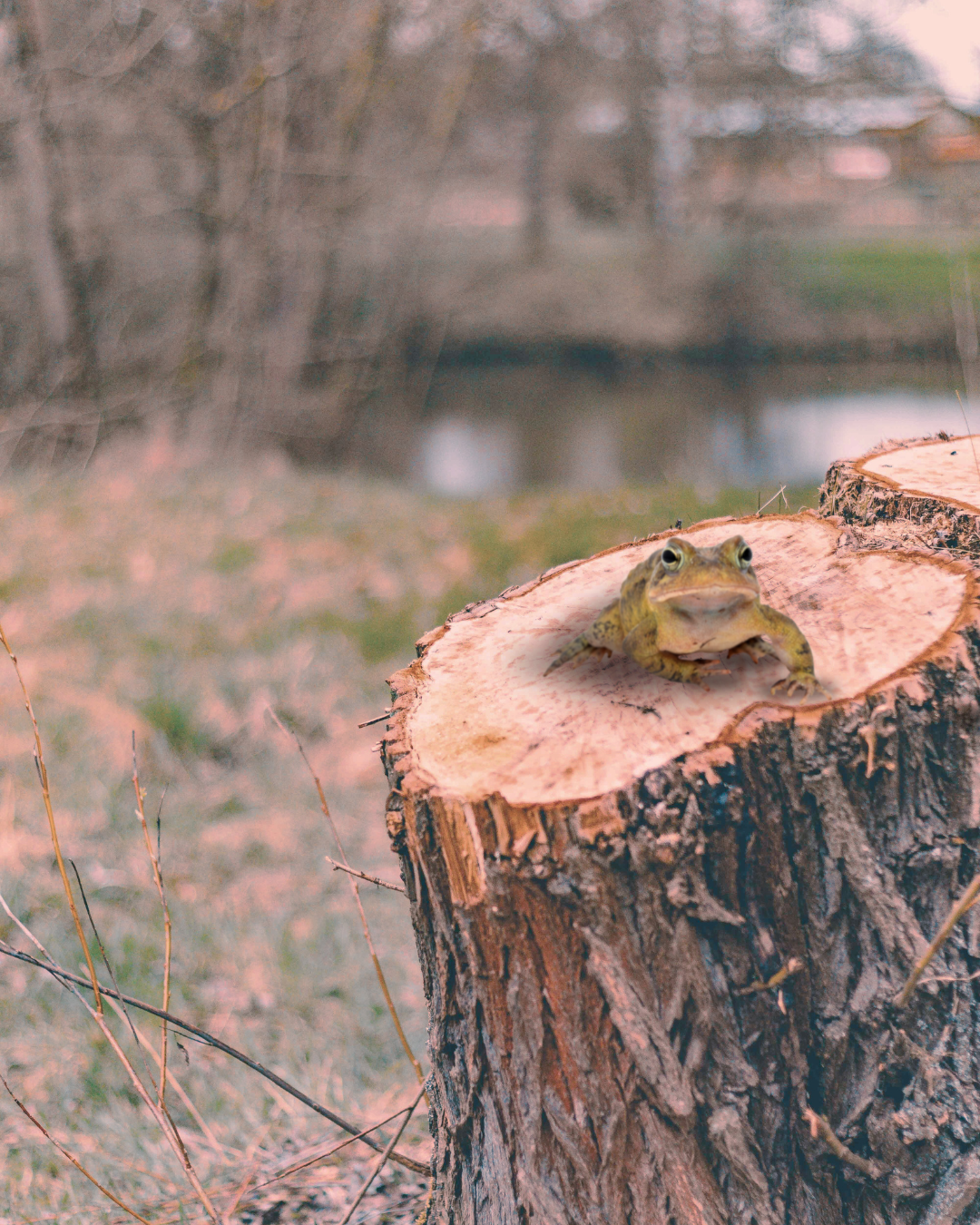
A toad sitting on a stump at the edge of a forest

An Acorns Flash Fiction Feature

By: James Hobbs

The toad squirmed in my pocket as I knocked on the witch’s door. Her name was Granny Hexham, an old, withered woman, so hunched that her body was practically a hoop. She couldn’t move around too fast, so there was a lot of grumbling, banging, grunting, and growling before the door creaked open. Her watery eyes squinted at me as she scratched one of the hairy warts on her cheek with a long, moldy, yellow fingernail.

“Well, well, well, well, sweet, little boy, did you bring my fee?”

I was too scared to speak, so I just nodded, reached into my pocket, and held out the bundle I’d made from my handkerchief. You could see the toad inside kick and struggle as Granny Hexham brought it to her nose, almost as lean and crooked as her body, and took a long sniff.

She licked her skinny lips and hissed, “Yes, yes, sweet boy, this’ll do nicely.”

She ushered me into her crooked little cottage and hurried me to sit on a stool. It was dark except for the needles of light that poked through the gaps in the crooked boards of the walls. Then knotty fingers unwrapped the bundle, grabbed the toad by the leg before it could hop away, and slammed its head against the table until it stopped trying to escape. Then she took stock of the rest of her payment: a blue-shelled beetle; two small green apples; six hairs from the tail of a three-legged dog; and a small stone I’d kept in my shoe for three days and three nights.

“So, little man, you wanted someone cursed.”

“My new school teacher, Mr. Cospwattle. He yells at me all the time, when I can’t do my ciphering or forget my grammar lessons.”

She nodded, a look of exaggerated sadness twisting her wrinkled face. “A dreadful shame to be so cruel to such a dear, young child.”

She pulled a dented frying pan off the wall, tossed a pat of butter into it, lit a fire in her stove, and started frying up the toad with a pinch of salt and pepper.

“I…I don’t want you to kill him or turn him into a worm or anything. I just need you to chase him away, so they have to get a new teacher.”

Granny Hexham cackled to herself as she tossed the toad in the pan. “Yes, yes, yes, yes, I know many spells to vex him.” She flipped the toad onto a plate and started frying some eggs to go with it. “I can make it so that every time a Thursday falls on the seventh day of the month, if he wears black or green, a sparrow will drop its dung on his shoulder. I can cast a spell that will make his left wrist tickle perniciously before it snows. I can make him unable to spell the word ‘social.’ I can cause him to drop his favorite mug, so that it shatters into a thousand pieces, as long as that mug doesn’t have diagonal stripes on it. Do any of these little tricks strike your fancy, hmm?”

“Umm…” To see Granny Hexham, I had braved the dark forest, which my parents had told me in no uncertain terms never to enter. “Is there anything else you can do?”

She whirled around and glared at me. “I have other curses, little man. I can make him sneeze any time he meets the eyes of a two-year-old hog. If he has a fondness for fruit, I can cause pears to taste like slightly rotten apples. If that is not cruel enough for you, I can cause the knot of his favorite cravat to come untied twice as often as usual. Are any of these wicked enough for you?”

“Well…”

I have never in my life seen anyone take fried eggs from a pan with so much malice. She slammed her plate onto the table across from me and grabbed a two-tined fork so long I was afraid she’d skewer me with it, not her supper.

“Ungrateful boy. Don’t be so choosy. I haven’t tasted toad and eggs in a long time. I would rather eat them in peace.”

“Those curses are all really very wicked, but I thought—”

She stabbed the toad and bit off its head so forcefully that I shut my mouth with a snap.

After the lump of chewed toad made its way down her skinny throat, she licked her lips and said, her voice suddenly less hissing and mysterious, “Listen, I don’t know what you expect to get for a toad and a few measly trinkets. If you want better curses, you can go see another witch, but I can promise you nobody’ll cast a curse for cheaper than me.”

“But I’ve heard all about you. They said you were the wickedest witch this side of Glarmsby.”

She sighed and hunched over so far that her long nose almost dipped into the runny yolks of her eggs. “I was, little man. I was, but that was many years ago. In my prime, I could’ve had your teacher’s house eaten by termites or struck by lightning or given him the old yalping cough; howling aches; and the foul fustian flux. I could’ve filled his bed with hedgepigs and his breadbox with bog worms. I’d vex him. I’d well and truly addle him.” Then her voice rose and her jowls shook with anger. “But I’d like to see you do a better job of casting a curse when you’re a hundred and two, and your eyes don’t work, your back aches, and you set things down one minute and can’t remember where you left them the next. And for only the price of a toad.”

I wasn’t quite sure how to respond to her sudden outburst, so I fidgeted with the buttons on my coat and said, “What if I brought you another toad? Could you cast two curses for me?”

“Another toad, another stone from your shoe, and a fly’s left wing.”

I didn’t like the idea of walking around with an uncomfortable stone in my shoe for three more days, and flies are hard to catch, so I said, “My mom’s tomatoes are ripe. I can pick a couple of those to eat with your toad and eggs.”

She took another bite of toad and chewed thoughtfully for a minute, before saying, “You’ve got a bargain.”

So I went home and stole two oblong tomatoes and scoured the forest and splashed around until I had caught another toad and tied it up in my handkerchief. She told me she cast curses on Mr. Cospwattle that made his leg itch whenever he ate peas and that gave him a splitting headache in the morning of any day in October when a bird had sat on the roof of the schoolhouse the previous night. I guess it worked. I think I noticed Mr. Cospwattle scratching his leg sometimes as he ate his lunch out of a tin pail, and he did seem especially irritable in October from then on, but it didn’t drive him away. I doubt he noticed anything had changed. Finally, he got offered a better paying job teaching in the city and left. As for me, I never made another bargain with a witch. As far as I can tell, it’s not worth the trouble.

About the author:

Originally from Kansas City, Missouri, James Hobbs is currently a PhD student at the university of York, studying early modern history. He writes as a hobby in between doing research.

Posted on Leave a comment

Of Lost Boys and Stars and Sharks and Other Impossible Things

An Acorns Flash Fiction Feature

By: Alyson Tait

From low tide of the pirate cove all the way back to our camp, me and Peter ran, ignoring everything except each other and the traps we’d set because those weren’t for us. They were for grown-ups and other beasts: bear traps, swinging nets, and hidden pits with sticks we’d spent weeks sharpening. We didn’t stop until we reached our home tree. Staccato laughter punctuated gasps of air.

Peter boosted me, my foot pushing off his hands so I could grab a branch and climb. He jumped as if he weighed nothing and beat me to the top where we lay next to each other on thick branches and planks of wood, gulping air.

When we could breathe again, he turned to me, grinning. “They thought—” The rest of his sentence vanished beneath roaring laughter.

It’s impossible to know how long we stayed there laughing, catching our breaths, and talking in half-finished sentences about the raid on the pirates. The only marker of time was the sun disappearing, and in its place, the moon arrived, bringing friends with it. A hundred thousand million stars, and those were just the visible ones.

I asked Peter how many stars he thought there were. “Not just the obvious ones. How many total in all the universe?”

He shrugged. “Who cares? Wendy, you should leave that kinda stuff to the philosophers.” He stood and climbed down the tree, whistling a tune as if he didn’t have a care in the world.

And really, he didn’t. It was the best thing about him.

He didn’t care that he’d lost when we played cards that night, numbers barely visible in the moonlight—even when I’d played the queen of hearts. He never cared. Maybe because he never got tired, injured, or lost anything of great importance.

Sometimes, I wondered if he considered me of great importance. Was I worth him getting upset about? Would he grab that play sword of his and swing it at a pirate? Or a canyon if I fell in?

I almost asked but I knew what he’d say. The same thing he always said about questions like where the other kids were, how many stars there were, or why we never grew.

Leave it to the philosophers.

I didn’t need the philosophers for that one though—I just wanted his attention.

When dawn came, he didn’t sleep. Instead, he suggested we go swimming after breakfast.

The sun was bright overhead when our toes dipped into the water. I sat on the sand, nursing a stitch that pinched at my side because we’d traveled from one end of the island to the other with no dreams in between.

“The water’s warm!” Peter sang—taunted—from chest-deep in the lagoon.

“The water’s always warm!” I yelled back.

He shook his head. I could hear his thoughts. “Stop thinking so much.”

“So swim with me,” he said instead and grinned.

There was never any arguing with him, and I didn’t want to, I liked him too much.

So I swam.

We splashed and called out for the mermaids that liked to play sometimes and ignored everything else until my arms got tired and heavy.  When I was halfway to the shore, Peter yelled. I assumed it was about me leaving his game, but something sharp scraped against my leg.

I picked up my pace.

The sharpness came again. A thin burning pain ripped across my calf from some wayward shark that’d ventured into the shallower water.

My fatigue drained away—my tiredness vanished as if it had never even been there.

Water splashed behind me, and impossibly, my aching arms pumped faster despite my lungs burning from the effort until I was safe on land.

“Peter!” I screamed, voice cracking.

I didn’t see him anywhere. Not a limb, finger, or single strand of hair.

The water went still.

I held my breath.

“Come up.” My heart thundered in my ears.

Panic came in waves. My vision went dark at the edges.

I’d escaped. Was it because the shark had feasted on Peter instead?

That meant my guide—my best friend—was gone.

A choking sob left my throat.  “What do I do?” The thought was unfinished, swept out to sea with my heart and lungs.

Only the wind moved.

“Always so many questions, Wendy,” a laughing voice said behind me.

A startled scream tore out of me before I turned.

There he was.

My chest tightened and he grinned, as if the ocean hadn’t just threatened to take us away from each other. I slapped his arm for always scaring me.

His grin widened. “Too many questions, actually. Save some for the—”

“Maybe I’m the philosopher!” I said although I wasn’t sure what it meant. Not really.

I wanted to push him back into the water so he could feel fear too.

But then Peter laughed, and just like always, the sound took all my anger away.

When he caught his breath, we ran.

I ignored the scrape in my leg, and we ran all the way from the lagoon back to our tree. We didn’t slow down, not even to take a breath or watch the beasts that ran by. We tagged each other’s shoulders anytime the other got too far ahead, and both of us jumped over hidden pits, and we veered around the traps along the way so we didn’t get hurt because injuries meant less adventures—the worst possible thing to happen on Peter’s island.

When we reached the tree again, we flopped onto the grass, Peter laughing like always while I watched the sky. Clear, blue, and endless, like the ocean had been flipped upside down above us.

How many days of careless running did we have left? I glanced over, catching him staring at me with a grin. Maybe he was right. Maybe I didn’t need all the answers if I could still run with him, and maybe I should leave all those hard questions to the grown-ups.

And so with a grin, I decided I would.

About the author:

Alyson Tait was born and raised in the Southwest USA, where she walked alongside cactuses and scorpions before moving to Maryland. She now lives among the crabs with her partner, daughter, and multiple judgmental pets. She has appeared in (mac)ro(mic), HAD, and Pseudopod. She has chapbooks published by Querencia Press, Bottlecap Press, and Fahmidan Publishing, one book forthcoming with Graveside Press, and several novellas on Amazon.