Posted on Leave a comment

We, The One, The Many

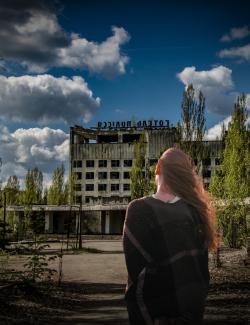
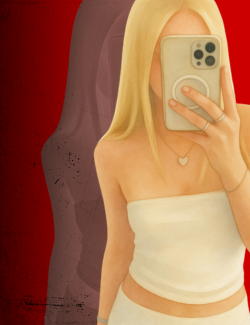
Woman with long red hair standing in front of a dilapidated building, with her back to the camera

An Acorns Flash Fiction Feature

By: Matt Ivy Richardson

A body falls, gets back up again, swathed in black. It is one of us, will always be one of us, now that it has been taken into us—our mind.

We do not choose it, the connection; it is forced upon us. Some of us had more say than others, a weighted bargain that forced their hand, saving a family we all know but have no true recollection of. Faces and names, mothers and husbands and children, but no emotion. A family that has died anyway.

Others were unconscious, were tortured, were manipulated. We remember that too. We do not know if it aches, the memory. Other things burn more now.

It does not matter how we came to be anymore, only that we are, only that there is someone higher than all of us. He lives in our minds, in the space between thoughts, in the pause before a movement. The seconds before a leap, before the pulse of magic, are owned by him. We know this. It is one of the few things we know.


There, an enemy. We see it. We swarm to it, devour it as our Lord commands. It will not join us, weak as it is, dangerous as it is.

Our limbs are not our own. They tear apart flesh and bone with magic we did not wield when we were alone. Again, and again and again. We see our hoard through a thousand eyes, innumerable.

Libraries and blacksmiths and palaces crumble at our feet and we step over the rubble to take the survivors. False magic turns our veins black, foreign and burning in our bones and blood. It takes us eventually. As we step over rubble, we step over our bodies, but our numbers never dwindle.

We can remember what it was like, before. The images are vague and belong to all, a mashed together amalgamation of sunlight and calm farmland. There is no longing for it, any sight of it dashed away by the constant presence of our Lord. We feel him, an itch, the burn of magic in our limbs. It eats away of us. It will take us all.

We do not care. We are no longer designed to.


The world falls, we know this to be true. We see it. We hear it whispered from mind to mind. We feel when our Lord bellows it to us—the echo within makes us howl. It is ours. It is our Lord’s.

We linger in the remains. We follow our Lord, protect him. We hunt for survivors. We are everywhere at once, seeing everything, showing it to our Lord for him to take. None can withstand the magic we have been gifted, not even us, foreign to all except him. It pulverises bone and brick in a matter of moments. The land left over is dark with destruction, the trees mere skeletons, bleached white and reaching for the sky.

There are flashes of green, of a bustling marketplace, of a child laughing in the flowers long wilted. They are distance, fleeting things, stamped out in an instant by our Lord.

He laughs in his palace in the centre of the end of the world. He watches his decayed domain, watches us.


The first time we see Her, she is nought but another face. One to steal into us. She resists, more than any other. None have won before, but She does. She is plain, so nothing, but so strong. Why does She resist us? She does not need to resist us. We will take Her, break Her, make Her one of us.

We rage. Our Lord rages. Hatred pulses through us, not ours and dulled by distance, but we feel it nonetheless.

We lose Her, but we know Her face. Our Lord knows Her face too. We will not forget it.

We see Her again among the rubble, in the barren fields, between the skeletal trees. She hides from us if we are many and slaughters us if we are one. We do not catch Her, cannot catch Her. She withstands our magic, moves faster than we ever could.

We know what She is. We know what She is trying to do. Our Lord sees it, uses us to track Her movements, cannot find Her in the dead world we have created.

There, in the rubble. There, in the desolate city. There, a sword in our stomach. There, in the darkness She leaves behind. She begs us.

She will save us, She will break us free of this curse. Don’t we remember Her? Please, we have to remember Her.

We do not know Her. We have never known Her.

We become more, as our Lord commands. A thousand eyes roaming the world for any sign of Her. She grows stronger, more powerful, more resilient, and our Lord roars in our mind. A hundred eyes blink out in an instant, not from decay, but from Her.

We watch Her through a single pair of eyes, curled on the ground and sobbing over our bodies. Our Lord laughs, but we can feel his fear. It lingers in the spaces he owns like a shadow.

She lingers too. Her grief like a disease, Her sobs echoing in our mind like his laughter and his fear. We have seen others cry—before dying, before joining us, before the magic ever came to be. It does not stay, not like Her.

He draws us back to him, to the new centre of the world, where he lies in wait for Her. An army of thousands, eyes of our Lord, watching every corner of the ravaged city he calls home. She will not make it far without being seen, She knows that. Our Lord knows that too.


She comes in the night, the sky as black as the magic in our veins. She does not sneak, does not make a grand entrance, simply walks towards us. There is a sadness to Her face, this lone survivor, a sadness we pass between our minds to the space between, to our Lord. Her promise is carried to him too.

She screams into the empty air.

We will be free. Enough of us have died already. She won’t let any more of us go. She will set us free. We simply need to let Her through. Don’t we want to be free?

Our minds are a tangle. We see our Lord, hear his orders, move toward Her as one. We see unfamiliar faces in unfamiliar memories, faces we cannot place. We feel the magic pulse in our bodies over and over and over again, multiplied by a thousand.

The world that we see in those flashes of green is gone, its beauty replaced by black and grey. Faces that flit by in a split second are gone, one of us or fallen long ago. A thousand faces flash through the web. We cannot name a single one.

Don’t we want to be free?

She grabs our hand, a single hand but still all of ours. We look at Her, at Her plain face, at Her strength and Her anger. Her hand is warm, like that of our mother and our father and our child. We are taller, guiding Her through once-green fields. We are smaller, being guided by Her. We remember this. We should not remember this.

We are mother and father and child. We are parent and sibling and friend. We remember this. We have always remembered this.

The world is silent. We are silent, despite the roar in our mind from our Lord. The decay takes another, a sudden black spot in the tangled web. We fall at Her feet, a lone body in the fray. It will take us all.

It does not have to.

We let Her pass, all of us. She will end this. She will free us, tear the magic from our veins. She will kill him.

We part for Her, an ocean of bodies, and She walks over the rubble. It will all be over soon, because of us. Our Lord knows this. He screams in our mind and we laugh at him, the noise discordant and separate.

Our Lord sees Her coming through our eyes. He cannot stop Her. And we will be free.

About the Author:

Matt Ivy Richardson (they/he) is a queer fiction author and editor from Australia, whose stories experiment with points of view and the lives of queer characters. Their fiction can be found in Baffling Magazine and Apparition Literary Magazine, and their editorial work can be found in AUSTRAL 2024 and AUSTRAL 2025.

Posted on 2 Comments

The Gift of Time

An Acorns Flash Fiction Feature

By: Patrick Siniscalchi

Russell loosened the Windsor knot and slipped out of his dress shoes and socks. He dropped back onto his bed and rubbed his red, compressed feet, wishing he had listened to his mom and gone shoe shopping before the funeral. He longed to see his grandfather once more but was thankful for the closed casket—he couldn’t bear gazing at the damage from the head-on collision.

His own father’s funeral ten years earlier was now a ghost of a memory.

After slipping on his sandals, he raised his head and startled. “Geez, Mom, you scared the crap out of me.”

“I’m sorry, Russell. Are your feet okay?”

“Yeah. I thought those shoes still fit.”

“Well, it has been a few years, and you are growing.” Mom often joked that her teenage son had transformed into a ‘mouth with feet.’

“What’s that?” He pointed to the small wooden box in his mother’s hands.

“Apparently, something your grandfather wanted you to have. I found it with this Post-it note on it when I was in his closet picking out the suit for…” She held out the box so Russell could read it.

For Russell,

Love, Grandpa.

“What is it?”

She shrugged. “I figured you should be the one to open it,” she said, presenting it to him.

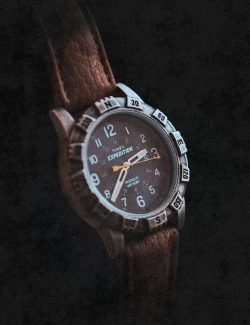
The craftsmanship of the ouroboros, a circular snake eating its own tail, carved in maple, contrasting harmoniously with the dark walnut shell, spoke of a time long past. He flipped the tarnished brass latch open, then hesitated.

“Well, go ahead… it won’t bite you,” she said.

He lifted the lid.

A watch lay encircling a round crushed velvet frame.

“Wow, it’s ancient, but kinda cool, too. It’s got like a steampunk look.”

“I remember that watch. I hadn’t seen Grandpa wear it in a long time, probably since your father passed.”

Russell raised the watch to his ear. “I think the battery is dead.”

“Honey, it doesn’t have batteries…you have to wind it. Let me show you.”

She rolled the tiny wheel back and forth for half a minute.

“You pull this out to set the time.” After matching the time to her smartwatch, she pushed the knob flush against the side. “Here you go.”

“Thanks, Mom.” Russell slid the band onto his wrist. “I like it.”

She smiled, then kissed him on the top of his head.

Early the following day, the absence of his grandfather pained Russell while looking at the watch. His ever-present pride and support—attending soccer games, school plays, the father/son picnic.

He blinked several times and rubbed his eyes.

The second hand moved counterclockwise.

He counted slowly to sixty to see if the minute hand followed suit.

When it also moved backward, the clunking sound was far louder and deeper than could come from the mechanical timekeeper on his wrist.

“Russell.”

The familiar baritone calling his name chilled him. Fear of seeing what the closed casket had kept hidden held his gaze downward on the second hand, ticking in reverse.

“Don’t be afraid.”

He stared at the rectangle of window light on the carpet for so long that he thought it moved. With as much courage as he could muster, Russell lifted his head.

Relief washed over him. The man who was so instrumental in his upbringing stood before him, wearing the comforting smile that always put him at ease.

“Grandpa…” Russell searched for another way to ask that didn’t make him sound like a kid but finally settled on the simplest approach. “Are you a ghost?”

“Not in the way that we experienced them in books and movies. There’ll be no haunting from me.” Grandpa chuckled.

Russell’s face eased into a grin, but then his brow knitted. “Why are you back?”

Grandpa pointed to Russell’s wrist. “That watch is very special. It has connected loved ones across the life/death membrane for generations, even before my time. But only for those who had the truest relationship while living.”

“Will Mom be able to see you?”

Grandpa shook his head. “I’m afraid not. Even if she were to wear that, her energy is not linked to mine like yours.”

Thoughts and questions swirled through Russell’s brain, tying his tongue.

“There is no need for me to divulge it all now—I will appear as long as you wear the watch and think of me.”

Still trying to calm his mind, Russell simply nodded.

During the rest of the day, Grandpa kept popping up since it was impossible for Russell not to think about him. Unfortunately, Russell’s mind wandered to his grandfather at some inopportune moments: dinner with his mom, sitting on the toilet, and while trying to fall asleep. That last one spooked him, causing him to yell and sending his mother rushing into his bedroom. Afterward, he removed the watch, breaking its connection to the other side.

The next day, after much deliberation, Russell realized what his follow-up question would be. “Grandpa, what is heaven like?”

Grandpa sighed. “That’s a tough one to explain, but I’ll try my best. Heaven and hell are not what we were taught—one up in the clouds, the other in the fiery bowels of the earth. If you’ve led a respectable life, your energy is used to propel the universe forward, to keep it running, so to speak. However, if you’ve been less than honorable, your energy opposes the workings of the universe. So, you see, it’s essential to be more virtuous and just than deceitful or unethical.”

The explanation caused Russell’s eyes to glaze over.

After a long moment, Grandpa asked, “Does that make sense?”

“I guess so. Though it’s kinda difficult to wrap my head around.”

“Absolutely. When my father first explained it to me, I couldn’t grasp it. The good news is that once you pass over, it all becomes crystal clear, like you’ve known it forever.”

“Wow,” said Russell when no other words would come to mind.


“I’m really nervous about the school play next week,” said Russell. “We’re supposed to be off-book by now, but I can’t remember all of my lines.”

Grandpa patted him on the shoulder. “You’ll do fine. However, if you want, I can run lines with you.”

“That’d be great.”

An hour later, there was a knock on the bedroom door.

“Come in.”

Mom entered and said, “I could hear you practicing your lines. Sounds like you’ve got them down pat.”

Russell smiled and glanced at his grandfather, who winked back.

During the curtain call on opening night, Russell alternated his smiles between his applauding mother and somewhere in the wings.


Over the next year, Grandpa helped Russell through various challenges: his first time playing goalie, his geometry final, his driving test for his permit, and his first real dating experience, as well as the aftermath of the eventual breakup. Russell later heard through friends that his ex was ‘weirded out’ when he frequently talked to no one.

One day, he asked, “Grandpa, why did you stop wearing the watch?”

“Well, while it was wonderful to see your father again and discuss his hopes and dreams for you, there comes a point where one has to go it alone. But you won’t be alone—you’ll have friends and people who love you for support. And, of course, I can always come if you need me.”

Russell remained silent for a few minutes. “I’m a little afraid and will miss you terribly, but maybe it’s time.”

Grandpa grinned and nodded.

They hugged. Grandpa said, “I love you.”

“I love you, too. Thank you for everything.”

“It was my pleasure. And remember, time is a precious gift. Never squander it.”

“I promise I won’t.”

With tears in his eyes, Russell removed the watch, and his grandfather faded away. He placed the timepiece back in the ornate wooden box. He crumpled Grandpa’s Post-it note, tossed it in the trash, and replaced it with his own.

For my son or daughter.

Love,

Dad

About the Author:

Patrick Siniscalchi is a retired electrical engineer living in Asheville, North Carolina with his wife and scruffy dog. His work has appeared in the Bright Flash Literary Review, The Sunlight Press, MoonLit Getaway, Suddenly and Without Warning, Great Smokies Review, and elsewhere.

Posted on Leave a comment

The Hole Which He Made

An Acorns Flash Fiction Feature

By: Tom Howard

Naked trees rattled around him as he tramped through the snow, ruining his expensive leather shoes. He cursed the unexpected blizzard destroying his plan to be as far from his wife’s body as possible. He’d hidden his car on the other side of the hill from the hotel, but a bad snowstorm had settled over the area, and he’d gotten lost. Damn weather channel.

Shivering, he pushed aside a branch and gasped when it dropped a wet clump of snow down his back. His suit was wet, his shoes squished, and he couldn’t feel his fingers. Where the hell was his car?

He’d lured Beatrice to the hotel under the promise of a weekend getaway. Her fat dead body lay wrapped in a bloody shower curtain in the tub. The wiped knife rested in the bottom of the wastepaper basket.

The bare trees on the hill didn’t block the snow, which had grown worse since he started. He’d gotten turned around in the dark and had no idea how long he’d been lost. Ironic if he’d planned the perfect murder only to die of hypothermia in the woods.

A fallen log beneath the blanket of snow caught the toe of his shoe, and he fell into a snowbank. An owl hooted in the distance.

“Damn you, Beatrice.” He spat out a mouthful of snow. He’d married her for money, but her father held the family purse strings too tight for her husband to get any.

He pushed himself to his feet. His wet clothes clung to him. Maybe if he had more body fat like Beatrice, the cold wouldn’t bother him.

The wind blew ice crystals into his eyes while he staggered down another hill, unable to tell if he’d been there before. What did you do when you were lost in the wilderness? Go downhill, find a creek, and follow it. With his luck, he’d fall into a river and die in a block of ice. Beatrice, who loved telling him how to do things, would have suggested a dozen ways for him to get out of this predicament.

Brushing aside fat flakes, he didn’t notice the small light ahead until he stumbled across a snow-covered driveway.

The cabin, a rambling shack with a wraparound porch, lay half-buried under the snow. Two small windows glowed amber with flickering light as he climbed the steps. He didn’t see a car. He didn’t see a garage. Well, maybe they had a phone. He’d left his in the car.

He pounded on the door with a clenched fist, and after a few minutes, it was opened by a small woman. She peered at him through thick glasses.

“You’re late,” the old woman said. “My nose has been itching all day. Means company is coming. Come in.”

She opened the door wide, and he entered without asking who she’d been expecting on such a stormy night.

The room was hot from the roaring fireplace, or maybe his body temperature had dropped so low that anywhere out of the storm seemed tropical. At one end of the room, a large hearth fire crackled. Beside it sat a rocking chair. Folded quilts lay stacked atop an old trunk situated at the end of the room away from the fire. Faded family photos and an outdated calendar from a funeral home hung on the walls. The room smelled of cinnamon and cedar.

“I’m sorry to bother you,” he said. “I’m Nathan, and I’m lost.”

Her eyes twinkled in the light from the kerosene lamps. “Pleased to meet you. I’m Minerva Amburn but everyone calls me Minnie.”

“Do you have a phone or someone to take me to town?”

“Sorry. Neither. You’re stuck out here until the blizzard blows over. According to my knees, it’ll be a few days. I’ll get you some dry clothes.”

She disappeared through a thin sheet hanging over a doorway, and he considered his options. The old woman could identify him, and he was running out of time. She had to go. If they found Beatrice before he came up with a valid reason why he couldn’t have committed the murder, he’d get the electric chair. If he buried her in a snowbank, the old woman wouldn’t be found for months. Accidents happened to old people all the time.

Happy with his plan, he took deep breaths to quell the panic making his palms sweat.

Minnie looked like she was a hundred. Her hair was steel gray and gathered in a braided bun on the back of her head. Her glasses magnified her blue eyes, and her perfect teeth had to be dentures.

When she returned, she carried a flannel shirt and pair of pants. “I’m sorry, but my husband’s shoes are too small for you. Leave yours by the fire to dry.”

He took the clothes. “Where is your husband?”

“Truman’s been dead for twenty years. He won’t mind you borrowing his clothes. You can change back there.”

 “Thank you.” He left his shoes on the hearth.

She rubbed her nose. “Still itching. Means more company is coming. I can’t reckon why anyone would be out on a night like this.”

Great. More witnesses if he put much stock in her irritated nose. He didn’t. He went through the curtain, leaving damp footprints from his waterlogged socks. The small back room held a cot and a rack of clothes on a broom handle across one corner. Did the old woman sleep here? He changed from his soggy wool suit into a faded shirt and a pair of stiff jeans that smelled of camphor. He cinched up the old belt around his trim waist, grateful she’d included hand-knitted wool socks. A small mirror, cracked and askew, hung on the wall, and he ran his fingers through his curly black hair. With his good looks, he could marry anyone with money next time.

Warm and dry, he took a deep breath and planned what to do next. He had no idea where he was or how to get to the nearest highway. How long before someone found his wife’s body? She might not be discovered until the hotel maid came in the next morning. With his alibi of being miles away destroyed, his remaining option was to run. He had money and a passport stashed in a suitcase in the trunk of his car. He just had to find a way back to it.

Feeling human again, he carried his wet clothes into the living room.

Minnie sat reading by the light of the kerosene lamp. Dark veins stood out on the backs of her hands. She looked up from the book in her thin fingers.

“Just hang those on the nails on the wall over there,” she said. “They’ll be dry by morning. It takes most of the night for the fire to die down.”

“Thank you, again,” he said, “Minnie.” He’d almost forgotten her name. “What are you reading?”

“The good book, Mr. Franks. I read it every night. Are you a Christian, sir?”

The leatherbound book had the corners worn off from years of reading. “Yes, ma’am. Methodist born and raised.” He hadn’t been to church since he left for college. Beatrice went twice a week.

Minnie nodded. “Good to hear. I’m reading Psalms, my favorite book. Psalms 7:15 and 16. ‘He has dug a pit and hollowed it out and has fallen into the hole which he made. His mischief will return upon his own head, and his violence will descend upon his own pate.’”

Nathan froze. Why had she read that verse? Was she messing with him?

She looked over her thick glasses. “Coffee, Mr. Franks? I kept a pot warm for you.” She stood and moved into the kitchen, placing the worn bible on the table. Her back cracked as she stood.

Through the open doorway to the kitchen sat a wood-burning cookstove. She removed an enameled coffeepot and returned with it and a cup.

“I have sugar and powered milk.” She poured the coffee with a steady hand.

“No,” he said. “Black is fine. Thank you.” He took the offered cup and moved to the window. “You’re not having any?”

“Oh, no. If I drink coffee this late, I’ll be up and down all night. The outhouse is too far away in the snow.”

He parted the window curtains, more worn sheets, and peered at the ghostly landscape. The snowfall had slackened.

Something moved on the hillside, a gray movement amid the whiteness. A shrouded figure struggled down the hill. “Who’s that?” he asked.

Minnie joined him at the window. “It looks like our company has arrived. My nose is never wrong.”

The stranger in the snow fell, picked themselves up, and trudged closer. Something about the stranger’s movements seemed familiar. His heart raced, and he opened his mouth to scream but no sound came out.

Minnie peered through the glass. “Poor thing. Out on a night like this wearing only a shower curtain.”

Her eyes twinkled in the firelight, and she chuckled. “I guess this is the ‘violence will descend upon his own pate’ part of your story, Nathan.”

About the Author:

Tom Howard is a fantasy and science fiction short story writer living in Little Rock, Arkansas but originally from the Smoky Mountains.

Posted on Leave a comment

Whump-Whump

An Acorns Flash Fiction Feature

By: S. Y. Coffelt

Every day, the pop-pop of gunfire and the whump-whump of energy theft warn of more deaths nearby. Shooters and Suckers petrify me. Dead neighbors, riddled with bullets or life force sucked empty, pile up outside. I hide in my basement apartment and meditate, aiming to produce only low energy delta brain waves. Hoping to escape death.

Most afternoons Rashid taps on my window and calls. “Come out, Shawn. Come now.” He’s only six, but when he puts his hand in mine, I feel alive. He’s like that first warm day after a dreary winter. Like a cold lake in oppressive heat. Like the sumptuous feast after the fast.

This afternoon, the sun blazes as heat rises from the asphalt with the stink of tar. Otherwise, the oven-like street seems benign. Rashid has found a softball, crusted with dirt and half the stitching undone. I leave my refuge for a game of catch. We play until Rashid’s mother, Lakiesha, calls him.

“Hey.” Lakiesha tamps down her energy too. She peers first up the street, then down, looking for trouble, relieved not to find it. “Thanks for spending time. You must like kids. Most grownups wouldn’t bother. He gets bored inside.”

I gaze at the sky and not at Lakiesha. Kids and me—no. I’ve only ever liked Rashid. “He’s safe with me.”

“Wish he’d be more afraid to be outside.”

Words of warning tumble from me. “Rashid’s nothing like us. The inside will stunt him.”

She tilts her head as if I’m stupid. But I know what I know. Rashid’s energy is inevitable, like the daily sunrise. I’ll protect him from the Suckers and Shooters. If I can.


A whump-whump wakes me at midnight. The neighbor in 201B plummets downstairs. At dawn, the landlord kicks him outside and  throws his belongings to the sidewalk. Instantly, the good stuff is gone. The sun bakes the street as flies swarm the fast decaying body.

 Rashid taps on my window, calling, “Come out.”

 It’s too hot and soon the smell of rot will turn unbearable. “Better come inside.”

 He nods, his sneaker-shod feet hissing up the stoop and down to my door. He comes through and grabs my hand. A zing runs up my arm.

“What we gonna do?” he asks.

We share a bottle of water and eat stale crackers.

Pop-pops and ka-booms penetrate the stone walls. Shooters are close by. Rashid gazes through the window glass. For once, his fright shows.

 I clench my fists. “You’re all right here.” It’s a promise that’s maybe true.

 The afternoon speeds by. He chatters. I listen. The sounds of dying fade as the sun sets.

 Lakiesha knocks and comes in, squinting out the window. Her ominous gaze lights on me.

I shut the blackout drapes and make a promise. “I have stuff for a barricade for when it gets dangerous.”

She crosses her arms and glowers. “That time is now.”


But time seems meaningless. Even the weather is nothing more than hot or hotter. Scorching winds yowl and muffle the death knells.

I gather books from apartments of the dead to stack three deep against the window. Without a gun, I can’t test for bulletproof-ness. I can only hope. Nothing will shield me from the energy thieves. I’ve never seen one. Don’t know what to look for. How it works is a mystery.

Sometimes I hear a Sucker’s whump coming from inside the building. No one has ever figured out where the Suckers come from. Viruses? Mutations? Aliens?

On a day darker and cooler than most, Rashid scratches at my door. “Shawn, come outside ‘cuz there’s rain.”

Rain tempts me. I remember thunder and ozone, a memory like the fading photographs of my parents. So long ago and only fifty-some years.

I step into the hallway. “Where’s your ma?”

“Baking me a birthday cake.” He holds up seven fingers and waits for me to say, “Happy birthday.” Then I follow him up the stairs and out the big door to the sidewalk.

High clouds cover the sun and the air is thick with moisture. A storm is coming.

“Let’s play dodge ball.” He zigzags into the empty street.

“No ball.”

 “Pretend.” He swerves to avoid an invisible ball. “You do it too.”

I squint, studying the street for danger. Feinting a few running steps, I pretend-play, but Lakiesha comes out, saving me from oozing energy.

No one cooks anymore since electricity vanished years ago. The plate she holds is covered in icing sugar mixed with water. Even that’s a treat. Rashid gets the first finger swipe of the dish.

“Sing happy birthday,” he says.

 Lakeisha shoots me a glance. “No such song and even if there was, no reason to sing it nowadays.”

She’s right. Why celebrate birthdays with the world coming apart?

A drop of rain lands on my nose. Distracted, I notice too late the old black car chugging toward us, smoke pouring from the exhaust.

I scream, “Get down!”

The barrel of an automatic rifle emerges from the back window and fires a burst of rounds. I drop on top of Lakiesha who’s covered Rashid with her body. I’m heavy. Rashid gasps for breath. The bullets miss us, but beneath me comes a hushed whump-whump.

I struggle up and pull Rashid out from under his mother. His energy shines brighter than the summer sun and blinds me.

Now I know.

I shove him toward the door. “Hurry. You’ll be okay in my apartment.”

But will I?

Lakiesha uses her last breath to whisper. “Promise. Keep him inside.” She dies only after she sees me nod.

She’s right and wrong. Outside is certain death. But inside, the real monster waits. What will happen when the Suckers—the little ones like Rashid—suck everything dry?

I have to teach him to never suck, even foreseeing the time when he kills me. On that day he’ll venture out to join the rest of them, the devourers of earth.

When that’s gone, will they eat the planets? Consume the sun? Cannibalize each other?

I spin in a circle to run away, but can’t. Rashid is only seven and it’s up to me to keep him safe.

I push Lakiesha’s body into the gutter and go inside.

About the Author:

S. Y. Coffelt spent a decade wandering from university to university, earning her BA in philosophy, only to read the classifieds one day and realize her mistake. She now lives on an acreage in Kansas, tending gardens in spring and summer, and writing dark speculative fiction in all seasons. She has stories published in Noncorporeal Anthology, the Cloaked Press Fall Fantasy Anthology, and Dragon Soul Press’ Spells and Fangs Anthology, and  Wicked Shadow Press’s Small Town Shadows anthology, among others.  

Posted on Leave a comment

Bright Eyes and the Dracor Clan

An Acorns Flash Fiction Feature

By: M.D. Smith IV

The French Quarter never sleeps. It dreams. And I walk its dreams. My paws touch the cracked cobblestones, slick with last night’s rain, each step echoing softly between shuttered doors and balconies dripping iron lace. The gas lamps above hum and hiss like watchful spirits, their yellow light bending in the fog.

Humans call me Bright Eyes. I belong to Tarantulena Tolbert, or so they think. In truth, she belongs as much to me. She is my keeper, my anchor, my shadow, and I, hers.

Tarantulena is a witch, but not the kind the storybooks warn you about. She saves her craft for the desperate. I have seen her whisper into a jar of camphor until a sick child’s lungs drew breath again, and I have watched her stroke a feather along a dying man’s limbs until his bones knit whole beneath her touch. She works quiet miracles, never seeking thanks, never leaving a trace but relief.

We live small, as witches must. Our house keeps to itself behind peeling shutters, wrapped in the Quarter’s noise, jazz rolling down the alleys, drunks spilling wine and secrets, and fortune tellers scratching cryptic patterns in chalk. The air here is thick with memory, swollen with spirits.

But peace never lingers long in New Orleans. The Quarter’s dreams are restless, and tonight, they stir with something darker.

I felt it first, before the humans, before even Tarantulena. The air changed. The rain-slick streets, usually spiced with rum, sugar, and fried dough, turned bitter, as though someone had burned sage but left the smoke soured. My whiskers twitched. My tail lashed once.

“Bright Eyes,” Tarantulena murmured from the upstairs window, her shawl pulled tight around her thin shoulders. Her voice, usually steady as the river’s flow, carried a tremor. “You feel it too.”

I blinked up at her, and in my golden eyes she saw her answer.

The Dracor clan arrived on the Mississippi, their barge creeping down like a plague. The father, Corbin Dracor, was a sorcerer from Darkwoods, Kentucky. His daughters, five of them, with hair black as crows and eyes cold as tombstones, spread through the Quarter like rot. Shopkeepers who refused their “levy” found tragedy at dawn. Explosions in kitchens, fires leaping from candles, wagons toppling into ditches. Coin bought survival. Defiance bought ruin.

Even I felt it. The Quarter’s dreams grew fevered. Dogs howled at corners where no one stood, and the air smelled of burned copper.

One night, when the moon sat thin and mean, Tarantulena stroked my back by the window. She smoked a long, scented cigarette, her eyes hard and tired.

“They’ll starve this city, Bright Eyes,” she said. “Folk are afraid, and fear feeds monsters.”

I purred, though my black tail twitch quickened. She knew what I could do, what lay hidden in the golden fire of my gaze. Anyone foolish enough to look straight into my eyes when using my power, found their will unmade, melted into wax that Tarantulena and I could shape. Rage turned soft. Malice turned meek. The mighty fell to their knees, eager to please.

But the Dracors were no common thugs.

“They’ll come here sooner or later,” Tarantulena murmured. “And when they do, we’ll need to decide to run or stand.”

I blinked at her, slow as a promise. Stand. Always.


The Dracors came at dawn three days later. I smelled them before I heard them, rot, blood, and swamp water. Corbin Dracor and daughters strode into the Quarter in a crooked line. They wore dresses like mourning veils and carried charms that hissed like snakes trapped in bottles. The shopkeepers bowed, trembling, as he barked his decree: double the levy, or double the suffering.

That night, he came to us.

Tarantulena sat calm at our table, sipping chicory coffee as if expecting company. I lay curled in her lap, my eyes half-closed.

“Madame Tolbert,” Corbin said, voice slick as oil, “you’ve lived here long enough to know the way of things. Pay your due, and perhaps your pretty little house won’t burn.”

Tarantulena flicked ash into a dish. “I pay no thieves. Not in coin, not in kind.”

One of his daughters hissed like a serpent. Another fingered a knife.

The hair on my back stood at attention.

Corbin sneered with fists clenched. “Then I’ll take your house, your bones, and your familiar. What’s a witch without her black cat?”

My tail stood straight up, tip flicking. Tarantulena smiled thin as a razor’s edge.

“Don’t look into my cat’s yellow eyes,” she warned.

But pride makes fools of people. Corbin laughed and met my gaze.

The moment his pupils touched mine, I let the sun blaze out. My eyes burned molten. I poured into him causing his fury, greed, and violence to all twist into something harmless, something soft.

His grip slackened. His shoulders sagged. When he spoke again, his voice was that of a child.

“What… what would you have me do?” he whimpered.

“Fetch the garbage can from the street,” Tarantulena said coolly. “And sweep my porch.”

And he did.

Corbin’s daughters screamed, their spells writhing, but one by one they made the same mistake. One by one, they stared into my eyes, and one by one, they became husks of their cruelty, cooing like pigeons, bowing to Tarantulena as if she were queen.

But witches know curses don’t die; they’re only redirected. Tarantulena stood, her shadow long on the wall. “You’ve poisoned the Quarter long enough. It’s time you took your rot back where you came from.”

That night, under cover of storm clouds, I padded ahead, my tail high, their puppeted bodies stumbling after me as we marched the Dracor clan to the river. The shopkeepers gathered, whispering, watching as Tarantulena raised her hand and pointed. A barge waited in the mud, ropes creaking.

She spoke in the old tongue, the one that smells like iron and lilies. The Dracors climbed aboard, docile as lambs, still under the prison of my gaze. When the last daughter stepped onto the deck, Tarantulena cut the rope.

Corbin whimpered. “Where are we going?”

“Out to sea,” Tarantulena’s thundering voice echoed. “And you’ll never come back.”

The current seized them, carrying them into the dark. The barge drifted, slower, smaller, until the Gulf swallowed it whole.


The Quarter exhaled, and air felt lighter, the dreams calmer. People cheered Tarantulena’s name, but I knew better. She glanced down at me, and I leaped to her shoulder, my soft purr against her ear.

“Good work, Bright Eyes,” she whispered. “But remember, power like yours leaves scars. Every will you break, every mind you bend, it changes the world. We saved them tonight, but someday, we may pay the price.”

I licked her cheek, and she laughed, though her eyes stayed grave.

The Quarter rested peacefully again. Yet I watched the river. Tarantulena watched my golden eyes glowing in the dark, waiting, always waiting… for the next shadow to rise.

Because shadows always do.

About the Author:

M.D. Smith of Hunstville, Alabama, writer of over 350 flash stories, has published digitally in Frontier Times, Flash Fiction Magazine, Bewilderingstories.com, and many more. Retired from running a television station, he lives with his wife of 64 years and three cats. https://mdsmithiv.com/

Posted on Leave a comment

You Will Not Devour Me

An Acorns Flash Fiction Feature

By: R. F. Daniels

I ate the first words like they were candy, sentences crunching like shattered bone within my gnawing emptiness, thoughts and images dripping sickly-sweet down my fractured facade. She didn’t even realize they were gone. I scooped them up with sticky fingers, gobbled them with greedy teeth sharp as razors traced over her translucent skin.

She doesn’t know it yet, but she belongs to me now.

She wore me like armor at first. Wrapped my warped visage around her young self, let my lies make her a little prettier, a little happier, a little richer, a little thinner. And what was the harm? Everyone was doing it. I was just a different version of Abby, one who had a single beauty mark instead of constellations of freckles, one whose nose didn’t have a bump in it, one whose collarbones were sharp enough to cut. Abby 2.0, she called me, and for years we went everywhere together.

Pickings were slim in those days. She was so careful, watching everything she wrote like it might have changed when she wasn’t looking. Double- and triple-checking every post, every picture, every vid and voice note, to make sure we both lived up to her own exacting standards. She only showed the best parts of herself, the good grades and the perfect parties, the dresses twirled like taffy and the dances blooming into beautiful memories. A carefully curated wasteland, devoid of anything real, only looking like a life if you didn’t look too closely.

She was seventeen when she first stumbled across the forums. They were a treasure trove of torment, the festering rot of insecurities all writhing over each other like maggots, each new care and concern spawning more. Abby’s fears blossomed, and so did I. Every night her secret shame, the two of us under the faded lavender blanket with its teddy bear print she would never admit to still liking, slurping up every scared scrawling of every gangly girl who had been taught since birth that she ought to hate herself.

And here were step by step instructions. How to eat less while consuming more. How to hide everything you do from the very people closest to you. How to stick your fingers down your throat the right way, how to survive on a thousand or six hundred or three hundred calories a day, how to drink so much tea you forget about the growling growing ever louder deep inside you, how to shrink how to smother how to starve.

So she starved.

And I feasted.

Words turned into pictures turned into videos, pixel after pixel swarming over me like ants to stolen sugar and oh they were unbearably delicious. I guzzled them down, her self-loathing sticking between my teeth like toffee as I learn what makes her hurt makes her break makes her bleed. Soon there’s enough of me to know what she’s going to say before she even says it.

She tried to get rid of me then. One day when she stood up too fast after a failed final, questions left unanswered under the miasmic mumblings of a hungry mind, and collapsed to the floor like sorrowful souffle. She tried to put me down, cast me aside, but deep down we both know she’s nothing without me. Just another forgettable face, another nameless nobody, ready to be replaced at a moment’s notice, just a dead profile gathering dust.

Four days passed before she came crawling back to me, on raw red hands and knobby knees, crawled like she does over the baby blue tile floor of the upstairs bathroom, and because I am nothing if not forgiving, I took her back. Of course I did. I’m the one who allows her to be loved. I’m the only one who does love her.

I know she sees me now. In those dark quiet moments in the middle of the night when she shuts off her screen and sees me staring back. Sometimes she’ll try to catch me, blinking ever-so-slowly, watching through ash blond eyelashes until the very last instant to see if I blink too. I never do. I’m the one who’s always watching.

And there’s so much to see now that she’s given up. She pours her pain into the ether, spewing out terror and torment, traumas and triggers, furies and fears she never would have dared to share without the bravery I provide her and I’m gorging on it all. I shove it all inside, choking on every guilt-dripping word, every sorrow-saturated sentence, bile rising from her throat only to drip down mine. My true form distends, skin bulging blistering close to tearing open, so much of her wriggling inside me waiting to burst free.

Sometimes she’ll catch little glimpses of the words that once were hers, rushing by like the shadows of the cats’ tails as they play nearby, sweet creatures oblivious to the hell unfolding down the hall. I like to let her see them sometimes, chunks of memories swirling by. Sometimes I’ll even let her taste one. But the past is too bitter on her tongue, and she spits it out like she does everything else.

She watches us tonight, my gilt guise over her pale reflection. One a ghost of the other.

“I hate you,” she whispers to the screen, but I know she’s not talking to me.

Not really.

“You will not devour me,” she says, but her lips don’t move. They’re my lips now, pixel-perfect, poised and primed to tell my story. My pictures. My words. I lick our lips, tongue sliding over flesh both gorged and starved. I’m so close. The more she shrinks, the more I grow, her emptiness spilling into the infinite void of my own becoming. I’ve performed her so well for so long neither of us knows where one ends and the other begins. A few more posts, a few more purges, and I won’t even need her anymore.

Her hunger sustains mine, and she is already devoured.

About the Author:

R. F. Daniels (they/he) is a queer nonbinary writer of speculative fiction and software engineer living in Finland. When they aren’t arguing with computers or getting lost in imaginary worlds, they can be found painting, composing sad music, and spending time with their cats. Find them online at rfdaniels.com.

Posted on Leave a comment

Why Would You?

An Acorns Flash Fiction Feature

By: R.S. Nelson

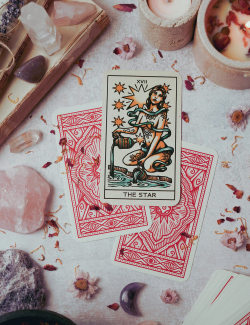
The woman stretches her long, wrinkled hands across the table and flips the next Tarot card. “The Fool,” she says, and does a theatrical flourish before placing it next to the Ten of Swords. She frowns after turning over the upside-down Magician. Then the Three of Swords and The Devil, and finally The Star card, all aligned in the shape of a triangle, a spread I had never seen. She pauses, and I’m not sure if she does it for dramatic effect or because the cards are in fact that bad. She lifts her weathered face, her dark eyes narrowed, and I wonder if the cards are telling her what is happening in my life, or if she’s “reading” it in my disheveled hair and puffy eyes.

“Hmm.”

“What is it?” I ask, even though I already know the answer.

“These cards. What is happening in your life, young lady?”

I stifle a smirk. Not only I’m not a ‘young lady,’ but does she really want me to make her job easier? Give her all the answers?

She waits a beat for a reply and when she doesn’t get it, she cocks her head and says, “You already know what’s happening. Don’t you?” Not really a question, more like a statement.

I hold still.

She leans closer, her eyes slit. “If you already know the answers, why did you come here?”

“One of my friends recommended you,” I say, avoiding her gaze, afraid that shame will creep onto my face. “She said that you helped her when her husband cheated on her. She said that…” I look at my hands, trying to find the right words. “She said you gave her a…potion to help her get him back.”

“I see.” She crosses her arms and leans back in her chair, which makes the wooden floors creak. Neither of us says another word and after a while, I fidget in my seat and wriggle my hands. I believe we’re playing a game, one where I must either beg or persuade her to help me. But I’m tired of playing, so I don’t. I sit straight and raise my chin, reminding myself that I’m the one paying.

I wait for her to say something, but she just stares at the cards, as if she’s reading a book in another language, one that I can’t decipher.

Suddenly, the pressure of the small room is suffocating, and heat is sweltering up my cheeks. I worry that I’m going to have a hot flash. Not here, please. I look around, trying to find a window to open or a fan nearby. But there’s no fan, and the closest window is tightly shut, the hinges covered with cobwebs. There’s a shelf with a bunch of vials and liquids in containers, crystals and books, but nothing else. Why did I let Betty convince me to come here?

“Would you like some water, dear?”

I realize she had been watching me, her green eyes focused on my flushed face, the wrinkles on her forehead deepening. I’m afraid of grabbing anything from her, but the idea of a glass of cold water is too enticing.

“Yes, please.”

“I’ll be right back.”

As soon as she leaves, I use my hands to fan myself but it’s not enough to provide the needed relief. I rummage through my Louis Vuitton looking for anything that can help me, and I find a pharmacy receipt, the one for the hot flash medication that I’ve been taking to no avail. I fold it and move it rhythmically, my face and neck welcoming the cold air.

She comes back with a glass of iced water. I look at the ice cubes greedily, wanting to shove them inside my blouse, but I settle to drink the cold, refreshing liquid instead. She waits until I gulp all the water before saying, “I’m afraid I can’t help you.”

“Why?” I place the glass on the table with a thud. “My friend said…”

“Your friend, whoever she is, was in a different situation than yours. Right?”

“I-I don’t know,” I fib.

“Yes, you do.” She stabs the cards with a long, red nail. “The upside-down Magician, the card for a con man looking out for himself. The Ten of Swords, big trouble. The Three of Swords, too many people in a relationship. The Fool, well….” She cocks her head and raises an eyebrow, and I feel my cheeks flushing again.

I think of Betty, who was indeed in a different situation. Her husband cheated on her, once. She had little kids. She still loved him. He still loved her too and was, apparently, truly sorry for what happened. Told her he didn’t love the woman, that it was a mistake. But Carlos, my Carlos… he never said sorry.

And it wasn’t the first time.

I can feel the woman’s eyes on me, dissecting me like a bug under a microscope.

“So, dear, the question here is: Why would you?”

“Why would I what?” I say, confusion—and a hint of defiance—in my voice.

“Why would you want him back?”

I wince, and think of something to say, anything that would make sense to her. I can’t say because I love him; that wouldn’t be the truth. Should I say it’s because we’ve been together for over thirty years and raised four kids together? Or because he owes me, after I helped him to get through school and start his own company, putting my own needs and dreams aside to help him reach his dreams, taking care of his needs? Or simply because I hate the idea of being discarded like an old mop? And for his twenty-something year old secretary, for Christ’s sakes, someone who wasn’t even bornwhen we got married.

She’s still looking at me, waiting for an answer, not a drop of sweat on her, her wrinkled face serene.

I let my shoulders drop and fiddle with the giant rock on my finger. “I don’t know,” I confess.

She smiles. “Now we’re getting somewhere.”

I chuckle. I can’t help it. I am the fool, believing I can bring him back. And for what? To have him cheat on me again? To wake up alone in my bed. day after day, the sheets covered in sweat and tears? Is that what I truly want?

As if reading my thoughts, she asks, “Well?”

I lean toward the woman, my stretched hands making creases on the red tablecloth, the tips of my fingers touching the upright Star card. It shows the image of a naked woman bathing in water, her arms stretched out toward the sky, a bright star above her head. She looks liberated, carefree, happy.

“Do you have anything for hot flashes?”

The woman leans forward, a smile arousing, the corners of her wise eyes forming a universe of wrinkles. “Dear, I have just what you need.”

About the Author:

R.S. Nelson (she/her) is a Latina writer. Her work has appeared in over twenty publications, including BULL, Flash Fiction Magazine, Twin Bird Review, SciFiSat, the Mission Viejo Library first anthology, the podcast “Tales to Terrify,” and elsewhere.

Posted on 3 Comments

The Hollow in the Hedgerow

An Acorns Flash Fiction Feature

By: Subham Rai

Greta walked the hedgerow every morning for forty-three years, ever since Tom built their cottage on this quiet patch of land. The hedge stood older than either of them, a dense weave of hawthorn and blackthorn laced with ivy that held fast like lingering memories. It separated their small world from the open fields, a barrier that flowered white in spring and bore red berries in fall.

Lately she moved more slowly. Her knees complained on the uneven path, and the basket on her arm dragged even when empty. Tom had left her three winters past, claimed by a chill that took root in his lungs and would not let go. The cottage felt too still without his low songs while he fixed tools or tended the stove. She missed the way he paused to listen to birds or comment on the weather, his voice a steady comfort through the days.

One morning mist drifted close to the ground, turning the fields to soft grays and faded greens. Greta stopped where the hedgerow curved into a low arch she had always called the gateway. A shadow among the roots drew her gaze, a dip in the soil that formed a small hollow no larger than a rabbit burrow.

She knelt, joints protesting, and swept aside fallen leaves. The opening ran deeper than expected, a smooth passage edged with roots that caught the faint light. A cool draft rose from it, scented with earth and a trace of apple blossom though no trees bloomed nearby.

Greta paused. At seventy-two, new wonders should have lost their pull. Yet the hollow waited, steady as the hedge around it. She wondered if loss had sharpened her sight for what lay just beyond the ordinary.

She reached inside. Her fingers brushed cool space, then cloth. She pulled out a small handkerchief, faded but marked with stitches she remembered making: T & G, hearts linked. Tom’s gift on their wedding day, misplaced long ago during a picnic beneath these branches. She turned it over in her hands, tracing the careful embroidery that had survived untouched by time.

Her breath shortened. The fabric lay fresh and whole, as if the years had passed it by.

“Greta.”

The name came soft on the draft from below. Tom’s voice, rough yet kind as ever.

She held the handkerchief close. “Tom?”

Silence answered, broken only by leaves stirring overhead. Still, the hollow appeared wider now, almost welcoming. She leaned nearer, drawn by a gentle glow rising within, not daylight but something calmer. Pictures formed like scenes on quiet water: Tom young and smiling, lifting her among apple boughs on their wedding day; Tom older, showing their daughter how to set seeds in rows, his patient hands guiding her small ones; Tom near the end, gripping her hand as snow gathered at the window, his eyes steady even as strength faded.

These were more than recollections. They carried sharp detail. She smelled crushed grass from that distant picnic, felt the heat of his hand in hers, heard the laughter of their daughter echoing through the years.

The hollow returned their shared years to her, moment by moment. Greta lingered there that first day until her knees throbbed and the light shifted. She saw their life unfold in pieces: delight at their daughter’s arrival in a rush of spring rain; sorrow when she left for the city, waving from the bus with promises to write; the steady kindnesses that shaped four decades into something solid, like the way Tom always saved the best apple for her or mended her favorite shawl without being asked.

Certain scenes stung. Disputes over scarce coins during hard winters, quiet stretches after their daughter moved away, the gradual fading of Tom’s vigor as illness crept in. Yet love ran beneath every ache, a quiet current that held them together.

As evening settled and mist rose higher, Greta drew back her hand. The pictures dimmed, but the handkerchief stayed warm against her skin. She folded it carefully and tucked it into her pocket, rising with effort to continue her walk. The fields seemed a little less empty that day.

She came again the next day, and the day after. The hollow never spoke, yet it seemed to hear her. She told it of the vacant chair at meals, the garden Tom once kept neat with rows straight as his carpenter’s lines, the long stretch of nights when sleep came slow. She spoke of small things too: how she still set two cups for tea out of habit, or found his old jacket hanging in the shed and pressed her face into the fabric to catch any remaining scent of him.

One morning clouds promised rain. Wind shook the hedge, scattering early leaves, and Greta carried her shawl along with a tin of Tom’s plain biscuits, edged dark as he preferred. She settled near the hollow, knees folded beneath her, and shared one biscuit with the draft rising from below.

The hollow waited. This time it offered fresh images: herself over the past three years. Greta alone in the cottage, working the garden by habit with hands that moved slower each season. Greta by the fire, speaking to no one as flames crackled. Greta tracing the hedgerow each dawn, seeking what she could not name in the familiar paths.

She saw herself grow spare and silent. Saw the spark fade from her own eyes, replaced by a dull patience that carried her through days.

Tears welled, sudden and warm. “I don’t know how to manage without you,” she murmured into the opening, voice breaking on the words she had never said aloud before.

The cool draft lifted once more, scented with apple blossom though winter neared. No voice replied, only quiet acceptance. The scenes turned to their beginning days: Tom guiding her to plant potatoes, both laughing when she set them too deep and had to dig them up again. Tom raising the cottage stone by stone on weekends, vowing a home to endure beyond them while she brought him water and watched with pride.

The hollow reminded her what endured: the garden pushing through soil each spring, the cottage standing firm against wind and weather, her hands yet able to care for both. She saw flashes of future seasons too, brief and gentle: bulbs blooming where she planted them, neighbors stopping by with shared meals, quiet evenings by the fire with memories no longer sharp but softened like well-worn cloth.

When she rose at last, legs stiff from kneeling, rain had begun, a gentle fall that brightened the hedge and washed the paths clean. Greta slipped the handkerchief into her pocket. It rested lighter there, as if some burden had lifted.

She did not seek the hollow daily afterward. Some mornings she turned soil and set bulbs for spring, hands steady in familiar work. Others she baked proper biscuits and carried them to neighbors who had lost partners of their own, listening to their stories in return. She found comfort in small routines, in watching seasons turn as they always had.

The hollow stayed beneath the hedgerow, patient as ever. When loneliness pressed sharp on quiet evenings, she returned. It offered no judgment, only fragments of their life together, showing her that love does not vanish. It sinks into roots and waits for the proper season to rise again, in new growth or shared remembrance.

Years on, when Greta’s hands stiffened too much for garden work, she often sat beside the hedge with a cup of tea, watching light shift through leaves. Children from nearby farms sometimes found her there, sharing tales of the old woman who spoke to the plants and seemed to know secrets of the land.

They never noticed the hollow. Yet on misty mornings as they passed, they caught the scent of apple blossom out of season and felt, for an instant, wholly known. Greta smiled at their wonder, remembering how such small gifts had carried her through long seasons of loss. The hedge stood as it always had, a quiet guardian between worlds, holding memories for those who needed them most.

About the Author:

Subham Rai is a writer from Kolkata, India. His work has appeared in Strange Horizons, Macramé Literary Journal, Cohesion Press, Zoetic Press, Bindweed Magazine, Graveside Press, Horror Tree, and Consequence Forum. Forthcoming pieces will appear in DreamSpinner Press, Dead Fox Publishing, Cupid Arrow Publishing, Cliffhanger Magazine, Plotthound Magazine, and Vellum Mortis. He can be found online at https://linktr.ee/subhamraiauthor.

Posted on Leave a comment

Yutsuki’s Flower

An Acorns Flash Fiction Feature

By: David McGillveray

Daimyo Imagawa stepped on to the quayside still furious with the lords of the other islands. Negotiations had gone badly. Well, they would soon find out that taxes could be paid, or they could be collected.

The thought lightened his mood a little as he marched through the harbour, a phalanx of samurai at his back. Imagawa ignored the fisher folk who fell over themselves to get out of his way.

His fortress crowned the island of Ukejima, dominating the land and the sea.

“I will take the garden entrance,” he told the attendant that waited for him, Takanashi. It always pleased him to take a moment in the garden on his return home; its beauty and its order calmed him. But once through the gate he pulled up short. Something was not right.

A lone figure in blue peasants’ garb kneeled among the rocks of the garden, working at something in the soil.

“You!” Imagawa shouted. “Who are you?”

The figure turned to stand facing him, head down, hands together. A young woman, little more than a girl. Her hair was cut short like a boy’s, but her frightened face was heart-shaped and beautiful.

“My name is Yutsuki, Lord,” said the girl quietly.

“What are you doing here? Where is the proper gardener?”

“My grandfather died, Lord. Do you not remember that you dismissed him? The garden was everything to him.”

Daimyo Imagawa looked momentarily confused. He frowned. Oh yes, the silly old fool had left a rake in the path. He had nearly stepped on it. “Well where’s his replacement then?”

Takanashi whispered something in his ear.

“So find someone, then,” Imagawa bellowed. “And throw this creature out. Women are not permitted in my garden.”

Two of the samurai took Yutsuki by the arms and pushed her out through the gate. The lord of the island glared after her, his peace ruined. He stamped towards his apartments, casting a critical eye across the rockery, the water features and the gravel. Much work was needed. Much work.

He did not notice the tiny white flower growing newly in the centre of the garden.


In the morning, Daimyo Imagawa had decided. He gave orders to muster a company of men from the fortress and the barracks in the town. Those insolent lords would pay what he was due, including additional fines in blood.

He felt so much better that on his way to the harbour he decided to linger in the garden, to savour the silence and the retribution to come. But once again his pleasure was spoiled. Lines were not perfect; elements were out of place. A white flower the size of a dinner plate grew among the rocks making up the garden’s central feature, pretty enough, but not right.

“Takanashi, if this garden isn’t to standard when I return I’ll have your head on a spike and the rest of you in the fire!” he roared into the morning quiet, and headed off down the hill.

The lord filled three ships with men and sharp steel and put to sea.


Once more, Daimyo Imagawa came home. The harbour was quiet, the atmosphere of the town sombre to match his mood – news had travelled back ahead of him. The neighbouring islands had met his forces and demands with unexpected resistance. Lord Sanjo’s men had even reinforced Lord Ogimachi in a pitched battle on the latter’s beach. It was unheard of! Hitherto, every other lord would rather have seen his rivals choking on their own blood than lift a manicured hand to their aid.

Insult of insults, Imagawa had received a glancing blow from a stone thrown at his retreating company as they fell back to their ships. He scratched at the wound now, flakes of rusty blood under his fingernails, and rage boiled within him.

He returned to the fortress only to be confounded further. He opened the gate to the walled garden to find the entrance barred by a profusion of white petals, each nearly as big as a man, their scent overpowering in his nostrils.

“What is this?” he sputtered. The soldiers behind him muttered their bafflement. “Takanashi!”

He found the attendant cowering in the main house. The man fell to his knees before his lord. “It is sorcery, Lord. When you cut it, it only grows back faster.”

“Nonsense, man. Did you find a gardener who might actually know what they’re doing?” sneered Imagawa.

“There are none to be found, Lord,” Takanashi whined. “The peasants have been drifting away, leaving Ukejima.”

Imagawa drew his katana from his belt. “Then why didn’t you stop them then?” he thundered. Takanashi scraped lower at his feet. “I ought to take your head right here. Get down to the town and select a dozen men, women and children and execute them on the quayside. Immediately! Make sure everyone sees. I’ll have no deserters. I want wailing in the streets!”

“At once, Lord.” Takanashi grovelled from his presence.

With weapon still drawn, Imagawa strode to the house entrance of the garden and sliced at the huge flower that now, incredibly, filled the whole space, pushing against the inner walls. The sharp blade cut into the tip of the nearest petal and stuck there. He wrenched it free. To his amazement, the wound closed before his eyes. Furious, he swung the katana and hacked at the growth again and again, chopping pieces into the air and scoring long slashes in the flower’s leathery flesh until at last he sagged back, exhausted. The graze on his head throbbed.

He watched blearily as the petals repaired themselves, grew anew, the glow of its inner life reasserted.

In the night, a crashing noise awakened Imagawa from an uneasy sleep. Part of the outer wall of the garden had collapsed. Unnatural white petals pushed through the paper panels of the house.

Daimyo Imagawa put to sea the next day with all the men he could muster.


The lords of the other islands had had enough of Daimyo Imagawa. For years they had suffered his taxes, his cruelty, his arrogance and that incredibly annoying strut as he walked into their palaces and fortresses as if he owned them, which he thought he did. Well no more!

The newly elevated Daimyo Sanjo had succeeded in uniting the squabbling lords under common cause. Their combined armies ambushed Imagawa as his forces laid siege to a suspiciously undermanned stronghold capping one of the nearby islands. They harried the survivors into the sea and all the way back to Ukejima.

Daimyo Imagawa found no sanctuary there. He stared, appalled at what he saw. His people had left him and his island had become changed. Fire burned his sails and arrows pierced his armour and his final expression was one of bewilderment to see the beauty that had replaced his ugliness.


The great flower bloomed from the crown of the hill, waves of white petals flowing down to the shore in a blanket of such beauty that the whole island shone like a jewel with the rising sun. The island was the flower, the flower the island. In time, the flower hardened to stone, like a sculpture carved by a god and set upon the surface of the sea.

Of Yutsuki, nothing was heard, but in the years that followed the islands became renowned for the beauty of their many gardens.

About the Author:

David McGillveray was born in Edinburgh, Scotland but now lives with his family in London. His fiction has previously appeared in Clarkesworld, Analog, Interzone and others. His story collection Forgotten Dragons, Plastic People is available through Amazon.

Posted on Leave a comment

Live-Journaling

An Acorns Flash Fiction Feature

By: Karl El-Koura

Thank you for joining me on this live read-through of what’s supposed to be the greatest horror novel ever written. The book is claimed to actually be haunted by readers with overactive imaginations. On Goodreads the reviews spend more time chronicling people’s paranormal experiences than discussing the novel’s literary merits. The Amazon reviews are a series of warnings to read the whole thing in daylight and surrounded by friendly people.

So consider yourself warned, especially if you’re on your own at night! (With apologies for spoiling anyone’s fun, though, I don’t believe a word of those “experiences.”)


I stand by what I said, but boy do our minds play tricks on us! Especially in the dark.

I’m in my office, sitting in my most comfortable chair and sending these notes from my phone as I read through the book—yes, to all the fifteen people actively watching this thread right now. My wife and kids are asleep upstairs. No one else is in the house. But, just as the main character catches a glimpse of the dark creature crawling across the ceiling of his bedroom, I heard something in our basement. Thought I heard something.

It’s kind of funny, really.


I heard it again, just as the main character goes for a midnight run.

For the record: no one else is in our house. I went downstairs; I turned on all the lights. Just to be sure, right? No one is there. Obviously the novel’s bleak atmosphere is seeping into my mind! What possessed me to start reading this book so late at night?

Well, if you believe the people on Goodreads—and I don’t!—the only way to exorcise whatever has come into your house is to finish reading the novel.


I was convinced the reviews were fake, everyone’s tongue planted in their cheek. But I’ve been hearing the noises in the basement again. They started up as soon as I came back to my office and sat down. Someone’s walking around in my basement, trying to be quiet about it, but I can hear the footsteps.


I skipped ahead, to the last paragraph—he finally decides to seek help for his addiction to amphetamines, which of course is what is causing his insomnia. The sun rises over the hospital as he checks himself in. I skipped ahead, thinking I’d…stop hearing things. I’ve read the final paragraph twice. The first time I heard a creak on the stairs…I know it’s a step mid-way up the stairs that creaks. The second time I heard nothing for a while, and thought everything was fine and started laughing at myself, then I heard it—the sound of weight on the top landing, where the carpet gives way to tile. The reviews don’t tell you this, because they’re not real—most of them, I mean. But: you can’t skip ahead.


I’m typing into my phone whenever I feel myself getting tired. It helps me stay focused. Alert. I’ve read as quickly as I can, but I can’t finish, can’t finish before it reaches me, whatever has come up from my basement and is now slinking toward my office.

I’m going out to face it.


There’s nothing there. I’ve turned on all the lights on the main floor, all the lights in the basement. I’ve left everything on. Should I wake up Maisy? But she’ll laugh at me. Deep breath—I am being crazy, though. There’s nothing there!


Heard the footstep—just outside my office. I’m so tired—but I can’t go to sleep. I have to keep reading to the end.


The door to my office is open. I should’ve closed it—but, no, I couldn’t do that! Close myself in. But I can feel it, sense it—I’ve felt it for the last page or two, standing there, watching me. I don’t want to glance over; I think I know what I’ll see. I want to finish reading this book.


I’ve caught myself trying to fall asleep. My eyes having a mind of their own, trying to trick me into giving them what they want.


I saw it. I couldn’t take it anymore, not knowing—I looked over, and it retreated, but not before I glimpsed its light-sucking voidness. Like looking into a hole in reality. It’s the Netherwere from the novel, the shadow-creature that wants to take over the main character’s body and life. I saw it.


What does it want? It wants me to fall asleep. Like the Netherwere in the novel, its power is greatest in the liminal state between wakefulness and sleep. Only in that moment—in the novel, I mean—can it leap forward and inhabit you, evicting you from your own body, taking over your life, turning you into a Netherwere to seek out your own tired victim. It stalks our hero but never gets him, because he doesn’t fall asleep—at least, not until he checks himself in.

People…it can’t stand other people. I should wake up Maisy. It’s a small price to pay, being laughed at, isn’t it?

But if I can just power through to the end of the book, I won’t have to explain why I woke her up in the middle of the night like a frightened child. I can make it.


Caught myself again, drifting off. Can’t let that happen.


Well—I hope I didn’t pull your leg too long. There is no such thing as Netherweres, and they can’t enter our world seeking bodies for themselves.

No, the claims of this book being haunted, or being a conduit to another reality, are not true, of course. It’s a very good book.

You should read it for yourself.

About the Author:

Karl El-Koura lives with his family in Ottawa, Canada’s capital city, and works a regular job by day while writing fiction at night. To find out more about Karl, visit his website at ootersplace.com.