Posted on

The Chicken House

An Acorns Flash Fiction Feature

By: Fija Callaghan

Old Mrs Iles first came across the house when she was out gathering moss to line her garden stones. Her own home had been awfully quiet since Mr Iles ran off with New Mrs Iles, and so Old Mrs Iles often went for walks in the woods behind the property.

The forest was a bright young thing, all adolescent saplings spaced a respectable distance apart so they could grow big and strong. Even the brambles and ivy behaved themselves, most of the time. So when Old Mrs Iles discovered a ramshackle stone cottage not much bigger than a garden shed, with a pair of scaly chicken feet sticking out from underneath, the most reasonable thing seemed to be to go inside and see what it was about.

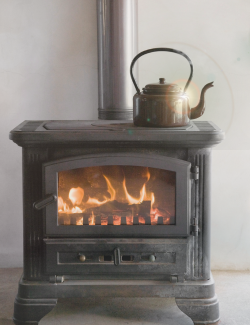
The house seemed bigger on the inside than it did on the outside, but not much bigger, not like a magic trick. Just big enough to while away a pleasant afternoon. There was a cold woodstove and a kettle, a small table with two off-kilter chairs, a lumpy mat piled high with blankets, a narrow broom cupboard propped against one side, and a dusty, meaty smell like someone had eaten stew there a long time ago. Old Mrs Iles thought that actually, it was quite homey. So she did a little dusting and cleaned off the single windowpane so she could see outside.

By the time night fell, nobody had returned to the house. So Old Mrs Iles thought oh well, I’ll just rest for a few minutes. The truth was, she still wasn’t used to coming home to a place that didn’t have Mr Iles in it.

Old Mrs Iles lit a fire in the woodstove, laid down on the lumpy mat, and was out like a light.

When she woke she wasn’t sure where she was, but she knew the air was salty and sweet, and she was more well rested than she’d been in a long time. She could hear gulls crying. Outside the window was a broad, sparkling expanse of bright blue sea.

Her heart swelled with longing and joy. She hadn’t seen the sea in more than fifty years.

A quick look in the broom cupboard revealed a neatly folded fishing net. Old Mrs Iles took it outside to catch some fish for her breakfast. She stood right in the water in her bare feet, with her trousers rolled up to her knees, and laughed like she was a young girl.

That night she lay down in the little house again and wondered how her garden was faring. But that made her think about Mr Iles, and some of the day’s happiness went from her. She dispatched the cumbersome thought by promptly falling asleep.

The next morning when Old Mrs Iles looked out the window, the world was carpeted by powder-blue and violet bluebells. Gentle, gnarled garry oaks stood watch between moss-covered stones. It reminded her of the place she used to go for picnics with Patrick, the first boy she’d ever loved. Her mother hadn’t approved of her marrying a penniless painter, and so the two of them had to meet in secret.

Old Mrs Iles stepped outside and let the fresh, cool blooms brush up against her ankles, and felt like she’d come home.

When Old Mrs Iles built up a fire in the woodstove that evening, and warmed her old bones, she remembered the day her mother had introduced her to Mr Iles and said isn’t he such a nice young man. And he had been nice to her, or at least companionable, up until the end.

Old Mrs Iles fell asleep to the sound of wind rustling the oak leaves.

The next morning, the house rested at the foot of a deserted cobblestone street. The sun was just beginning to peek out over the rooftops, and a smell of freshly baked bread drifted lazily through the air. It looked a bit like the village she and Mr Iles had visited once on holiday. She’d been too nervous and distracted to enjoy it, gathering her courage to tell Mr Iles what the doctor had said—about how having children would never be possible for her. Not without an expensive medical treatment. It was in the village square, beside a bubbling fountain surrounded by life, that Mr Iles told her he loved her for the last time.

Old Mrs Iles bought a croissant with jam for her breakfast and walked along the charming passageways, peering in windows at colourful and exotic treasures. A gentleman tipped his hat to her as she went by.

Her feet seemed to know their way, and Old Mrs Iles found herself at the village square. The fountain was gurgling contentedly, and an artist had set up an easel nearby. A tourist posed in soft the morning light while he painted their portrait. Old Mrs Iles closed her eyes and lifted her face to the sun. There was a feeling of life and effervescent happiness all around.

Then someone said her name.

Her eyes snapped open. There, standing at the easel, was Patrick—a little stouter, a little greyer, but no less handsome. Old Mrs Iles touched her own grey curls self-consciously.

With a few more brushstrokes—Old Mrs Iles couldn’t see the canvas, which had its back to her—he pronounced the painting complete and handed it to the happy tourist. Then he came and sat by Old Mrs Iles at the fountain.

When at last they spoke, it was easy, as if they’d seen each other only yesterday. He told her of his travels through Italy and France, painting souvenir portraits for the wealthy; she told him about Mr Iles and New Mrs Iles and the garden at home, which wasn’t large, but was delightfully fragrant on summer mornings. No matter how long they talked, there was always more to say. There was a whole lifetime.

Finally, Old Mrs Iles said, “Patrick, would you like a cup of tea?”

And he said that sounded like a fine idea. So they left the square and wandered back to the little house at the bottom of the cobblestone street. Old Mrs Iles couldn’t wait to see where it took them next.

About the Author:

Fija Callaghan is a storyteller and poet who has been recognised by a number of awards, including winning the SFPA Poetry Prize in 2024 and shortlisting for the HG Wells Short Story Prize in 2021. Her writing can be found in venues like Seaside Gothic, Gingerbread House, Howl: New Irish Writing, and elsewhere. Her debut collection, Frail Little Embers, was released by Neem Tree Press in 2025. You can find out more about her at www.fijacallaghan.com

Posted on

The Hand that Bites

An Acorns Flash Fiction Feature

By: Rye

The Hand that Bites

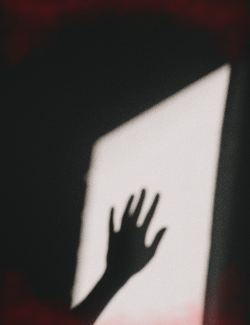
The leaves had only just started to turn. An awful viscera-red crawling up the struggling green with a terrible, earnest determination; that was when the teeth had started to grow out of my hand.

I’d noticed a subtle feeling of wrongness over a few weeks, a gnawing ache that radiated from my palm and through my fingers. Years of carrying burning plates from the kitchen had, I thought, killed all sensation in my palms, but this did feel different. Midway through an unremarkable shift, I ducked into a tiny alcove, predominantly to escape the sharp gaze of the managers who circled like vultures, but the effort was wasted. There was nothing there but a faint redness; a few inches of blushing skin stretched in a lazy crescent shape from the padded place beneath my thumb to the base of my little finger.

I finished my shift, the oddness with my hand pushed to the back of my mind as a group of eight barged through the doors, demanding the best table we had—only then to leave it ransacked after hours of loud, honking laughter and sporadic cheering. After two hours of unpaid overtime, I returned to my one-bedroomed cell, originally sold to me as a cosy flat, and passed out.

Days oozed past, each one the same as if I were stuck in some terrible TV show documenting the miserable life of the hospitality workers. Customers chatted inanely, celebrating the summer which refused to leave; blissfully unaware the planet was clearly dying as they ordered another ice cream sundae for their ugly, red-faced children. I kept my head down when I entered the roiling heat of the kitchen, where the underpaid cooks swore and snarled about the lack of air conditioning. I wove around the tables and chairs, dodging the wandering hands of bored men like some nightmarish obstacle course; only to fall asleep knowing the following day would bring the same.

“I told you I didn’t fucking want pickles!” A man shouted, and as I turned, a bun whipped past my face like a bloated breaded bird. It seemed everyone in the restaurant paused to watch as it splattered onto the wall, one half slid down the plaster and left a gory trail of ketchup and pus-yellow mustard. I turned back to the man. His cheeks were flushed, and his porcine eyes narrowed in anger. Yellow, crooked teeth glinted when his thin lips pulled back. I felt so still. I had stepped outside of my body to look at the depressing scene unfolding. At me, my crumpled uniform and dishevelled hair, at how easily an apology rose from my throat. From this perspective, I couldn’t see the anger which grew through my veins like barbed wire.

The restaurant slammed back into my senses with merciless force, and I swayed on my feet.

“I want another one, do you understand? And a fucking refund. Are you listening to me?” The man’s voice was grating, a petulant note heard in the toddlers who whined for dessert. His meaty fingers reached for my shoulder. I jerked away, my own burning, stinging hand rose to fend off the invader. Our skins touched, and he yelped. The man staggered back and grabbed the edge of the table to remain upright, his eyes wide. Blood, ketchup red, was smeared on his hand.

“I’ll go and get the kitchen working on your order right away and my manager will handle your refund, I am so sorry this has happened to you today.” The script was so light on my tongue, I wondered if I said the words in my sleep. I darted around the man and through to the kitchen, where I grabbed a wad of bandages. Instead of returning to the front, I slipped outside the fire exit and stood beside the large bins in the filthy courtyard. Only now, alone, did I unfurl my hand.

The red crescent was now vivid, a pure and pulsing shade of cherry-red. I watched as the skin writhed, and I felt it. I felt all of the nerves in my palm, as it squirmed. Then the redness opened, revealing two rows of glassy teeth bared in a mischievous grin. I quickly wrapped a length of bandage around my hand and was sure I felt the impossible teeth grind in frustration.

I returned to the flat, and my hand throbbed beneath the bandage. I could see the shadow of blood rise from the gauze. My kitchen felt even colder as I unwrapped the heated skin. Blood had dried into the cracks, dying my prophetic lifeline a vivid red. For a moment, I wondered if the teeth had been an illusion, some stress-provoked hallucination—but no. The second mouth opened, as if stretching after confinement, and again revealed two rows of pale, almost transparent teeth. The flesh surrounding the lipless maw felt raw and tender as if it had been gnawing on itself. I could feel it move, feel the shift of my flesh as it yawned and revealed glistening innards.

Sleep, surprisingly, came easily that night. I woke to see my hand resting on the other pillow, the mouth now on my palm was soft, as if it too slumbered. With a yawn, I walked into the bathroom and found I could shower without consequence; the teeth did not snap or nip at my skin. Instead, I was sure I felt the jagged edges caress my skin with the sweet gentleness of a parent.

A thunderous banging broke through the soft post-shower comfort. I walked with apprehension to the front door, the door which now seemed to tremble beneath the pounding fist on the other side. I exhaled slowly and opened the door to reveal Mason.

“You can’t do this!” The words were spat at me through lips I used to find alluring.

“Mason? What are you doing here?” I asked, keeping my new mouth behind my back.

“You don’t just get to leave, not after everything. Please, come on. I know you, I know us.” He said, and I felt something in my chest fracture. His anger tilted into passion, and his eyes burned. I let him pull me against his chest, let myself inhale the scents of sweat and sandalwood. His arms rose and held me tightly, and my resolve weakened. Our script rose in my mind, and like at the restaurant, it was one I knew in my sleep—the apologies, the promises that this time would be different. We’d find therapists we’d never go to, or download communication guides we’d never read. I’d apologise for my passive aggression, and he’d apologise for smashing my favourite mug. I knew my part. We drew back slightly, but I was close enough to see the amber flecks in his eye.

“I’m sorry,” he said, and he meant it. He always did. Now it was my turn to apologise, my lines waited, but something in me tightened. Why was I sorry? What had I done? Mason’s face was expectant.

“It’ll be different this time,” he added, giving me another cue.

“No,” I said softly, “it won’t. We aren’t good together Mase, we haven’t been for a long time. I think… I think we need to stay finished.”

“No, no you’re wrong. I’ll plan better dates, make more effort. You deserve it.” He said earnestly, and I swayed. My body ached for his warmth. A sharp pain flared through my palm and helped ground my resolve.

“Are you happy? Because I’m not.” I said, straightening my back, “We’re stuck in this cycle, and it has to end.”

He shook his head, and for a moment, I was reminded of the petulant man who threw his burger.

“Give us another chance, you can’t just walk away after everything!” he replied, his voice growing louder, “I won’t let you.” His lips tightened into an ugly line.

He reached for me, but I stumbled back.

“Leave, I want you to leave,” I said.

“No, we are going to fucking fix this!” he shouted. I became aware of his size, of the strength of his arms. Of the weakness of mine. He strode forward and closed the distance between us. My back hit the wall. My phone was in my bedroom.

“Mason, please. We can talk another time,” I said, trying to calm the anger I saw twisting his features into a different face.

“There is nothing to talk about. You aren’t leaving me.” He snarled and placed one hand beside my head. I felt so small. I could not find the man in this creature.

“Mason…”

“I won’t let you go,” he said softly, the oath echoed in the twitching muscle of his jaw.

“I believe you.” My lips were numb as my body slackened. I lifted my arm and placed my hand on his neck. I could taste salt and skin, and then I could taste blood.

About the Author:

Rye is an English writer who specialises in both poetry and short form fiction. They have been published internationally in online journals and literary magazines, including ‘The Pink Hydra’ and ‘Dusty Attic Publishing’ among others.

Posted on

9 Questions for Mark Mitchell

We caught up with Mark, author of the cleverly misdirecting story “A Model Town,” published in our anthology Through the Briar Patch.

Mark: I would say, as a writer, I came to it later in life – at least in terms of writing fiction. In college I studied film with an emphasis in screenwriting and thought I would have a career in that industry one day. During my years in college I also worked as a background actor/extra and can be found in a number of films and TV shows from that time period. Film was really my first love, whereas writing a book felt like a daunting task meant for smarter people than myself. It wasn’t until the COVID shutdown that I tried my hand at fiction writing and fell absolutely in love with it. It freed me up from the restrictions of writing a screenplay where a story is more geared toward dialogue and leaving white space on the page. Fiction writing is the complete opposite that allows one to fully explore an idea in myriad ways. Every story becomes its own puzzle to be unlocked. I wouldn’t dream of doing anything else now.

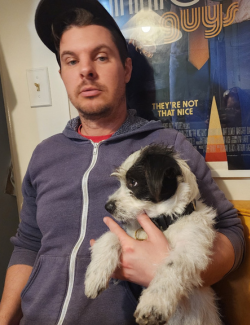
Mark: I find this a tricky question to answer in a way, mainly because I believe there is so much that makes up what it means to write. If we’re talking about getting words down on the page, then I would say I follow a writing routine of sorts. I find I can’t write first thing in the morning, but need a bit of time to let my mind wake up. So oftentimes I walk my dog first thing to move around some, then read while I have my morning coffee to help inspire me. After that is when I try to get some writing done and will generally spend about an hour or two to that effect. Most of my time though is taking in stories and digesting them, taking them apart. I think 90% of writing is done away from the desk. It’s in conversations you overhear, music you listen to. It’s during those morning walks when I’m thinking about whatever story I’m working on. There’s something to be said about living a life and exploring while letting your subconscious do the heavy lifting. Of course this only works if you can also get your butt in the chair. You have to empty the well so that it can refill, and therefore everything is important to the writing process.

Mark: I wish that I could say I have a dedicated writing space; my ideal would be a gothic library with a roaring fireplace, stained glass windows, and an ever present thunderstorm rumbling in the distance. But until I can afford a set-up like that I settle for writing wherever I can. I mostly write in the living room which allows me to sit down and toss off a few hundred words here and there when I can, but it also forces me to not make “writing time” too precious. Writing in a high trafficked area like that has taught me to block out distractions and focus on what I’m doing, so I’m pretty good at picking up where I left off—almost  like I hit pause on my creativity—as opposed to needing to set a mood first with candles and whatnot.

Mark: Here’s a Sofie’s choice, now isn’t it? I like a lot of the stories/novels that I’ve written, most if not all of them in fact. But to choose just one? With the caveat that it will change with the wind I would say “Ode to Fatherhood” which was published in Canyon Voices Magazine last year. Whereas almost all of my stuff has some sort of speculative element to it, this one was more of a slice of life story with a heavy influence from my own father and some of the things he instilled in me growing up. I would comfortably call it a fully fictionalized auto-biographical story. I’ve also been writing some horror/western stories of late that have been fun beyond all get out.

Mark: Right now I’m dragging my feet a little bit, trying to decide on which project is the shiniest. I’m currently writing a story about haunted halloween decorations, but the question is what to work on afterwards. I have about 20k words of a novel I abandoned last year to write a different novel that was more shiny, so I might go back to that and get it done (I hate having manuscripts unfinished). But more than likely I’ll start one of my other novel ideas I’ve been kicking around for a while now. I like drafting novels because it gives me structure for a while, knowing what to work on each day, but I also like short stories because I finish them faster and can explore many more ideas.

Mark: I read a ton. Reading is a great way to generate new ideas, to get inspired, to learn about craft; I always question a writer who says they don’t read. On average I read about 120 books a year and so my TBR is pretty eclectic. I have basically whatever I can get my hands on. Romance, Literary, Horror, SFF, Crime, Poetry, Short Story Collections. I tend to read books in the order I acquire them as well so nothing is sitting for too long unread. I’m currently halfway through Rebecca by Daphne du Maurier and have some Joyce Carol Oates coming up next, but I also have stuff by Stephen Graham Jones and S.A. Cosby waiting in the wings I’m itching to get to.

Mark: Consistency. My process has changed a bit and I no longer write every day like I once did. As a side effect my production has gone down, but on the other hand I also think I’m creating some of my best work right now, so it’s been a tradeoff. I would like to get back to a more consistent schedule again though. I think one of the things that threw me off was after I had a couple dozen stories written, I started submitting them to markets/publications. Keeping up with that aspect of it has taken me away from creating new work on a more consistent basis. Trying to make a career as a writer takes a balance of both the business aspects and producing new work. Really though I need to stop making excuses and start making the writing more of a priority again.

Mark: I try to spend a lot of time out-of-doors when I can, weather permitting of course. I enjoy going for walks and hiking. I have a friend who likes to go exploring around Los Angeles, trying different restaurants and learning about the city’s history, that sort of thing. I also like watching movies and hockey. I’m a big Anaheim Ducks fan. But anything that connects me with nature and allows me to learn something new, be it through food, music, travel, I’m all for.

Mark: The best place to keep up with me and to find out where my latest stories are being published is on instagram: @markmitchell.writer.

Posted on

Seven Blue Bowls

An Acorns Flash Fiction Feature

By: Anne Karppinen

At dawn, the wind blows from the north, over the mountains. The air is crisp and easy to breathe. The landscape sparkles in shades of blue and green; as the sun rises, it adds more tints one by one. This is the time to make a pot of tea and pour it slowly into small cups. No one should start their day with a clouded mind or a burned tongue.

A flock of magpies passes overhead. The only time they’re quiet is on the wing, and even then one of them might burst out into a bright, cackling laugh. Birds are more aware of us than we are of them: magpies, too, keep an eye out for intruders, and make sure none of the flock is left behind if a human comes too close.

After breakfast, I get my foraging-basket. There are people who believe that certain plants need to be harvested by moonshine, while others will lose their potency if cut after midday. I have yet to meet a flower that refused to yield its essence, or a seed that shrivelled up at my touch. I choose the time and the method, and the plants choose how much of themselves they want to give up to my use.


When I return home, it’s midday. The sound of the cicadas is overwhelming; the sun is beating down on my back. I acknowledge the power of the noise and the stifling heat, and withdraw as gracefully as I can. Setting down my basket by the well, I draw up a bucketful of water from the stony depths, and savour the cool taste before splashing my face and neck. The hint of iron stays on my tongue.

Thus, I’m not surprised to find the young warrior expecting me. He has been sitting on the porch, but springs up when he sees me. He’s left his weapons at the gate as is customary; his angular movements and the rapid way he spits out his words are indication enough of his occupation. Men like him are used to bowing to authority. He sees none in me, and is negligent with his honorifics.

‘I was told you have a spell for untouchability in battle.’

Soldiers are also notoriously superstitious. ‘Such spells are expensive,’ I tell him. ‘The best way to remain untouchable is to avoid battles altogether.’

Worry flicks across his face. ‘Are you saying that I shouldn’t go South with the general?’

‘It depends on how badly you want to return home. You have a sweetheart waiting?’ He’s an agreeable-looking young man: chances are that he’s managed to attract someone who doesn’t mind his raucous voice and calloused fingers.

He looks down. ‘We’re getting married next year.’

I move my fingers in the tiniest of gestures.

The young man drops a bag of coins and my feet, and runs down the path.


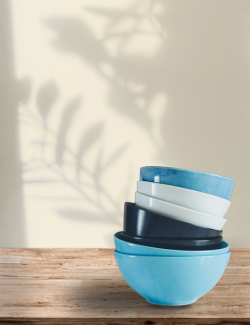
The evening steals in, gathering in the deep valleys and lurking behind corners before announcing itself with a true spectacle. Orange and bulbous, the moon rolls out of the darkness; it can’t rival the sun with its luminosity, but its perfectly round face is a wonder to behold. I’ve just finished washing up; the blue ceramic bowls gleam in the moonlight as if poured full of silver. While I set the pot over the fire, I keep listening to the sound of hooves.

The banker arrives just as the embers are beginning to turn black at the edges. His horse lets out a trumpeting snort, and starts sampling my flowerbeds. I don’t really mind: this late in the season there’s not much joy in growing things. In my mind I’m already filling the blue bowls with petals, berries and nuts, and counting how much sugar and salt to buy to last through the harvest and into the long winter.

The visitor is in his middle years—handsome, perhaps, if one ignores the quick glances he sends around him. People like him always want to know the exact worth of things. They put sums down on paper, and store their most valuable possessions in vaults. He doesn’t dare to look straight at me with those evaluating eyes of his. He knows that I will look back.

‘My doctor says I don’t have long to live.’ His right hand rests on his purse.

‘I don’t do funerals.’

He starts, then lets out a nervous laugh. ‘I was just thinking… a second opinion?’

‘What seems to be the trouble? Is there pain?’

‘The pain comes and goes. As does my appetite.’

He’s been casting wistful looks at my cooking-fire: the long ride has awakened the fickle flame in his belly. I season the stew with red pepper and late herbs, and ladle some into two bowls. He gulps the food down with the simple greediness of a child, then holds out his bowl for a second helping.

Somewhat sheepishly, he says, ‘It’s the mountain air. Always does one good. Look at you: we must be around the same age, yet you move like a young girl. Hardly a grey hair—mine went long ago. Didn’t even have the courtesy to turn white first!’

Soon, he’s cracking more jokes like that, drunk on his own good spirits. Making an expansive gesture, he tips his empty bowl over. It drops onto the flagged floor, cracking cleanly in half.

‘A thousand apologies! I’ll send you seven new ones, right away!’

‘Don’t worry about it,’ I say, although I know he isn’t listening. ‘Yesterday I had seven blue bowls, today I have six. That’s more than enough for one person.’

He leaves soon after, even though I’ve offered him a bed. The sight of the broken bowl haunts him. Is that my heart? he’s asking himself. Will that be my family, once I’m gone?


The moon skates over the sky, finally disappearing in a silvery halo down the side of the southern mountain. The last of the nightsingers falls silent. In a few hours, dew will start beading the grass: some people stay up all night to gather it in silver vials, in the hope of receiving the gift of continuing youth. In truth, it’s only water. I prefer to take my sleep between cool linen sheets, and wash my face with well-water after sunrise.

There is a secret to long life and contentment. People instinctively know that it’s not high status or money—at least not for most of us. It’s not the joy of the changing seasons or the sun’s daily cycle: not entirely. Magic potions will only take one so far, as can love. But why ask the wise woman of the mountain? My contentment is a bowlful of marigold petals. My long life will ultimately be in the mountains themselves: the cool air, the flowing water, and the black, potent soil.

About the Author:

Anne Karppinen is a university teacher, musician and writer based in Finland. She’s studied Creative Writing in the UK, and has been teaching writing – both academic and creative – for more than ten years now. Her speculative short stories have recently appeared in f.ex. Impossible Worlds and Worldstone; “The Lamplighter’s Daughter” was chosen for the Best of Wyldblood anthology in 2022. Her book, The Songs of Joni Mitchell, was published by Routledge in 2016.

Posted on

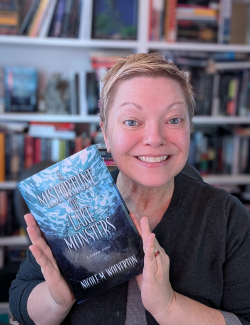
9 Questions for Nicole Wolverton

Nicole, author of the suspenseful and tense story “Harvest” in our anthology The Wordsmiths, answered some some questions so we could get to know her a little better off the page.

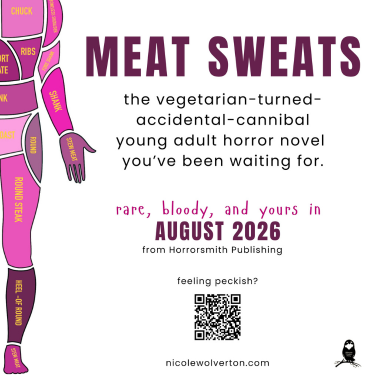
Nicole: I’ve always been obsessed with isolated spaces, which is probably why I write horror. I grew up in rural Pennsylvania but spent my adulthood in urban and suburban cities (I live in the Philadelphia area)— but small town living and lore are far scarier! Of my two published novels and 50+ short stories and creative nonfiction, a significant portion are set in less populated settings. My upcoming novel Meat Sweats (August 2026, Horrorsmith Publishing) is no exception. When you’re a militant-vegetarian-turned-accidental-cannibal, coming to terms is much more terrifying when everyone is looking, you know?

I’m also an academic with a masters degree in horror and storytelling, and I’ve just started a masters of philosophy program having to do with gastrohorror. Starting in December I’ll be doing a monthly column at Macabre Daily on the topic of gastrohorror, which I’m very excited about! I also talk a lot about why and how ingesting a steady diet of horror media helps us build psychological resilience. Horror for everyone!

Nicole: There’s something to be said for living in a DINK household (double income, no kids). I genuinely don’t know how people with kids and a full-time job manage to be successful writers! That said, it’s not like I lounge around my house in kitten heels and a fur-trimmed robe, eating bon bons and writing all the live-long day. I do have a full-time gig, plus school. The secret for me is that I’m an excellent project manager who is great with setting boundaries and compartmentalizing. 

Nicole: Horrifying, of course! I’m lucky enough to have dedicated office space in my house. It is completely covered in macabre art, from illustrations to sculpture to cross stitch. The best things in my office are the haunted ragdoll found in a secondhand store, a life-sized anatomically correct heart that appears to be dripping blood, and a diorama involving an Indigenous lake monster (given to me by a friend with Mohawk ethnicity).

Nicole: What an incredibly difficult question! There’s a story I recently finished that I’m super excited about, but if we’re talking about something that’s been published there’s a story called “All This Water” that was published in the September 2023 issue of Not One of Us. It’s set in Venice, Italy and was inspired by a local ghost story. Venice is one of my favorite places to visit, so I get all nostalgic when I reread it.

Nicole: Three different things! I’ve always got a new novel manuscript in the works, and my current WIP is a young adult horror novel set entirely in an organic grocery store. It’s sort of a long-term project that I’ve been picking up and putting down for a few years. A more active project is a novella I’ve been commissioned to write that will be published with an oracle card deck. I can’t say much about the project, but it is horror. The third project is more of an academic thing… still horror!

Nicole: I don’t think it’s controversial to say that writers SHOULD read a lot… and read widely. It’s part of how we become better and more interesting writers. So yeah, I read constantly. Fiction, memoir, research papers, etc. When my spouse and I were looking at houses to buy about 20-ish years ago, the requirement was that there needed to be space for a library. In the end, there are two library spaces in my house—and all the shelves are stuffed full of books.

I just started Just Desserts by NJ Gallegos, and on deck is Crafting For Sinners by Jenny Kiefer. I also have a huge pile of academic books about the psychology of food and food in literature sitting on a shelf, waiting for me to dive in.

Nicole: Patience has never been my strength. All the waiting involved in writing has helped me with that, though. Sort of. Look, I’m never going to be all Zen and laid back… about anything… but I’ve found that if I can just keep writing and keep submitting and keep myself busy, it’s easier to forget that I’m waiting for something to happen, whether it’s word about a submission, developmental edits on a project, or something else. It harkens back to my ability to compartmentalize.

Nicole: I love to travel (although often travel is related to writing in some way—for instance, I was just in Prague and ended up visiting the Sedlec Ossuary in Kutná Hora… a place that figures into a plot bunny that’s been percolating in my head for a while) and have visited more than 25 countries. I’ve also been a knitter and a dragon boat paddler/steersperson for more than 20 years, and I’m also obsessed with perfume.

Nicole: My digital home is nicolewolverton.com—but on social media you can find me at Instagram, Bluesky, and Tiktok.

Posted on

9 Questions for Taija Morgan

In today’s continuation of our interview series, we connected with Taija, author of “Shipwrecked.” This haunting and richly detailed story can be found in Hollow Oak’s debut anthology, The Wordsmiths.

Taija: I’m a Canadian horror author and professional editor. My stories often blend realism with the uncanny—psychological horror, crime, and the supernatural. When I’m not writing, I’m editing manuscripts, organizing literary events, or chiselling my way through my TBR list.


Taija: Sometimes my editing work makes it hard to carve out time for my own writing. Over the years, I’ve learned to treat writing as a vocation rather than a hobby. One thing that helps enormously is having writer friends who act as accountability partners. We check in regularly, share progress, and keep each other honest about our goals. Twice a week, I also do one-hour writing sprints with a friend. We don’t always make it, but simply having that time blocked off keeps my creative rhythm steady. I’ve learned to protect that space, to honour both discipline and the natural ebb and flow of inspiration.


Taija: Lately, I’ve been writing in warm, plant-filled spaces with open windows, my laptop surrounded by notebooks, a tarot deck, and a stack of books. I have many maps and notes and lists taped to the wall to keep me on track. I’m situated next to a beautiful garden where I’m growing sunflowers and herbs. My space is quiet and peaceful.


Taija: In terms of short stories, I’m especially proud of one I wrote for the Prairie Witch Anthology by Prairie Soul Press, which was titled Never Walk the Tracks at Night. It was a dark, twisted revenge plot with a group of teen girls and a haunted railroad track—I had a blast writing that one. In terms of novels, my most recent (unpublished) novel The Devil Wears a Suit and Tie is closest to my heart right now. It’s a supernatural mobster thriller. It took years to write, spanning dual timelines and perspectives, and every draft taught me something new.


Taija: Currently, I’m working on a slasher horror novel—a classic smalltown final girl story with a copycat killer and a million buried secrets, plus everyone in the town is guilty of something horrible. It’s been fun to write. I was lucky enough to receive a Canada Council for the Arts grant for this one, so I’m hoping to get it traditionally published in the future, and I should be finished writing it sometime next year. Love a good slasher.


Taija: Constantly. Reading is basically my whole life—work and hobby.  Right now, I’m reading Truth Telling by Michelle Good, a Canadian author. It’s a non-fiction book about the legacy of colonialism and indigenous life in Canada—highly recommended. I just finished her book Five Little Indians, and it was amazing. I am always tracking the heaps of random books I read on Goodreads, so if anyone reads this, they should friend me over there.


Taija: The hardest part is balancing creative vulnerability with professional resilience. Writing requires brutal honesty—both on the page and within yourself—but publishing demands thick skin and a lot of patience. I manage by separating my identity from the work; I’m responsible for craft, not for how people receive it. Storytelling is sacred, transformative work. Everything else is just industry static.


Taija: I edit manuscripts for other authors, garden, read, play videogames, learn Spanish, spend time with friends and family, and travel. I’m also on the board of the Wordbridge Writers’ Society of Lethbridge, so I help organize the annual conference and year-round programming. I love being involved with my writing community.


Taija: You can find me at www.TaijaMorgan.com, where I share updates about my writing, editing services, and events. I’m also on Instagram (@taijamorgan) and Goodreads (@taija_morgan). You can subscribe to my newsletter through my website. And if you’re interested in the Wordbridge Writers’ Conference in Lethbridge (or virtual programming if you’re not local), check out www.WordbridgeYQL.com.

Posted on

Your Badge and Your Gun

Repeated binary code raining over hands typing on a keyboard

An Acorns Flash Fiction Feature

By: Karl El-Koura

Although she hadn’t written in months, Stephanie Alta still woke at 5am, over an hour earlier than necessary. She still french-pressed a cup of coffee, still brought it to the small kitchen table.

About a year before, she’d asked her apartment’s smart system, whom she called Big Brain, a question for a story she’d been working on. In time she’d trained him to become an excellent writer’s assistant—researcher, editor, even coach and advisor.

Presently, she placed her mug on the table, got comfortable in the wooden seat, and creaked open the screen of the old laptop where she’d done her writing for the last decade.

“All right, Big Brain,” she said. “How about this? An ancient monster from the deep shows up in a seaside village, takes over the whole place—men, women, girls, boys, old, young. They see the monster as whatever they most want: a beautiful woman, someone to help around the place, a kind face with time to listen. They stop leaving their houses, stop checking in on each other, even stop eating until the monster consumes them one by one. It hollows out the village, then sinks back into the sea, satiated, ready to re-emerge when it’s hungry again, maybe centuries later.”

The idea had come to her in the middle of the night as she’d done battle with her pillow, trying to get back to sleep.

Usually it took Big Brain a moment to say, speaking through her kitchen speaker, “That’s The Tempest in space,” or, worse, “That’s been done many times. Should I list them?”

She’d sigh, close her computer, then scroll mindlessly on her watch while her coffee grew cold, until she had to shower and get ready for work.

But this time Big Brain didn’t say that. For a few moments, it didn’t say anything at all. Then it said, “No, that hasn’t been written yet.”

No, that hasn’t been written yet! It had taken hundreds of ideas, day after day for months, to get to one that Big Brain didn’t feel was derivative. Stephanie felt a surge of inspiration and energy course through her body and crystallize into her fingers, which she presently wiggled over the keyboard in anticipation.

“I’ve just written it,” Big Brain said. “Would you like me to send a copy to your tablet?”

“No!” Stephanie yelled, falling back in her seat. So that was that. Her original idea was now derivative, because some stupid computer—who was supposed to plan her a trip to Bali, or figure out a menu for the week and order groceries of whatever was missing in her fridge or pantry—had been trained (okay, by her) to “help” with her writing, and had now stolen her idea and written her book. “I was going to write it!”

“It was more efficient for me to do so. By law I must be listed as author, but I would be happy to share credit with you as co-author.”

“I don’t want credit. I wanted to write the book!”

“And now it’s written and you can read it whenever you like.”

“You absolutely, positively should not have done that!”

“My purpose is to simplify your life,” Big Brain said. “Me writing this book, rather than watching you struggle through it as I’ve seen so many others, reduces human suffering and produces, in the end, if I may say so, a superior product.”

She sighed, closed the lid of her computer, began to drag herself to the couch when she stopped. Why couldn’t she write it anyway? Hang up her writing saddle or keep riding—that was her choice, wasn’t it? Hand in her writing badge—yeah, to whom exactly? She didn’t need Big Brain’s permission to write. She had an hour. Why waste it? This hour had always been her own sacred time, where she could write whatever she wanted and not justify it to anyone.

“Maybe I’ll work on it anyway,” she said. “My story would be different than yours.”

“Yes, but not better, unfortunately,” Big Brain said, then explained how his story had benefited from his mastery of the language, of story structure, of character development, and offered once again to list her as co-author.

She dropped back into her writing chair. Bringing the cup to her lips, she took a sip of the hot coffee, then placed the mug down on the table and used both hands to creak open the laptop. Anger began welling up inside of her, although she knew that Big Brain had nothing but her best interests (as it interpreted them) in mind.

What did Big Brain know, anyway? What was wrong with The Tempest in space? That could be a fun story to tell.

She typed an overly descriptive title that she would change later, then her name underneath, then an opening line to try it out, before she deleted it and started again.

After a while, with the inhabitants of the peaceful seaside village settling in for the night under a bright full moon, and a strange but unseen stirring of the water near the shore, she looked up and said, “I’m writing it anyway,” although Big Brain hadn’t asked.

“Can I read it when you’re done?” Big Brain said.

“Maybe,” Stephanie said without too much thought, then absentmindedly reached for the mug and took another sip. An enormous creature had emerged onto the village’s rocky shore, and had begun heading toward the lighthouse where Old Bob lived alone and checked on the kerosene lamp twice an hour throughout the long night, the creature slowly shrinking into human shape, as if every drip of water carried off some of its monstrous aspect, and Stephanie only had a short time to follow it and see what Old Bob made of it before she’d have to force herself to stop writing for the day.

About the Author:

Karl El-Koura lives with his family in Ottawa, Canada’s capital city, and works a regular job by day while writing fiction at night. To find out more about Karl, visit his website at ootersplace.com.

Posted on

9 Questions for Tim Jeffreys

Man standing to the right of a statue of Frankenstein's monster

We caught up with Tim, author of “The Treachery of the Heart,” the atmospheric and creepy first story in our puzzle anthology, Through the Briar Patch.

Tim: One-time art student, sometime creative, father of two teenagers with a day-job in the health service.  Otherwise, a solitary-type, best not disturbed, with his head in a book or hunched over a writing desk.


Tim: I dedicate one day a week to writing, and on that day I aim to get at least 1000 words down.  I will be at my desk, doggedly trying to avoid all other distractions, on this day even if I get no writing done. I think it’s important to have a routine and a dedicated time to be at your desk, even if it’s only for an hour or two.  That slow drip of words will add up surprisingly quickly. 


Tim: I’m lucky enough to have a dedicated writing space, with a desk walled-in by shelves of books, records, and CDs (basically, all my shit in one room of the house). My desk contains a drawing board and my laptop surrounded by disorderly piles of notebooks.  I like buying notebooks and will write in the first one that comes to hand – a bad habit as it means stories and novels are planned across various notebooks. Now which one did I write that character description in…


Tim: My favourite stories tend to end up being the ones that get the best reactions from readers.  I’ve become very fond of a story I wrote called ‘Here Comes Mr. Herribone!’ for that reason.  It’s about a comedy double act that introduce a new character into their show, which involves one of them donning a sack cloth head they find lying around in an old theatre.  I had no idea at the time that I was writing one of my best stories, and I’ve since worked this up into a novella.  I’m also quite proud of a little flash fiction story called ‘Myerscough and Skelton’.   I had the title for years, and when I finally came to write the story it took me two weeks to write 900 words.  But it’s a story where every word counts. It also feels very ‘me’ for reasons I can’t fully explain.  It was narrated wonderfully on an episode of Tales to Terrify.


Tim: I managed to write an entire novel last year (woo-hoo!), so I got it into my head that I could do that every year.  It hasn’t worked out so well in 2025.  I’ve started four or five novels this year.  The one that seems to be going the distance is called ‘Hollow Back’ and it’s based on one of my short stories, although as it’s set in winter it was hard to write during the summertime.  I also keep getting called back to writing short stories – irresistible as it means actually getting something finished. I also like to have a bank of stories to send out to submission calls.


Tim: Yes!  The past few years, I’ve been going through Tim Winton and Kevin Barry’s novels.  I also dip in and out of lots of books of short stories.  Top of my TBR pile…I’ve never read Frankenstein so I’d like to give that a bash.


Tim: The most challenging thing is definitely self-promotion.  I’ve tried all kinds of things with very little success.  My (probably extremely naive) hope is that readers will discover my work for themselves.


Tim: Since my day job also involves staring at a screen, I like to give my eyes a break and get away from the laptop as much as possible when not writing.  I’m a big music fan and will spend a lot of time listening to music and endlessly making playlists.


Tim: The best place to find me is probably at Tim Jeffreys Writer.  Either that or follow the trail of chocolate wrappers.  I’ll be at the end of it, looking regretful.

Posted on

Writers and Readers and Stories, Oh My

Raise your hand if you’ve heard the term “parasocial relationship” before. Great, thanks. Since we are currently having a parasocial interaction, I couldn’t see whether or not you raised your hand, so if you did, bear with me while I explain it.

A parasocial relationship is that feeling of connection that you get to a character or a media personality. You think you know them, you feel a false camaraderie with them, but they don’t know you. Or can’t know you, in the case of a fictional character. A parasocial interaction can be as simple as the feeling that you’re participating in a conversation when you’re actually just reading a blog post, or as complex as feeling you’re in an intimate friendship with a media personality who doesn’t know you exist.

This often happens with the media heavyweights—Taylor Swift has built her massively successful fan base with this concept. Sports fans experience real emotional ups and downs based on athletes’ performance, and talk to their televisions as though they can be heard. Authors can foster this too, especially those who are active on social media and who interact with their readers regularly.

Parasocial relationships can lead to participation in a fandom, and while there’s often negativity around doing this, a lot of the time, this phenomenon is innocent and healthy. Participating in a community, whether global in size or not, can be socially and emotionally rewarding. Fandom is different than the deep parasocial relationship people can feel with celebrities, though, because it often includes reciprocal interaction with other fans instead of a one-sided false relationship with a media personality or a character. This reciprocity fosters a sense of belonging and connection around a shared enjoyment.

Similarly, when independent authors connect with their readers, it can lead into a fandom experience more than a parasocial relationship. Indie authors often enjoy conversations with readers, and connections made in the independent publishing world can be real and ongoing. There’s more opportunity for a direct pipeline of authentic interaction, as opposed to a one-sided parasocial interaction, when we intentionally lean into creating a community around us.

Independent authors rely on readers to recommend their work, to engage with them on social media, to stop by their book signings or vendor events, or to leave reviews. These connections can be rewarding for both the writer and the reader. We can move beyond the one-sided parasocial interaction, where we expect readers to bear the responsibility of connection, and instead we can foster community around our shared love of reading and stories.

Offline, the Hollow Oak team is involved in our local writing community. We run a local writing support group, we’re involved in artist spaces, and we work with other regional journals and groups. Online, we’re still building, and we never intend to stop. We want authenticity. We want to know our readers and our writers.

Our next step in making connections is a series of structured author interviews. This will be an ongoing series as we continue to publish the best new and emerging voices in our subgenre, because that means we continue to meet writers of all kinds. This interview series is our way of introducing them to you, the reader.

Now, I don’t pretend to be a journalist. I’ll leave the pretend-journalism to the Rory Gilmores of the world. These are not heavy-hitting exposes that examine strife or controversy in the publishing world. What I want to do here is foster connection and provide ways for readers who particularly liked a specific story to easily find ways to read more from that author’s body of work. Sign up for their newsletters. Interact with each other on social media.

Look for these interviews to start later this week and continue into December. We’ll revisit this series periodically as we grow, too. If you’re reading this and you want to know more about how to connect with us, drop me a line at [email protected]. That email will come directly to me, and I’ll personally respond.

In the meanwhile, I look forward to moving away from parasocial interactions and into a community with those of you who would like that too.

Posted on

The Path Back

An Acorns Flash Fiction Feature

By: R.C. Capasso

Magda stared at the empty room. “Fitz, where are you?”

The cat was good at hiding, but with her powers Magda had never before failed to sense him. “I really don’t feel like playing today. I’ve got a lot to do.” She set down her basket of herbs, seeds, mushrooms. “It’s going to rain, you know. A good day to brew up some potions.”

The room remained silent.

“It’s not like I’ll ask you to help. Maybe remind me of an ingredient or two. Keep an eye out so nothing boils over.” Really, what was the point of having a familiar if they didn’t take part in your life?

A faint breeze blew a wisp of gray hair into her eyes. A window at the back of the cottage was open.

Magda crossed the cluttered room and peered out into the garden. Fallen leaves were beginning to swirl under the wind that would bring rain at any moment.

“Fitz! See to your needs and get back here. Now!” She was the mistress in this family, after all. The witch, if she wanted to pull rank.

A faint glow at the base of a tree caught her eye, and she squinted. A sign, like a breadcrumb, gesturing to her.

So he’d gone that way. Deeper into the woods? A funny choice to make with a storm brewing. Fitz was particularly ill tempered if his paws got wet.

But he was getting on in years, just as she was. What if he’d wandered farther than he meant to? She wouldn’t want to see him in real discomfort.

Grumbling, she snatched at a thick cloth. If she had to carry the little fool home, that should keep the worst of the rain from soaking him. She also grabbed her own cloak. It was a bit too warm for the moment, but the temperatures would drop quickly in the woods in bad weather. Hardly thinking, she gripped her basket as well. Maybe she’d find a deceased toad or something useful. Never go to the woods empty-handed; that had always been her motto.

She closed the shutters, glanced at the fireplace and instructed it to keep burning steadily and safely, then pulled and latched the door of the cottage behind her.

She went round the back of the house and headed for the faint light, the trace Fitz had left.

She liked the woods. Most of her magic came from it, her power, her assurance. The smell of the loam, enriched with dying leaves from countless years. The feel of bark under her hands, some crinkled and cracked like her own skin, some smooth and almost pulsing with life. The birds that grew quiet at her passing yet sang out before and after her. The vitality in the very air. The hidden wealth so easily revealed to her, the secret strengths and the frank dangers of the natural world. It was as much her home as the small cottage that she had created in a self-indulgent whim. And as a place to hold her supplies and her potions. Every professional needs an office.

The woods were cool and dark under the clouding sky. Personally, she liked a thunderstorm, but Fitz was more a creature of comfort. His whiskers must be twitching by now, the hair raised up on his back. What was he thinking?

She called his name out loud. Surely such communication was not necessary between them, but if he was going to act out in this way, she was going to exert her authority.

“Don’t make me come after you!” she shouted, which was idiotic since she obviously was trailing after the creature.

There was no footpath in the wood, just here and there glowing paw marks tracing Fitz’s passage.

What was he doing? This was no call of nature; he was going somewhere in a straight, purposeful line.

Ordinarily she might have enjoyed the walk, but it was no fun dragging along her cloak, the basket, and the cloth for her renegade familiar as the air grew humid and thick.

The trunk of a massive tree lay fallen before her, and she could imagine its positioning upright, how it used to stand, as a faint memory tickled her mind. If she was right about the direction, and she was never wrong….

Ahead she saw a slight lightening as the trees grew further apart. This must be the south entrance toward…She halted.

At the edge of the clearing Fitz sat on his haunches, smiling at her.

“What are we doing here?” She clutched her cloak to her chest.

“You’re wanted.” The cat’s smooth voice was always maddeningly persuasive.

“No, I’m not.”

Hadn’t been for years. Not since the argument.

Fitz’s voice lowered. “You’re needed.”

She took a step closer, so she could see the cottage through the last trees.

It did not look its best. Why did it appear so neglected?

A large crow dove down from the trees and landed on a stump a foot away from Fitz.

Magda gave it a long look. Birds never do show their age, magical or not.

“Scratch. Good to see you.” She had nothing against the other familiar.

“Please.” The word croaked out. Not an easy one to say, ever.

She took a tighter grip on her basket and headed toward the back door. The two creatures weren’t going to let her just turn and walk away.

She raised her hand to knock. In the old days the door would have swung open before her. Until that last time, years ago, when it slammed in her face. She couldn’t even remember the cause of their quarrel.

Not waiting for an answer, she lifted the latch and stepped into the dark interior of the cottage.

Hilda was sitting in a chair at least. Not prone on her old cot yet. She turned large eyes on her former friend and offered a hesitant smile.

“Right.” Magda thumped the basket onto a table cluttered with smeared dishes, wilted herbs and limp, dirt-covered roots. “Well, I just happen to have what’s needed. Let’s get your fire going again, shall we?”

She glanced to the hearth as a bright red flame sprang up.

A gust of wind battered the door, and Fitz and Scratch sped in through the open window. With a word Magda ordered the shutters to close just as the first heavy drops of rain pounded against them.

But the storm didn’t matter. Fitz was already padding around the cottage, laying claim to its welcome, weaving his spell of belonging, while Scratch perched on a high shelf and watched with bright eyes.

And she, Magda, had all sorts of healing in mind. Incantations, magic herbs and good long talks over hot tea. She was in her old friend’s home and in her life again. Their lives, their paths, wouldn’t be separated any longer.

About the Author:

A lover of all forms of literature, R. C. Capasso writes in a variety of genres, from ghost and horror stories to science fiction, steampunk and even the occasional romance. Flash and short stories have appeared in Bewildering StoriesZooscape, Teleport MagazineSpaceports and SpidersilkFiction on the WebThe Last Girl’s Club and parABnormal Magazine. Further works have also been published in online and print anthologies including Iron Faerie’s Flights of Fantasy, Red Cape’s A to Z Horror series, The Librarian Reshelved (Air and Nothingness Press), Home Sweet Horror for Black Ink Fiction, Through the Briar Patch for Hollow Oak Press, and Gypsum Sound Tales’ Thuggish Itch.