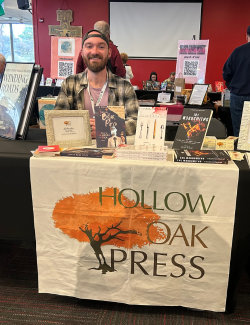
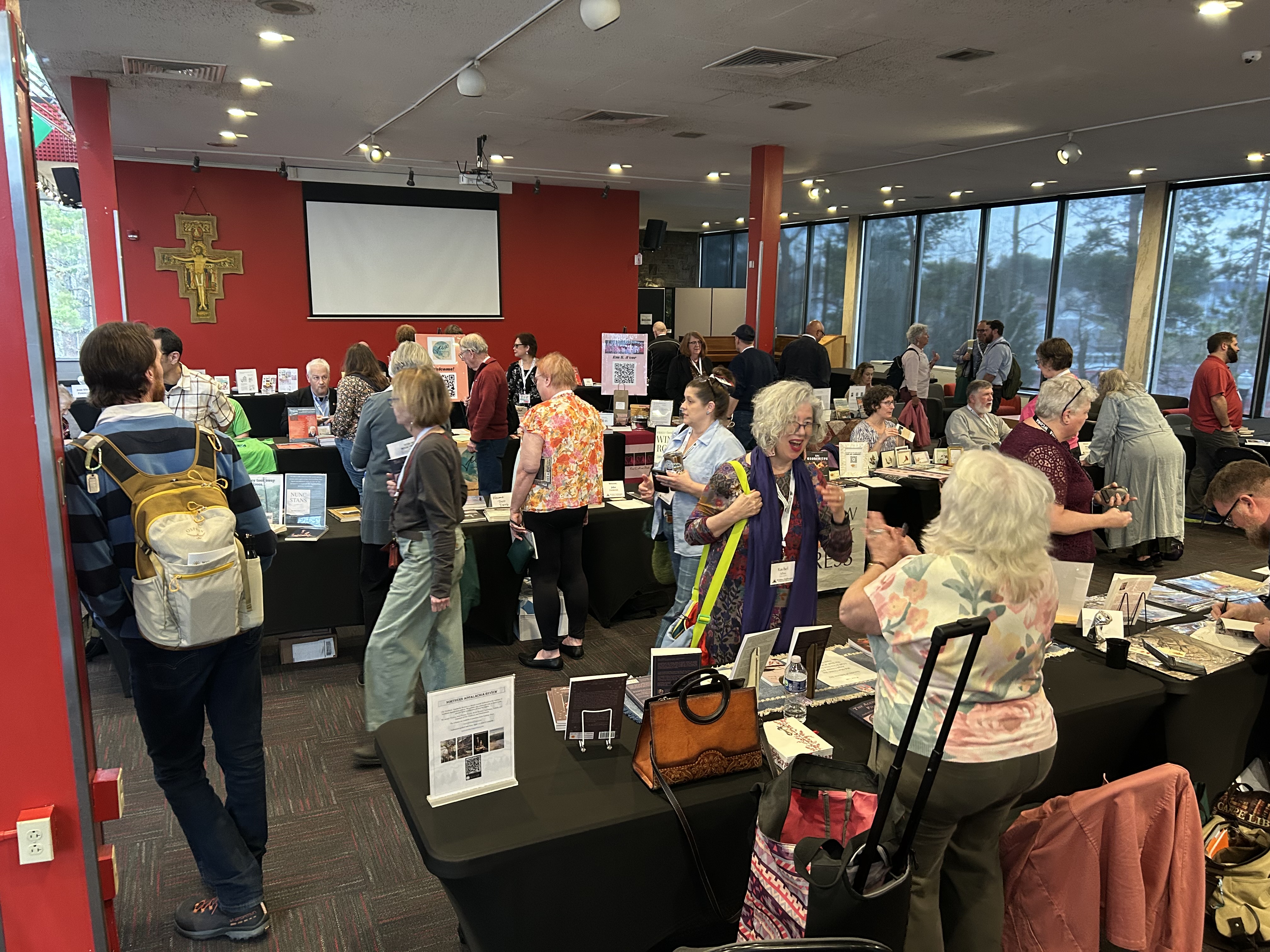
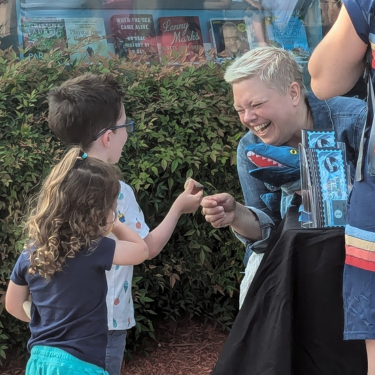
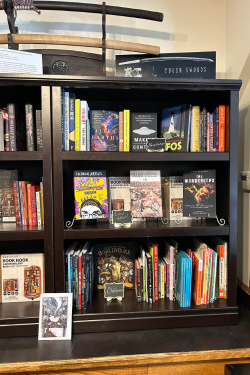
Two of our team members attended the Writers Conference of Northern Appalachia (WCoNA) deep in the Appalachian countryside in Cambria County in our home state of Pennsylvania.
Writing is an isolative act, and if you’ve had more than a few minutes’ worth of conversation with me about writing, you’ve probably heard my impassioned speech about how writers need writers. Usually I sing the praises of writing groups, but today? Today’s about feeling part of something even bigger.
Conferences.
WCoNA is a real gem. It’s big enough to walk away each year with new connections, but intimate enough to have real conversations with the presenters and attendees. The focus is on craft, and the full day on Saturday offers five sections, each with multiple topic options to attend. There’s something for everyone, from poetry to fiction, from memoirists to novelists.
What makes this my favorite conference, though, is the focus on place.
WCoNA holds up a mirror for me and then says, don’t look into your own eyes. Look around. Look behind and beside yourself.
All of the attendees are connected deeply by our sense of place, and even though we have sessions on marketing and building craft and submitting our work, thematically the organizers wrap us up in Northern Appalachia.
And I love it.
From the panel and open mic on Friday night to the keynote address Saturday morning, we were steeped in the experiences of the rust belt. Of coal and oil and natural gas mining that stripped our land and our families bare. The unspoken kinship of our grit and resilience, that rose out of the clouds of dust from our dirt roads on dry days. The Appalachian wilderness that fostered the wildness in our hearts.
WCoNA is a reminder of who I am, and of the importance of introspection. I don’t necessarily write about Northern Appalachia, although some of my pieces are set here. I don’t necessarily center place in my writing, although it’s certainly informed by my experiences here. We are all a sum of our parts, and place is an important one. If you haven’t done much introspection on place, I’d strongly encourage it. Being intentional about place in your writing adds depth and layers to your story, and creates a richer and more memorable experience for your readers.
This weekend, I had the honor to sit among a group of like-minded people, all acutely attuned to how this place has molded us.
We caught up with Mark, author of the cleverly misdirecting story “A Model Town,” published in our anthology Through the Briar Patch.
Tell us a little bit about yourself.
Mark: I would say, as a writer, I came to it later in life – at least in terms of writing fiction. In college I studied film with an emphasis in screenwriting and thought I would have a career in that industry one day. During my years in college I also worked as a background actor/extra and can be found in a number of films and TV shows from that time period. Film was really my first love, whereas writing a book felt like a daunting task meant for smarter people than myself. It wasn’t until the COVID shutdown that I tried my hand at fiction writing and fell absolutely in love with it. It freed me up from the restrictions of writing a screenplay where a story is more geared toward dialogue and leaving white space on the page. Fiction writing is the complete opposite that allows one to fully explore an idea in myriad ways. Every story becomes its own puzzle to be unlocked. I wouldn’t dream of doing anything else now.
How do you find time to write?
Mark: I find this a tricky question to answer in a way, mainly because I believe there is so much that makes up what it means to write. If we’re talking about getting words down on the page, then I would say I follow a writing routine of sorts. I find I can’t write first thing in the morning, but need a bit of time to let my mind wake up. So oftentimes I walk my dog first thing to move around some, then read while I have my morning coffee to help inspire me. After that is when I try to get some writing done and will generally spend about an hour or two to that effect. Most of my time though is taking in stories and digesting them, taking them apart. I think 90% of writing is done away from the desk. It’s in conversations you overhear, music you listen to. It’s during those morning walks when I’m thinking about whatever story I’m working on. There’s something to be said about living a life and exploring while letting your subconscious do the heavy lifting. Of course this only works if you can also get your butt in the chair. You have to empty the well so that it can refill, and therefore everything is important to the writing process.
What does your writing space look like?
Mark: I wish that I could say I have a dedicated writing space; my ideal would be a gothic library with a roaring fireplace, stained glass windows, and an ever present thunderstorm rumbling in the distance. But until I can afford a set-up like that I settle for writing wherever I can. I mostly write in the living room which allows me to sit down and toss off a few hundred words here and there when I can, but it also forces me to not make “writing time” too precious. Writing in a high trafficked area like that has taught me to block out distractions and focus on what I’m doing, so I’m pretty good at picking up where I left off—almost like I hit pause on my creativity—as opposed to needing to set a mood first with candles and whatnot.
Tell us about your favorite story that you’ve written.
Mark: Here’s a Sofie’s choice, now isn’t it? I like a lot of the stories/novels that I’ve written, most if not all of them in fact. But to choose just one? With the caveat that it will change with the wind I would say “Ode to Fatherhood” which was published in Canyon Voices Magazine last year. Whereas almost all of my stuff has some sort of speculative element to it, this one was more of a slice of life story with a heavy influence from my own father and some of the things he instilled in me growing up. I would comfortably call it a fully fictionalized auto-biographical story. I’ve also been writing some horror/western stories of late that have been fun beyond all get out.
What are you working on right now?
Mark: Right now I’m dragging my feet a little bit, trying to decide on which project is the shiniest. I’m currently writing a story about haunted halloween decorations, but the question is what to work on afterwards. I have about 20k words of a novel I abandoned last year to write a different novel that was more shiny, so I might go back to that and get it done (I hate having manuscripts unfinished). But more than likely I’ll start one of my other novel ideas I’ve been kicking around for a while now. I like drafting novels because it gives me structure for a while, knowing what to work on each day, but I also like short stories because I finish them faster and can explore many more ideas.
Do you read much? If so, what are you currently reading and what’s at the top of your TBR pile?
Mark: I read a ton. Reading is a great way to generate new ideas, to get inspired, to learn about craft; I always question a writer who says they don’t read. On average I read about 120 books a year and so my TBR is pretty eclectic. I have basically whatever I can get my hands on. Romance, Literary, Horror, SFF, Crime, Poetry, Short Story Collections. I tend to read books in the order I acquire them as well so nothing is sitting for too long unread. I’m currently halfway through Rebecca by Daphne du Maurier and have some Joyce Carol Oates coming up next, but I also have stuff by Stephen Graham Jones and S.A. Cosby waiting in the wings I’m itching to get to.
What’s the most challenging thing about being a writer, and how do you manage it?
Mark: Consistency. My process has changed a bit and I no longer write every day like I once did. As a side effect my production has gone down, but on the other hand I also think I’m creating some of my best work right now, so it’s been a tradeoff. I would like to get back to a more consistent schedule again though. I think one of the things that threw me off was after I had a couple dozen stories written, I started submitting them to markets/publications. Keeping up with that aspect of it has taken me away from creating new work on a more consistent basis. Trying to make a career as a writer takes a balance of both the business aspects and producing new work. Really though I need to stop making excuses and start making the writing more of a priority again.
What do you do when you’re not writing?
Mark: I try to spend a lot of time out-of-doors when I can, weather permitting of course. I enjoy going for walks and hiking. I have a friend who likes to go exploring around Los Angeles, trying different restaurants and learning about the city’s history, that sort of thing. I also like watching movies and hockey. I’m a big Anaheim Ducks fan. But anything that connects me with nature and allows me to learn something new, be it through food, music, travel, I’m all for.
Where can readers find you?
Mark: The best place to keep up with me and to find out where my latest stories are being published is on instagram: @markmitchell.writer.
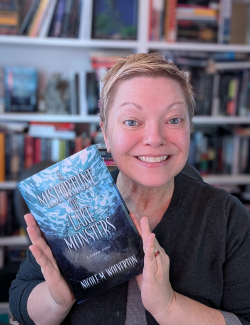
Nicole, author of the suspenseful and tense story “Harvest” in our anthology The Wordsmiths, answered some some questions so we could get to know her a little better off the page.
Tell us a little bit about yourself.
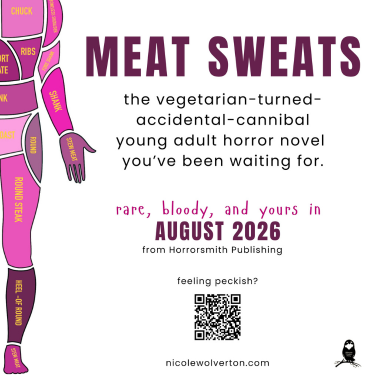
Nicole: I’ve always been obsessed with isolated spaces, which is probably why I write horror. I grew up in rural Pennsylvania but spent my adulthood in urban and suburban cities (I live in the Philadelphia area)— but small town living and lore are far scarier! Of my two published novels and 50+ short stories and creative nonfiction, a significant portion are set in less populated settings. My upcoming novel Meat Sweats (August 2026, Horrorsmith Publishing) is no exception. When you’re a militant-vegetarian-turned-accidental-cannibal, coming to terms is much more terrifying when everyone is looking, you know?
I’m also an academic with a masters degree in horror and storytelling, and I’ve just started a masters of philosophy program having to do with gastrohorror. Starting in December I’ll be doing a monthly column at Macabre Daily on the topic of gastrohorror, which I’m very excited about! I also talk a lot about why and how ingesting a steady diet of horror media helps us build psychological resilience. Horror for everyone!
How do you find time to write?
Nicole: There’s something to be said for living in a DINK household (double income, no kids). I genuinely don’t know how people with kids and a full-time job manage to be successful writers! That said, it’s not like I lounge around my house in kitten heels and a fur-trimmed robe, eating bon bons and writing all the live-long day. I do have a full-time gig, plus school. The secret for me is that I’m an excellent project manager who is great with setting boundaries and compartmentalizing.
What does your writing space look like?
Nicole: Horrifying, of course! I’m lucky enough to have dedicated office space in my house. It is completely covered in macabre art, from illustrations to sculpture to cross stitch. The best things in my office are the haunted ragdoll found in a secondhand store, a life-sized anatomically correct heart that appears to be dripping blood, and a diorama involving an Indigenous lake monster (given to me by a friend with Mohawk ethnicity).
Tell us about your favorite story that you’ve written.
Nicole: What an incredibly difficult question! There’s a story I recently finished that I’m super excited about, but if we’re talking about something that’s been published there’s a story called “All This Water” that was published in the September 2023 issue of Not One of Us. It’s set in Venice, Italy and was inspired by a local ghost story. Venice is one of my favorite places to visit, so I get all nostalgic when I reread it.
What are you working on right now?
Nicole: Three different things! I’ve always got a new novel manuscript in the works, and my current WIP is a young adult horror novel set entirely in an organic grocery store. It’s sort of a long-term project that I’ve been picking up and putting down for a few years. A more active project is a novella I’ve been commissioned to write that will be published with an oracle card deck. I can’t say much about the project, but it is horror. The third project is more of an academic thing… still horror!
Do you read much? If so, what are you currently reading and what’s at the top of your TBR pile?
Nicole: I don’t think it’s controversial to say that writers SHOULD read a lot… and read widely. It’s part of how we become better and more interesting writers. So yeah, I read constantly. Fiction, memoir, research papers, etc. When my spouse and I were looking at houses to buy about 20-ish years ago, the requirement was that there needed to be space for a library. In the end, there are two library spaces in my house—and all the shelves are stuffed full of books.
I just started Just Desserts by NJ Gallegos, and on deck is Crafting For Sinners by Jenny Kiefer. I also have a huge pile of academic books about the psychology of food and food in literature sitting on a shelf, waiting for me to dive in.
What’s the most challenging thing about being a writer, and how do you manage it?
Nicole: Patience has never been my strength. All the waiting involved in writing has helped me with that, though. Sort of. Look, I’m never going to be all Zen and laid back… about anything… but I’ve found that if I can just keep writing and keep submitting and keep myself busy, it’s easier to forget that I’m waiting for something to happen, whether it’s word about a submission, developmental edits on a project, or something else. It harkens back to my ability to compartmentalize.
What do you do when you’re not writing?
Nicole: I love to travel (although often travel is related to writing in some way—for instance, I was just in Prague and ended up visiting the Sedlec Ossuary in Kutná Hora… a place that figures into a plot bunny that’s been percolating in my head for a while) and have visited more than 25 countries. I’ve also been a knitter and a dragon boat paddler/steersperson for more than 20 years, and I’m also obsessed with perfume.
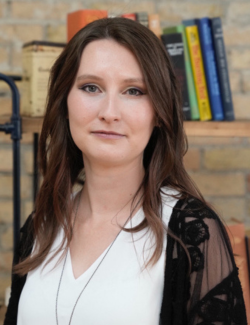
In today’s continuation of our interview series, we connected with Taija, author of “Shipwrecked.” This haunting and richly detailed story can be found in Hollow Oak’s debut anthology, The Wordsmiths.
Tell us a little bit about yourself.
Taija: I’m a Canadian horror author and professional editor. My stories often blend realism with the uncanny—psychological horror, crime, and the supernatural. When I’m not writing, I’m editing manuscripts, organizing literary events, or chiselling my way through my TBR list.
How do you find time to write?
Taija: Sometimes my editing work makes it hard to carve out time for my own writing. Over the years, I’ve learned to treat writing as a vocation rather than a hobby. One thing that helps enormously is having writer friends who act as accountability partners. We check in regularly, share progress, and keep each other honest about our goals. Twice a week, I also do one-hour writing sprints with a friend. We don’t always make it, but simply having that time blocked off keeps my creative rhythm steady. I’ve learned to protect that space, to honour both discipline and the natural ebb and flow of inspiration.
What does your writing space look like?
Taija: Lately, I’ve been writing in warm, plant-filled spaces with open windows, my laptop surrounded by notebooks, a tarot deck, and a stack of books. I have many maps and notes and lists taped to the wall to keep me on track. I’m situated next to a beautiful garden where I’m growing sunflowers and herbs. My space is quiet and peaceful.
Tell us about your favorite story that you’ve written.
Taija: In terms of short stories, I’m especially proud of one I wrote for the Prairie Witch Anthology by Prairie Soul Press, which was titled Never Walk the Tracks at Night. It was a dark, twisted revenge plot with a group of teen girls and a haunted railroad track—I had a blast writing that one. In terms of novels, my most recent (unpublished) novel The Devil Wears a Suit and Tie is closest to my heart right now. It’s a supernatural mobster thriller. It took years to write, spanning dual timelines and perspectives, and every draft taught me something new.
What are you working on right now?
Taija: Currently, I’m working on a slasher horror novel—a classic smalltown final girl story with a copycat killer and a million buried secrets, plus everyone in the town is guilty of something horrible. It’s been fun to write. I was lucky enough to receive a Canada Council for the Arts grant for this one, so I’m hoping to get it traditionally published in the future, and I should be finished writing it sometime next year. Love a good slasher.
Do you read much? If so, what are you currently reading and what’s at the top of your TBR pile?
Taija: Constantly. Reading is basically my whole life—work and hobby. Right now, I’m reading Truth Telling by Michelle Good, a Canadian author. It’s a non-fiction book about the legacy of colonialism and indigenous life in Canada—highly recommended. I just finished her book Five Little Indians, and it was amazing. I am always tracking the heaps of random books I read on Goodreads, so if anyone reads this, they should friend me over there.
What’s the most challenging thing about being a writer, and how do you manage it?
Taija: The hardest part is balancing creative vulnerability with professional resilience. Writing requires brutal honesty—both on the page and within yourself—but publishing demands thick skin and a lot of patience. I manage by separating my identity from the work; I’m responsible for craft, not for how people receive it. Storytelling is sacred, transformative work. Everything else is just industry static.
What do you do when you’re not writing?
Taija: I edit manuscripts for other authors, garden, read, play videogames, learn Spanish, spend time with friends and family, and travel. I’m also on the board of the Wordbridge Writers’ Society of Lethbridge, so I help organize the annual conference and year-round programming. I love being involved with my writing community.
Where can readers find you?
Taija: You can find me at www.TaijaMorgan.com, where I share updates about my writing, editing services, and events. I’m also on Instagram (@taijamorgan) and Goodreads (@taija_morgan). You can subscribe to my newsletter through my website. And if you’re interested in the Wordbridge Writers’ Conference in Lethbridge (or virtual programming if you’re not local), check out www.WordbridgeYQL.com.
I feel most at home when I’m surrounded by books. Add in a fluffy dog and a warm beverage and I may never leave. Buildings filled with books where you can get lost for hours in the stacks are these beautiful liminal spaces where I both lose and find myself. After all, writers are just readers with a story to tell.
Mostly when I think of places like that, it’s a library that comes to mind. But as much as I love libraries, this post is about bookstores. Sometimes you just need to own a book. Or ten. Or endless shelves of them with one of those ladders that rolls along the shelves. Wait, maybe this post is actually about how to use bookstores to make your own library… No, no. Back on track.
Bookstores. Not all categories of them are built the same. There’s those Big Box Chains, flavorless as a rice cake, and the massive Online Retailer That Shall Not Be Named that’s not technically just a bookstore, but it started as one. It’s a place where lots and lots of people buy their books, and I get it. They may not have character, but they’re convenient, and I’m just as guilty of using them in a pinch as anyone is. Convenience aside though, they cannot rival the feeling of a small, independent bookshop.
These indie stores have moxie. They have vibes for days. Every one that I’ve been in has its own pulse—a reflection of the store’s owner, its customers, and its community. They aren’t meant to be a convenient way to impulse-buy the latest Colleen Hoover while you’re multitasking six other things. Independent bookstores are an experience.
These are places that not only sell books, but they curate them. Indie bookstores provide a more personalized shopping experience than any big box store or online retailer ever could. Every time I go in one of these stores, it’s so easy to spot either the owner or an employee who is willing and eager to talk books with enthusiasm. These stores serve as gathering places—they host book clubs, they hold author signings, and they serve as a hub for various local interests. They can be the epicenter for community activism or education. They, in turn, support local authors and artists and can help you discover stories an algorithm would never suggest, because they aren’t mining your data. They’re run by people who connect with you through conversation and community.
And have I mentioned the vibes? Some are moody and mysterious. Some are bright and cheerful. Others are cozy and comforting. Some have wide open spaces between shelves that set you off on an adventure and others feel like you’re combing through a vintage estate teeming with treasures waiting to be discovered.
If you love books (and if you’re here reading this, I’m guessing you do) I can’t recommend enough that you become a regular at one of these incredible places. Giant retailers aren’t going to notice if you bought the latest bestseller from them, but an indie bookstore certainly will. Money spent in these stores stays in your community. If you value convenience over vibes, no shame there. I multitask too. Did you know that you can buy books with convenience online through bookshop.org and choose which indie bookstore you want to support?
If you’re in the same corner of the world as me, check out the independent bookstores I’ve linked below. They’re locally owned, and each one brings a unique personality to book selling that I really enjoy. And as a bonus, they stock our books! Do you have your own favorite indie bookseller? Comment below and tell us about them!