Posted on Leave a comment

The Last Page is Always Warm

An Acorns Flash Fiction Feature

By: Khayelihle Benghu

The Last Page Is Always Warm

The first time Miriam noticed the warmth, she thought it was the radiator.

It was early October, in the late hours of the afternoon, when the library grew hollow and echoing. The old pipes beneath the floor ticked and complained like tired bones. She had been re-shelving returns in the history aisle where the spines were old and some darker, the fonts more ancient. When she pulled a paperback from the drop cart, she felt heat against her palm, not body heat, no, not quite.

The book was warm the way a mug might be warm long after the tea inside has gone cold.

She held it there, confused, before checking the cover.

The Long Watch, by Arthur Bell. No dust jacket and slight curl at the corners. The library stamp inside was faded, as if impressed decades ago. She pressed her thumb to the pages and found them still warm.

Miriam looked around, half-expecting a prank, but the aisle was empty. The overhead lights hummed and the windows showed only her own reflection, thin and pale, framed by shelves.

She set the book aside and finished her shift.

The book must have embedded into her subconscious. That night, she dreamed that inside the library, the pages were live and they scanned her fingerprint.

The next afternoon, the book was back in the returns cart.

Miriam frowned. She was meticulous, had always been. She remembered placing The Long Watch on the shelf between two anthologies. However, here it was again, spine scuffed, pages faintly warm.

This time, curiosity overcame her caution. She slipped it into her bag at the end of the day and checked it out under her own name.

At home, she placed it on the kitchen table and let it sit while she made soup. The steam rose and the windows fogged. Still, when she returned and touched the book, it was warm in a way that did not belong to rooms or weather.

She opened to the first page.

The prose was spare, almost old-fashioned. A man standing watch in a lighthouse and the sea restless. The isolation familiar, Miriam read a few pages and then paused.

There was a line she did not remember from the first paragraph.

He thinks of the sound his wife made when she slipped on the rocks.

Miriam read it again and her throat tightened, becoming dry as if something was lodged inside it.

Arthur Bell’s wife had died that way. It was a minor detail mentioned in an obituary she had read years ago when cataloguing local authors. A coincidence, she told herself. Writers borrowed from life all the time.

She turned another page. The book was warmer now.

Miriam began to notice changes, sentences shifting and details deepening. Passages that felt less written than remembered. The lighthouse keeper began to think thoughts Miriam herself had once tried to forget: the hospital room with its too-clean smell, the way her mother’s hand had gone slack mid-squeeze, the silence afterward that felt heavier than grief.

She closed the book, her heart racing.

The warmth lingered on her fingertips.

For two days, she avoided it. She returned to work, catalogued donations, and answered patron questions. Almost pretended not to notice how often people paused in the history aisle, touching spines as if testing with their fingers.

On the third night, she opened the book again.

This time, the lighthouse keeper was no longer alone.

There was someone standing just beyond the reach of the light. Someone familiar, maybe someone he loved and had lost. The prose did not describe the face directly, but Miriam knew it anyway.

Her mother’s face, as it had been before the illness. Miriam slammed the book shut.

The cover was hot now –unmistakably so. She dropped it onto the table, breath shallow and pulse loud in her ears. She did not sleep that night. The following week, a patron approached the desk holding The Long Watch.

“Excuse me,” the woman said, eyes twinkling. “Is this new?”

Miriam stared. “No,” she said too quickly. “It’s old stock.”

“It feels alive,” the woman whispered, almost apologetically. “I’ve never read anything like it.”

Miriam swallowed hard. “I’m afraid it’s… fragile,” she said. “We’ll need to keep it in the archives.”

She took the book with careful hands. It was warm again, even through her sleeves.

That night, she locked it in the back room, inside the metal cabinet reserved for rare and damaged items. She told herself this was enough. That stories, however strange, were only stories. However, warmth is patient.

Miriam began to notice patrons lingering longer in the back room when she fetched holds. Fingers brushing the shelves and their eyes unfocused. One man stood too close to the cabinet once, breathing shallowly, as if listening for something inside.

She moved the book again. Wrapped it in archival paper. Placed it in a locked drawer within the cabinet, but the warmth seeped through anyway.

Feeling almost haunted, she dreamed of pages turning themselves. Hands reaching out from margins, of a lighthouse whose beam swept not over water but over memories, illuminating moments she had buried. The arguments left unresolved, words unsaid and the particular way grief could feel like being watched. When she woke, her palms were warm. Miriam tried to research Arthur Bell, but records were scarce. His biography was thin, contradictory, and one note in an old newspaper mentioned that the final manuscript of The Long Watch had been unfinished at his death, discovered among his papers with “no clear ending.”

She checked the library copy.

There was now an ending.

The lighthouse keeper, aged and tired, stood before the light for the final time. The warmth was unbearable. The presence behind him no longer waited in shadow. It stepped forward, and the prose grew intimate, tender.

He understands now that someone must remain.

Miriam felt a pressure behind her eyes.

The final paragraph was written in a hand that felt uncomfortably close to her own thoughts.

The watch does not end. It is passed.

She closed the book slowly.

It was hotter than she could comfortably hold. She considered destroying it. Fire would do, she thought. Or water. She imagined the book sinking into the river, pages bloating, ink bleeding away. However, the warmth felt almost pleading now. Not malicious, no, not exactly. But lonely.

That night, the power went out at her apartment. Darkness pooled in corners. She lit a candle and sat at the table, the book between her hands.

Her mother’s voice came to her, not as sound, but as presence, familiar warmth. The ache of connection.

Miriam felt aggrieved and wept. Not loud but in silence. She let herself read—the final pages had expanded again.

They spoke not of the lighthouse keeper but of a woman in a quiet building full of books. A watcher. A caretaker, someone who noticed what others passed by. Someone who listened.

The warmth grew steady, no longer threatening, but expectant.

The next morning, Miriam returned The Long Watch to the history aisle.

She did not stamp it. Did not catalogue the changes. She slid it into place and stepped back.

A young man reached for it moments later, eyes widening at the touch.

Miriam watched him go, heart heavy and calm all at once.

At the end of her shift, she noticed something strange.

Her hands were no longer cold.

Over the weeks that followed, the library felt different to her. It felt fuller and charged. She sensed stories breathing behind their covers and seemingly waiting. She began to linger after hours, walking the aisles, touching spines, feeling warmth bloom and fade.

Sometimes, when she paused long enough, she felt memories stir hers, others indistinguishable and some human. She understood now.

The watch does not end. It is passed, and the last page, she learned, is always warm.

About the Author:

Khayelihle Benghu is an emerging author residing in Johannesburg, South Africa. Except writing she has a heart for photography, mainly nature.

Posted on Leave a comment

Tuberculus Mom

An Acorns Flash Fiction Feature

By: Mario Senzale

I was assigned to Brother Kartoffel right after growth season. Some got hunting. Others, construction. I got planting.

“You’re strong,” the elder said, looking me over. “Good build. You’ll do fine with the mothers.”

I knew what that meant. Everyone did. The rooting ceremony. The mothers go down, they feed the earth, the earth feeds them, and the young ones come up stout.

On the first day, Brother Kartoffel showed me how to dig the beds. Six feet down, four feet wide. The soil in the north fields is perfect for it—dark, moist, full of nutrients.

“Make it cozy, Brother Arnut” he said. “They’ll be here for a while.”

“How long?” I asked.

“Six months. Sometimes seven if the young one’s stubborn.”

We dug four beds that week. Sister Wortel, Sister Rote, Sister Ube, and Sister Neep. The ceremony was on Sunday. The whole commune came out. Drums, singings, the elders blessing the soil. Sister Ube went first. Six months along, her middle huge and low. She walked to the field wearing nothing. Smiling. Covered in compost and manure. The women had prepared her since dawn, layering her in the mixture. She spread her arms to the crowd.

“This is my gift. My body for the earth. My young one for the future.”

Everyone cheered. Brother Kartoffel and I helped her into the bed. She lay down, still smiling, hands on her swollen middle. The compost was packed around her, thick and warm. Her face was the last thing visible.

“See you at harvest,” she said.

We covered her. The soil went on easy, and the women sang. When we were done, Brother Kartoffel hammered the stake into the ground. “Sister Ube—3/17.”

Sister Wortel came after, followed by Sister Rote and Sister Neep. All of them smiling. All of them honored. The ceremonies were always the same. Joyful. At night there was a feast. The whole commune celebrated the new plantings. Brother Kartoffel got loose on Kombucha and told stories about harvests from when he was young.

“You’ll see, Brother Arnut,” he said, his arm around me. “When they come up, it’s magic. Magic. And we—we have the front seat.”

“What do they look like, Brother Kartoffel? What do they look like?”

“Reborn, Brother Arnut. Reborn.”

“And the young ones, Brother Kartoffel? The young ones?”

“You’ll see, Brother Arnut. You’ll see.” He smiled.

I went home late. The light was fading. I drank water, lots of it, and stood in my yard for a while, feeling the start of spring.

Three months in, the soil above the beds started swelling. Rising up like bread. Brother Kartoffel said that was normal. It meant the mothers were growing.

“The seedling feeds them through the cord. Gives them what they need to survive. Nutrients, minerals. Keeps them strong.”

“So they’re alive?”

“More than alive. They’re becoming!”

One morning I was checking the irrigation system and heard something coming from Sister Wortel’s bedding. A hum. Low and steady. I knelt down and pressed close to the soil. Slow and thick. A heartbeat.

“Beautiful, isn’t it?” Brother Kartoffel said behind me. I jumped.

“I was just—”

“It’s ok, Brother Arnut. I do it too. I like to check on them. Make sure they’re happy.”

He knelt down beside me and listened. The sun felt good. Necessary.

By month five, all four beds had swollen significantly. The ground was raised a foot. Maybe more. You could see the shape of the mothers underneath. Round. Dense. Like huge tubers pushing up from below. The commune was preparing for harvest. Building the platforms, sharpening the tools, organizing the feast. It was the biggest celebration of the year.

9/24. Harvest day. The whole commune gathered at dawn. Drums, singings, the elders blessing the tools. Brother Kartoffel and I started digging. Carefully. The soil came up easy, loose and rich.

“There she is!” Brother Kartoffel said, grinning.

 We dug around it carefully, exposing the shape. It was huge. Four feet across. We kept digging until we could see the whole thing. Sister Rote. Her body had fused into a single swollen mass. No arms, no legs. Just a thick, oval shape with her face barely visible on one end. The crowd cheered.

“She’s perfect!” A young girl yelled.

We used ropes to pull her up. It took six of us. She was heavy, dense as clay. When we finally got her to the surface, everyone pressed forward to see. Her skin had a waxy sheen. Her eyes were closed. Peaceful. Her mouth was slightly open, and you could see roots inside. Thin, white, threading through her teeth. She was breathing. Slow. Steady. The elder stepped forward and placed his hand on her.

“Sister Rote. Your becoming honors us!”

Then the skin split. Not violently. It just opened. Like a pod. The flesh peeling back in sections, revealing dark, rich soil inside. And in the center, wrapped in pale roots, something small. It was deep red, almost purple. Smooth. Round and tiny, with a face. Sleeping. Perfect. The elder lifted it out carefully. The roots detached with soft pops. He held it up to the crowd.

“Behold! New life!”

Everyone cheered. The young one opened its eyes. Magenta. Dark.

The thing that was Sister Rote lay on the platform, hollowed out. The elder nodded to us.

“Return her to the earth.”

We carried her back to the bed. Her body was lighter now, crumbling at the edges. We covered her up. Within minutes, she started to dissolve.

“She’ll feed us now,” Brother Kartoffel said. “One last time.”

We harvested the other three after that. Sister Wortel’s young one was a parsnip—pale and tapered, with a fierce little face. Brother Möhre had been expecting a carrot himself, but he held the baby parsnip with pride anyway. Sister Ube’s came out as a fingerling potato, long and knobby. Brother Kartoffel looked at the sky. “At least it’s starchy,” Brother Kand said. Sister Neep’s young one was the surprise. Wrinkly, brown, kind of hairy.

“A taro,” someone whispered.

Brother Rapa stared at the small child, its face already scrunching up, ready to cry its papery cry.

“My father will kill me,” he muttered.

At the feast, I sat next to Brother Kartoffel and watched the families with their new ones. The beet, the parsnip, the fingerling, the taro. They were already growing, little root-hairs searching for soil, faces turning toward the sun. Brother Möhre was teaching the parsnip to hold a spoon. Brother Rapa sat alone in the corner, the taro-child asleep in his arms.

“You did good, Brother Arnut,” Brother Kartoffel said. “You did good.”

“It wasn’t hard. Always a surprise.”

“I know, Brother Arnut. I know,” he replied, looking at the fingerling.

“Do they stay like that? The young ones?”

“For a while. Then they root somewhere, and a few years later, they’re like us. Walking. Talking. Strong.”

I looked across the field where the mothers had been returned to the soil.

“Next season, we plant six more,” Brother Kartoffel said. “You ready, Brother Arnut?”

I nodded. The drums started up again. The dancing. The celebration. And in the fields, the soil hummed softly. Waiting.

About the Author:

Mario Senzale is a South American writer and mathematician currently living in Indianapolis, Indiana.  Check out his work at mariosenzale.neocities.org, or follow him on BlueSky at @mariosenzale.bsky.social.

Posted on 1 Comment

Dragon Dancers

An Acorns Flash Fiction Feature

By: Karen McCullough

An hour before the start of the afternoon performance, Lia discovered Ocho was missing. The dragons had a back-up four-place dance in their repertoire, but none of them liked it. More participants produced better routines. And today’s shows had to be fabulous. Their survival depended on it.

She asked Doce about him as she prepared the banners.

“He heard a call.” The dragon stretched out his wings and dipped one toward her. Lia massaged the tissues between the long bones and Doce sighed. “If he doesn’t return in time, we’ll do the Quatrain.”

“He had to go now? How far?” She considered sending Doce after him, but when a dragon heard a call, the compulsion overrode most other considerations. No telling what might be the source. A mating call was the most common type, but the dragons’ emotional sensitivity meant Ocho could be responding to a cry for help or companionship, from others of his kind, from humans, or even less self-aware creatures. Cinco had once brought back three orphaned dragons. Of them, Doce and Quince had stayed with the troop while their brother went off to seek his own adventures.

Quince had twice issued mating calls herself and received plenty of attention, but so far no offspring had resulted. The troop needed more individuals. The five dragons did remarkable routines, but more participants could create yet more dramatic and spectacular aerial dances. With luck, Ocho would find others.

“He said he’d be back in time for the afternoon dance,” Doce said.

Lia rubbed her forehead. “He’d better be. This is the best booking we’ve had for months, and it’s only for two days.”

Doce lifted a shoulder in a dragon shrug.

She sometimes envied the dragons’ carefree attitude. Other times, like now, it annoyed her. Lia worried over everything—food, shelter, transportation, bookings, and the hundreds of other details of managing the shows and the dragons’ needs. The job had grown harder two months past, when her former partner told her he’d had enough, handed over the business, broke off their engagement, and disappeared into the morning mist, taking all their recent profits with him.

A man and child walked up, distracting her, and asked, “Are there still seats for the next show? I heard this morning’s was amazing.”

“There are.” She made out tickets for them. “Take these to the gate and please spread the word about tomorrows’ performances.”

The man hesitated. “Can I ask you about the dragons? How do you train them to dance so beautifully?”

“I don’t train them. I help them develop routines, but mostly they create their own, and they dance purely for the love of it. Some dragons are born to perform. They draw energy from the crowds that watch and cheer for them.”

“How do you find them or recruit them?”

She searched the horizons, hoping for a glimpse of Ocho. “They find me. They need a human partner to manage the practical details for them.”

“Why do you do it?”

“I—” No one had asked her that before and she had to think about it. “I love them, I guess. I have an affinity for them, and they seem to feel the same for me. I’m part of their world and love to watch them dance their joy.”

“Taking care of them and the shows must be a lot of work.”

“Organizing the shows can be hard. The dragons mostly take care of themselves. And sometimes they take care of me, too.”

“They do?”

“They’re very sensitive to emotions, human and dragon. They try to cheer me when I’m distraught and they protect against danger.”

He looked surprised, but the girl with him tugged on his arm and dragged him away.

She checked the time. Thirty minutes until the next show. The customer’s words reminded her what a stunning performance they’d put on that morning. In the sky overhead, the five dragons had looped and swirled graceful arabesques with sunlight glittering off their scales in cascades of green, blue, and silver. Children in the audience gaped in wonder, inspiring her to see it from their viewpoint. She took for granted the glorious spectacle of wings beating in rhythm: long slender bodies weaving fluid, twisting patterns; tails joining together or with their fellows’ heads to form ovals, stars, and florets; and the final eruption of the flame display. The dragons fed on the wonderment of their audience and elevated their performance.

She doubted this afternoon’s show would run so smoothly. Ocho was the oldest and most experienced of the crew. Without him the others might fumble their moves.

Everything could go sideways if he didn’t return before the next performance. A glance at the village clock tower showed twenty minutes remaining.

Her breath sped up. They needed another spectacular performance to ensure tomorrow’s crowd would be larger. Without Ocho, though…

Movement caught her eye off to the east. A cloud of dust approaching, possibly with a cart at its center. Above it, scales glinted in the sunlight. Dragons…Maybe three? Was that greenish-gold one Ocho?

After a quick debate, she went to the staging area and announced a short delay in getting started but promised the show would be worth the wait. Her identification had better be right.

The dragons arrived before the cart, with Ocho in the lead. She sighed with relief as she went to meet him and urged him to join the others in getting ready for the show.

“We will all join,” he announced. “This show will be the best.”

Surprise and doubt washed over her. She looked at the two new dragons “They don’t know the routines.”

“They do,” Ocho insisted. “I have demonstrated for them. And they will fit in. I’ll inform the others.”

She’d have to trust he knew what he was doing. Ocho generally did. But her nerves still jangled as she watched him fly off. Before she could hurry after him to the field, the cart arrived, driven by an attractive young man wearing a bashful look.

“You must be Lia,” he said. “Ocho told me to find you and offer my help. He heard a call from my dragons, but he said your heart had been calling, too, and I was the answer.”

“Not sure what that means,” she answered. “But the show’s about to get started and I can’t worry about it now.”

She heard him follow her to the field, but he waited at the side while she announced the introduction. The nervous lump in her throat made it harder to project, but she got through her spiel and cued the dragons to begin. The newcomer joined her once she moved aside while the dragons glided onto the field, one after the other, in a rippling ribbon of graceful curves and glittering scales.

She held her breath as they rose into the air and began weaving the complex tapestry of fluctuating formations. Moments later she released the air on a gasp. Ocho hadn’t exaggerated. The newcomers fit themselves into the routines perfectly, the larger number making their flowing spirals and whirling pirouettes yet more spectacular.

The young man next to her jerked in a sharp breath and let it out slowly. “They’re beautiful. It’s amazing. I didn’t know they could do this.”

“They are. Ocho was right about them fitting in. He’s right about a lot of things.”

The dragons launched into their fiery concluding routine, emitting undulating, interweaving, and brilliantly colored columns of flame high above, drawing thunderous applause from the crowd.

The young man’s eyes lit as he stared at her. He leaned closer to make himself heard over the noise. “I’m Geoffrey, by the way, and this is the most amazing day of my life. I hope you’ll let me join your troupe along with my dragons.”

“I don’t think I could stop you.” She smiled at him, eyeing his broad shoulders, slender waist, and pleasant features. “I don’t think I want to.”

About the Author:

Karen McCullough is the author of more than two dozen published novels and novellas in the mystery, romance, suspense, and fantasy genres, including the Market Center Mysteries Series and three books in the No Brides Club series. A member of Mystery Writers of America, Sisters in Crime, and the Short Mystery Fiction Society, she is also a past president of the Southeast chapter of Mystery Writers of America and served on the MWA national board as well as the boards of two Romance Writers of America chapters. Karen has won numerous awards, including the 2021 Bould Awards for flash fiction, an Epic Ebook Award for fantasy, and has also been a finalist in the Daphne, Prism, Dream Realm, International Digital, Lories, and Vixen Award contests. Her short fiction has appeared in a wide variety of anthologies. More information is available at her website: https://www.kmccullough.com.

Posted on

In from the Cold

An Acorns Flash Fiction Feature

By: Maxim Volk

“Lace your skates tight,” her grandmother said, her warm voice a contrast to the deadly cold outside. “Don’t dawdle. They say we have a few more hours of daylight, but one can never be sure.”

Summer double-checked her skates, zipped up her coat, and put her earmuffs over her ponytail before donning a pair of white mittens that her grandmother had knitted her for Christmas. Summer loved running errands for her grandmother because Summer loved the ice.

Summer was born in the ice—not in a poetic way as some children are born in war and others in famine—but in a literal sheet of ice. She had often begged for her grandmother to recount the story of her birth, but her grandmother could only cry at any mention of the First Freeze. Finally, at her eleventh birthday teleparty she convinced her least favorite cousin, a rowdy, crass boy a few years older than her, to meet her in a breakout room and tell her of that night. He recounted the tale of her mother going into labor and her father taking her in the car, despite the weathermen’s warnings, to give birth in a hospital. He described in gruesomely exaggerated second-hand detail how they had found her father frozen solid outside of the family car that had slidden into a ditch, and how her mother, who had already fallen asleep for the last time, was transported to the already overflowing hospital where Summer was born healthy, kept warm from The Freeze by her mother’s unconscious body: one small miracle among a frozen sea of despair. Summer knew she should hate the ice for what it took from her, but how could she hate something so beautiful?

Summer flipped the switch in the foyer, causing the front door to glow and melt the frozen rain that had sealed them inside the last few days, draining it to be filtered into drinking water. Summer held in her breath, opened the door, and stepped out, slamming the door quickly shut behind her as to not cause her grandma any undo chill. Outside, Summer exhaled and watched as the warm breath she had been holding crystalized in the sunshine as it floated to the ground. She carefully descended the front steps, and then, on the sidewalk, she turned her heel and kicked off, gliding carefreely across the frozen landscape. She lifted one leg and bent the other, watching the world turn upside-down. The wind whipped her rosy cheeks as she pulled her slender frame into a tight low spin. She knew people were staring at her, annoyed that anyone chose to move so gracefully in a frozen world where speed and precision were often the key to survival. Summer didn’t care. There was nothing she loved more than basking in the glisten of newly frozen buildings and flitting from eternally icy tree to eternally icy tree.

Summer did not know how long the next rain would last, so she skated outside for as long as she could before setting off for the protein bank where everyone in town received their rations. In the middle of a smooth glide around the corner from her destination, she realized she had skated too long. The line to the protein bank was longer than she had ever seen it before. Everyone had set out as soon as the sun came out. The last rain had been worryingly long, and she remembered some of her virtual classmates mentioning that their families had begun rationing food. This time, no one was going to risk it. Summer pulled herself to the wall at the back of the line and waited impatiently, wishing she had listened to her grandmother’s advice. Hour after hour went by, and the sky turned orange as the pale sun, which Summer had been told once burned bright, began to set on the horizon. Summer was glad when she finally got to the front of the line and even more glad that they had not yet run out of purple, which was her favorite protein. She got some reds and some blues and a green along with an abundance of purple and set out for home in the ever-darkening twilight.

“It’s only a couple of miles,” Summer kept muttering to herself under her breath as she shivered in the frigid air. She made a reminder for herself that she would save her skating for after the protein bank next time so that this didn’t happen again, if she survived long enough to have that opportunity. Up ahead, a Zambo had stalled, blocking the narrow bridge that was the easiest way home. Sighing, she turned, knowing she was adding five more minutes to her journey but not wishing to keep her surely-already-worried-to-death grandmother waiting for the Zambo to move.

It was very dark now, but her new path at least took her through a maze of tall buildings that kept most of the icy wind away. She was moving too fast to take note of her surroundings when she tripped over something, falling hard against the ice. When she opened her eyes to check what she had fallen over, she wished she hadn’t. Her face was inches from a sheet of ice of that glazed the horror-stricken dead eyes of a homeless man. She screamed and pulled herself up. The city had not yet had the time to clean up the icy bodies left by the last rain’s unyielding slaughter.

Summer heard a noise nearby. Her scream had attracted attention. She didn’t want to know who would be out this late. She began to set off towards home again, but she didn’t get far. A man in a ski jacket and large goggles slid from around a corner, cutting off her path. He had long shaggy blonde hair that looked unwashed. “Where are you going little girl?”

“Stay out here and play some games with us,” snarled a different voice. Another man emerged from around a corner. Summer let out a shriek as the men inched closer to her. One lifted his hand to his mouth and slipped his glove off with his teeth. Summer held her breath, refusing to close her eyes.

From behind the men, Summer heard a whizzing followed by a loud crack. The man in front of her fell flat, a trickle of blood dripping from under his hat. The other one grumbled in confusion before receiving a similar blow that sent him sprawling. Summer looked up to see whether the attacker was her savior or another fresh horror that merely prolonged her inevitable fate.

Summer heard a chuckle as a masked figure slid to a halt in front of her holding a hockey stick. While organized sports were a thing of the past, some of the troublemakers still snuck out to play hockey when the weather permitted. The boy turned on an eLantern and pulled his mask up, revealing rosy-red cheeks that covered strong cheekbones and pretty blue eyes that glittered like ice. He gave a grin that was short a couple of teeth, trophies of too many unauthorized games. Summer recognized him as Benji, a student a couple of grades above her. He had gotten in trouble at school once for hacking the teacher’s camera and mooning the class. “Can I skate you home?” the boy asked with an air of sarcasm that masked sincerity. Summer blushed and nodded, suddenly feeling a bit warmer. Benji grabbed her gloved hand with his empty mitten and slung his hockey stick over his shoulder. They moved with haste but slow enough to make pleasant conversation. They chatted about school and family and skating and that, no matter the impending permafrost, they were glad to have the ice sometimes.

“Welp, this is me,” giggled Summer as the pair approached her grandmother’s house. “Thanks for saving me from those creeps.”

“Anytime,” Benji said, flashing his broken smile.

“See you at school tomorrow?”

“Not tomorrow; I got suspended again. Monday.”

“Monday it is,” she said. She skated up to her grandmother’s door and stepped inside. Her grandmother rushed to the door, praising the warmth that she was home and damning the cold for her tardiness. Summer turned around to wave to Benji, and he waved back. A drop of rain fell to the ground in front of her and froze immediately.

“Grandma!” she shouted. “We need to let him come in. He’ll freeze to death.”

Her grandmother shook her head. “We do not have the room or the supplies for another body.”

“Please,” Summer pled. “He got me home safely. I wouldn’t even be here if it weren’t for him.” Her grandma sighed and nodded her head.

“Benji!” shouted Summer. “Come in from the cold!” Benji smiled and skated up to the door, stepping inside. Her grandmother bade him close the door and went off to boil some water for tea. Summer and Benji hugged, feeling each other’s warmth as another rain washed over the house.

About the Author:

Maxim Volk (they/he) is a queer speculative fiction author from the Midwest. They have publications in Macabre Magazine and Carnage House, and their first book releases in 2026 from Slashic Horror Press. You can find them on Instagram @maximvolk1.

Posted on

Services Rendered

An Acorns Flash Fiction Feature

By: Ed Ahern

It was no one’s fault, really. Jason, a high-functioning ghoul, was working at the plant that produced hydrophilic acrylic eye lenses for cataract surgery, night shift naturally. It was a batch production process, sealed off immediately after the raw materials were measured in and mixed. There was the rub.

Jason wore latex gloves, a hair covering, and a mask that covered his nose and mouth. But Jason was a perspirer, and the mixing area wasn’t airconditioned. A drop of his sweat fell into the mix as he was pouring. It was, for better or worse, just enough.

The high temperature process drove off the water, but left behind a chemical essence that altered the optical properties of one of the lenses. Someone’s vision was about to be too clear.

Seymour Phillup had postponed his cataract operations until his view of the world came with fuzz. With the exception of tonsil removal, he’d successfully avoided surgery of any sort until he was fifty-five, and viewed surgeons as dissectors. He finally opted for a woman doctor in the vague hope that she had more delicate hands.

The right eye operation went without incident, except that he noticed that people were a good deal uglier than he remembered. The left eye, however, the sinister one, was installed with an unwanted upgrade. Everything seemed all right immediately post operation, good clarity, no infection. Until a nurse came in and he thrashed, then screamed.

“Get away from me!”

The nurse rushed to the bed to restrain him, and Seymour went fetal, arms and legs trying to tuck into his considerable belly. “Mr. Phillup, calm yourself, there’s nothing wrong.”

Except there was. Seymour had a double vision, his right eye showing a middle-aged beefy woman in scrubs and his left a hairy incisor-toothed humanoid, also in scrubs. The combined vision hurt to look at, and he felt a stab in his forehead, the start of a migraine.

He reflexively closed his left eye and the nondescript nurse was in his face asking what was wrong and checking readings. He peeked out of his left eye, saw fur, and slammed it shut again.

She eventually left and he cautiously unsquinted his left eye, then closed his right eye and again surveyed the room. Boringly plain and undecorated, just like the hospital administration had intended. Seymour wondered if the anesthetic had hallucinogenic properties, then wondered if maybe he could sue for malpractice. After all he was a lawyer.

But everyone else during his stay was unprepossessing, that is, normally homely. His doctor, Simplicity Sinclair, cleared him, the staff handed him a half pound of paperwork, and Seymour went outside to wait for his Uber.

His driver, an Armenian named Armen, wasn’t talkative, so Seymour idly voyeured into the side windows of cars in the right-hand lane. And almost peed himself. About every twentieth car had a driver who was grossly abnormal. Hairy or corpse pale or horned or hideously deformed. Once over his shock, Seymour studied their faces like he would a jury pool. Under their monstrous appearance, they all had that stoic resignation of beings who’d left a job they didn’t like for a commute they hated to a home they weren’t sure was worth the effort. Just like Seymour.

One of the drivers, though, a man with a thoroughly scarred face and a pig snout noticed Seymour noticing and glared back. Mr. Porcine then slowed his car and dropped behind Seymour’s Uber.

Once home, Seymour turned on his cable TV, more than a little afraid that some of his favorite actors would be monstrosities. But, maybe because of camera filtering, everyone looked normal. Not so the next day in his group practice.

Seymour was a confirmed bachelor, but his favorite fellow lawyer was Gwendolyn Kruste, an acerbic woman with his sense of suspicion about everyone’s motives. When Gwendolyn walked into his office he almost ran out of it. Gwendolyn had the spike haired stems of an arachnid, and a face with mandibles.

“Ah, ah, Gwen, urgent bathroom call. Probably something they gave me at the hospital.” He dashed out and went into a stall in the restroom, sitting on the throne without dropping his pants and trying to make sense of his life descending into one of Dante’s levels of hell.

Gwendolyn and he worked on too many cases together for him to avoid her, so Seymour cinched up his resolve and went into her office, trying to remain calm as they talked about upcoming trials. She noticed his anxiety and asked if he was feeling sick.

Seymour went home early. He was able to return to the office only because, as a defense attorney, he was accustomed to working with human dregs. But he never got over his apprehension, and discovered (on Amazon, God bless them) that he could buy apparently clear glasses with a left lens that blocked incoming light. He wore them constantly but still out of the corners of his vision or in glassless moments was shocked by the apparitions occasionally around him. Such horror story beings shouldn’t be in this world.

Eventually the objects of his revulsion noticed it. One dark winter evening Seymour returned home, entered his house, took off his glasses and was slammed against a wall by a pig-faced hulk who looked like the driver he’d seen three months earlier.

“It’s not your fault, but I need to kill you.”

The beast was about the size of a small boar, perhaps 350 pounds, and Seymour, who barely knew how to make a proper fist, also knew he had no chance to defend himself by fighting.

“Wait, please, before you commit my murder, at least tell me how it can be that so many of you exist and we never see you?”

“Ah. We’ve always had the ability to shield our true natures from you, but until Cagliostro it was of uneven quality and your kind were killing us off with gusto. Cagliostro, a great alchemist of the 1700s, was able to devise a medication that more thoroughly hides us. We’re almost never spotted now.

“So you see, even though blameless, we can’t allow you to reveal our presence and put us at risk. I’m sorry. Now I have a question. How is it that you can suddenly see us?”

Fear flushed through Seymour’s body. Then his training took over. He was pretty sure if he admitted the truth about his left eye lens, the eye would be gouged out and he’d be killed anyway. “I have no idea, but I’ve been really sick lately, with a high fever.” His lie was fluid, his body language sincere. “It’s probably a temporary aberration.”

Seymour hurriedly continued. “With so many different species, there must be serious disagreements between the kinds.”

“Of course, blood feuds even.”

“And if you do decide to settle differences, it must be hard to find an impartial judge, since he, she or it will always belong to one of the kinds.”

The porcine man tightened his hold. “Naturally, what’s your point?”

“What if I wasn’t a liability but an asset for you all?”

There was a wrinkle-snouted scowl. “What are you saying?”

“I’m a lawyer with extensive experience in both civil and criminal cases. You can verify that. What if I was to become your judge, or better still, your arbitrator. I’m not a member of any of your species and I don’t personally know anyone. I can make impartial judgements. The parties involved can split my fee so there’s no suggestion of collusion. Isn’t that worth considering?”

“But what about if you accidentally disclose something?”

“I can recant it or claim temporary insanity. At that point I’m beholden to you all for my livelihood and not likely to reveal anything.”

More wrinkles furrowed the massive brow. The sort-of-swine eased his hold, letting Seymour’s heels retouch the floor. “You may have value. May. We’ll discuss it. If we decline, I’ll make sure your death is quick.”

With quick movements that belied his size, the beast was gone. Seymour, who rarely drank, poured himself one. But just one. Then he made some preparations. Sealed notes were provided to three agencies, to be opened in the event of his death by accident or violence. Each of them specified that the lens of his left eye should be removed and used to view an auditorium full of unsuspecting people. Just a little no-fault insurance, he thought.

Then he drafted a rate schedule, adjusted to the severity of the offenses. After all, he thought, if they don’t still kill me their first question will be what will it cost.

About the Author:

Ed Ahern resumed writing after forty odd years in foreign intelligence and international sales. He’s had over 600 stories and poems published so far, and twelve books. Ed works the other side of writing at Bewildering Stories where he squats on the review board, and at Scribes Micro where he is the idle figurehead.

Posted on

The Chicken House

An Acorns Flash Fiction Feature

By: Fija Callaghan

Old Mrs Iles first came across the house when she was out gathering moss to line her garden stones. Her own home had been awfully quiet since Mr Iles ran off with New Mrs Iles, and so Old Mrs Iles often went for walks in the woods behind the property.

The forest was a bright young thing, all adolescent saplings spaced a respectable distance apart so they could grow big and strong. Even the brambles and ivy behaved themselves, most of the time. So when Old Mrs Iles discovered a ramshackle stone cottage not much bigger than a garden shed, with a pair of scaly chicken feet sticking out from underneath, the most reasonable thing seemed to be to go inside and see what it was about.

The house seemed bigger on the inside than it did on the outside, but not much bigger, not like a magic trick. Just big enough to while away a pleasant afternoon. There was a cold woodstove and a kettle, a small table with two off-kilter chairs, a lumpy mat piled high with blankets, a narrow broom cupboard propped against one side, and a dusty, meaty smell like someone had eaten stew there a long time ago. Old Mrs Iles thought that actually, it was quite homey. So she did a little dusting and cleaned off the single windowpane so she could see outside.

By the time night fell, nobody had returned to the house. So Old Mrs Iles thought oh well, I’ll just rest for a few minutes. The truth was, she still wasn’t used to coming home to a place that didn’t have Mr Iles in it.

Old Mrs Iles lit a fire in the woodstove, laid down on the lumpy mat, and was out like a light.

When she woke she wasn’t sure where she was, but she knew the air was salty and sweet, and she was more well rested than she’d been in a long time. She could hear gulls crying. Outside the window was a broad, sparkling expanse of bright blue sea.

Her heart swelled with longing and joy. She hadn’t seen the sea in more than fifty years.

A quick look in the broom cupboard revealed a neatly folded fishing net. Old Mrs Iles took it outside to catch some fish for her breakfast. She stood right in the water in her bare feet, with her trousers rolled up to her knees, and laughed like she was a young girl.

That night she lay down in the little house again and wondered how her garden was faring. But that made her think about Mr Iles, and some of the day’s happiness went from her. She dispatched the cumbersome thought by promptly falling asleep.

The next morning when Old Mrs Iles looked out the window, the world was carpeted by powder-blue and violet bluebells. Gentle, gnarled garry oaks stood watch between moss-covered stones. It reminded her of the place she used to go for picnics with Patrick, the first boy she’d ever loved. Her mother hadn’t approved of her marrying a penniless painter, and so the two of them had to meet in secret.

Old Mrs Iles stepped outside and let the fresh, cool blooms brush up against her ankles, and felt like she’d come home.

When Old Mrs Iles built up a fire in the woodstove that evening, and warmed her old bones, she remembered the day her mother had introduced her to Mr Iles and said isn’t he such a nice young man. And he had been nice to her, or at least companionable, up until the end.

Old Mrs Iles fell asleep to the sound of wind rustling the oak leaves.

The next morning, the house rested at the foot of a deserted cobblestone street. The sun was just beginning to peek out over the rooftops, and a smell of freshly baked bread drifted lazily through the air. It looked a bit like the village she and Mr Iles had visited once on holiday. She’d been too nervous and distracted to enjoy it, gathering her courage to tell Mr Iles what the doctor had said—about how having children would never be possible for her. Not without an expensive medical treatment. It was in the village square, beside a bubbling fountain surrounded by life, that Mr Iles told her he loved her for the last time.

Old Mrs Iles bought a croissant with jam for her breakfast and walked along the charming passageways, peering in windows at colourful and exotic treasures. A gentleman tipped his hat to her as she went by.

Her feet seemed to know their way, and Old Mrs Iles found herself at the village square. The fountain was gurgling contentedly, and an artist had set up an easel nearby. A tourist posed in soft the morning light while he painted their portrait. Old Mrs Iles closed her eyes and lifted her face to the sun. There was a feeling of life and effervescent happiness all around.

Then someone said her name.

Her eyes snapped open. There, standing at the easel, was Patrick—a little stouter, a little greyer, but no less handsome. Old Mrs Iles touched her own grey curls self-consciously.

With a few more brushstrokes—Old Mrs Iles couldn’t see the canvas, which had its back to her—he pronounced the painting complete and handed it to the happy tourist. Then he came and sat by Old Mrs Iles at the fountain.

When at last they spoke, it was easy, as if they’d seen each other only yesterday. He told her of his travels through Italy and France, painting souvenir portraits for the wealthy; she told him about Mr Iles and New Mrs Iles and the garden at home, which wasn’t large, but was delightfully fragrant on summer mornings. No matter how long they talked, there was always more to say. There was a whole lifetime.

Finally, Old Mrs Iles said, “Patrick, would you like a cup of tea?”

And he said that sounded like a fine idea. So they left the square and wandered back to the little house at the bottom of the cobblestone street. Old Mrs Iles couldn’t wait to see where it took them next.

About the Author:

Fija Callaghan is a storyteller and poet who has been recognised by a number of awards, including winning the SFPA Poetry Prize in 2024 and shortlisting for the HG Wells Short Story Prize in 2021. Her writing can be found in venues like Seaside Gothic, Gingerbread House, Howl: New Irish Writing, and elsewhere. Her debut collection, Frail Little Embers, was released by Neem Tree Press in 2025. You can find out more about her at www.fijacallaghan.com

Posted on

The Hand that Bites

An Acorns Flash Fiction Feature

By: Rye

The Hand that Bites

The leaves had only just started to turn. An awful viscera-red crawling up the struggling green with a terrible, earnest determination; that was when the teeth had started to grow out of my hand.

I’d noticed a subtle feeling of wrongness over a few weeks, a gnawing ache that radiated from my palm and through my fingers. Years of carrying burning plates from the kitchen had, I thought, killed all sensation in my palms, but this did feel different. Midway through an unremarkable shift, I ducked into a tiny alcove, predominantly to escape the sharp gaze of the managers who circled like vultures, but the effort was wasted. There was nothing there but a faint redness; a few inches of blushing skin stretched in a lazy crescent shape from the padded place beneath my thumb to the base of my little finger.

I finished my shift, the oddness with my hand pushed to the back of my mind as a group of eight barged through the doors, demanding the best table we had—only then to leave it ransacked after hours of loud, honking laughter and sporadic cheering. After two hours of unpaid overtime, I returned to my one-bedroomed cell, originally sold to me as a cosy flat, and passed out.

Days oozed past, each one the same as if I were stuck in some terrible TV show documenting the miserable life of the hospitality workers. Customers chatted inanely, celebrating the summer which refused to leave; blissfully unaware the planet was clearly dying as they ordered another ice cream sundae for their ugly, red-faced children. I kept my head down when I entered the roiling heat of the kitchen, where the underpaid cooks swore and snarled about the lack of air conditioning. I wove around the tables and chairs, dodging the wandering hands of bored men like some nightmarish obstacle course; only to fall asleep knowing the following day would bring the same.

“I told you I didn’t fucking want pickles!” A man shouted, and as I turned, a bun whipped past my face like a bloated breaded bird. It seemed everyone in the restaurant paused to watch as it splattered onto the wall, one half slid down the plaster and left a gory trail of ketchup and pus-yellow mustard. I turned back to the man. His cheeks were flushed, and his porcine eyes narrowed in anger. Yellow, crooked teeth glinted when his thin lips pulled back. I felt so still. I had stepped outside of my body to look at the depressing scene unfolding. At me, my crumpled uniform and dishevelled hair, at how easily an apology rose from my throat. From this perspective, I couldn’t see the anger which grew through my veins like barbed wire.

The restaurant slammed back into my senses with merciless force, and I swayed on my feet.

“I want another one, do you understand? And a fucking refund. Are you listening to me?” The man’s voice was grating, a petulant note heard in the toddlers who whined for dessert. His meaty fingers reached for my shoulder. I jerked away, my own burning, stinging hand rose to fend off the invader. Our skins touched, and he yelped. The man staggered back and grabbed the edge of the table to remain upright, his eyes wide. Blood, ketchup red, was smeared on his hand.

“I’ll go and get the kitchen working on your order right away and my manager will handle your refund, I am so sorry this has happened to you today.” The script was so light on my tongue, I wondered if I said the words in my sleep. I darted around the man and through to the kitchen, where I grabbed a wad of bandages. Instead of returning to the front, I slipped outside the fire exit and stood beside the large bins in the filthy courtyard. Only now, alone, did I unfurl my hand.

The red crescent was now vivid, a pure and pulsing shade of cherry-red. I watched as the skin writhed, and I felt it. I felt all of the nerves in my palm, as it squirmed. Then the redness opened, revealing two rows of glassy teeth bared in a mischievous grin. I quickly wrapped a length of bandage around my hand and was sure I felt the impossible teeth grind in frustration.

I returned to the flat, and my hand throbbed beneath the bandage. I could see the shadow of blood rise from the gauze. My kitchen felt even colder as I unwrapped the heated skin. Blood had dried into the cracks, dying my prophetic lifeline a vivid red. For a moment, I wondered if the teeth had been an illusion, some stress-provoked hallucination—but no. The second mouth opened, as if stretching after confinement, and again revealed two rows of pale, almost transparent teeth. The flesh surrounding the lipless maw felt raw and tender as if it had been gnawing on itself. I could feel it move, feel the shift of my flesh as it yawned and revealed glistening innards.

Sleep, surprisingly, came easily that night. I woke to see my hand resting on the other pillow, the mouth now on my palm was soft, as if it too slumbered. With a yawn, I walked into the bathroom and found I could shower without consequence; the teeth did not snap or nip at my skin. Instead, I was sure I felt the jagged edges caress my skin with the sweet gentleness of a parent.

A thunderous banging broke through the soft post-shower comfort. I walked with apprehension to the front door, the door which now seemed to tremble beneath the pounding fist on the other side. I exhaled slowly and opened the door to reveal Mason.

“You can’t do this!” The words were spat at me through lips I used to find alluring.

“Mason? What are you doing here?” I asked, keeping my new mouth behind my back.

“You don’t just get to leave, not after everything. Please, come on. I know you, I know us.” He said, and I felt something in my chest fracture. His anger tilted into passion, and his eyes burned. I let him pull me against his chest, let myself inhale the scents of sweat and sandalwood. His arms rose and held me tightly, and my resolve weakened. Our script rose in my mind, and like at the restaurant, it was one I knew in my sleep—the apologies, the promises that this time would be different. We’d find therapists we’d never go to, or download communication guides we’d never read. I’d apologise for my passive aggression, and he’d apologise for smashing my favourite mug. I knew my part. We drew back slightly, but I was close enough to see the amber flecks in his eye.

“I’m sorry,” he said, and he meant it. He always did. Now it was my turn to apologise, my lines waited, but something in me tightened. Why was I sorry? What had I done? Mason’s face was expectant.

“It’ll be different this time,” he added, giving me another cue.

“No,” I said softly, “it won’t. We aren’t good together Mase, we haven’t been for a long time. I think… I think we need to stay finished.”

“No, no you’re wrong. I’ll plan better dates, make more effort. You deserve it.” He said earnestly, and I swayed. My body ached for his warmth. A sharp pain flared through my palm and helped ground my resolve.

“Are you happy? Because I’m not.” I said, straightening my back, “We’re stuck in this cycle, and it has to end.”

He shook his head, and for a moment, I was reminded of the petulant man who threw his burger.

“Give us another chance, you can’t just walk away after everything!” he replied, his voice growing louder, “I won’t let you.” His lips tightened into an ugly line.

He reached for me, but I stumbled back.

“Leave, I want you to leave,” I said.

“No, we are going to fucking fix this!” he shouted. I became aware of his size, of the strength of his arms. Of the weakness of mine. He strode forward and closed the distance between us. My back hit the wall. My phone was in my bedroom.

“Mason, please. We can talk another time,” I said, trying to calm the anger I saw twisting his features into a different face.

“There is nothing to talk about. You aren’t leaving me.” He snarled and placed one hand beside my head. I felt so small. I could not find the man in this creature.

“Mason…”

“I won’t let you go,” he said softly, the oath echoed in the twitching muscle of his jaw.

“I believe you.” My lips were numb as my body slackened. I lifted my arm and placed my hand on his neck. I could taste salt and skin, and then I could taste blood.

About the Author:

Rye is an English writer who specialises in both poetry and short form fiction. They have been published internationally in online journals and literary magazines, including ‘The Pink Hydra’ and ‘Dusty Attic Publishing’ among others.

Posted on

Seven Blue Bowls

An Acorns Flash Fiction Feature

By: Anne Karppinen

At dawn, the wind blows from the north, over the mountains. The air is crisp and easy to breathe. The landscape sparkles in shades of blue and green; as the sun rises, it adds more tints one by one. This is the time to make a pot of tea and pour it slowly into small cups. No one should start their day with a clouded mind or a burned tongue.

A flock of magpies passes overhead. The only time they’re quiet is on the wing, and even then one of them might burst out into a bright, cackling laugh. Birds are more aware of us than we are of them: magpies, too, keep an eye out for intruders, and make sure none of the flock is left behind if a human comes too close.

After breakfast, I get my foraging-basket. There are people who believe that certain plants need to be harvested by moonshine, while others will lose their potency if cut after midday. I have yet to meet a flower that refused to yield its essence, or a seed that shrivelled up at my touch. I choose the time and the method, and the plants choose how much of themselves they want to give up to my use.


When I return home, it’s midday. The sound of the cicadas is overwhelming; the sun is beating down on my back. I acknowledge the power of the noise and the stifling heat, and withdraw as gracefully as I can. Setting down my basket by the well, I draw up a bucketful of water from the stony depths, and savour the cool taste before splashing my face and neck. The hint of iron stays on my tongue.

Thus, I’m not surprised to find the young warrior expecting me. He has been sitting on the porch, but springs up when he sees me. He’s left his weapons at the gate as is customary; his angular movements and the rapid way he spits out his words are indication enough of his occupation. Men like him are used to bowing to authority. He sees none in me, and is negligent with his honorifics.

‘I was told you have a spell for untouchability in battle.’

Soldiers are also notoriously superstitious. ‘Such spells are expensive,’ I tell him. ‘The best way to remain untouchable is to avoid battles altogether.’

Worry flicks across his face. ‘Are you saying that I shouldn’t go South with the general?’

‘It depends on how badly you want to return home. You have a sweetheart waiting?’ He’s an agreeable-looking young man: chances are that he’s managed to attract someone who doesn’t mind his raucous voice and calloused fingers.

He looks down. ‘We’re getting married next year.’

I move my fingers in the tiniest of gestures.

The young man drops a bag of coins and my feet, and runs down the path.


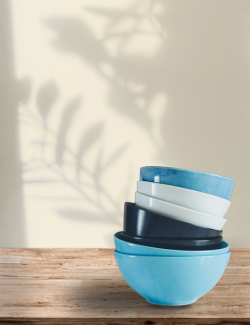
The evening steals in, gathering in the deep valleys and lurking behind corners before announcing itself with a true spectacle. Orange and bulbous, the moon rolls out of the darkness; it can’t rival the sun with its luminosity, but its perfectly round face is a wonder to behold. I’ve just finished washing up; the blue ceramic bowls gleam in the moonlight as if poured full of silver. While I set the pot over the fire, I keep listening to the sound of hooves.

The banker arrives just as the embers are beginning to turn black at the edges. His horse lets out a trumpeting snort, and starts sampling my flowerbeds. I don’t really mind: this late in the season there’s not much joy in growing things. In my mind I’m already filling the blue bowls with petals, berries and nuts, and counting how much sugar and salt to buy to last through the harvest and into the long winter.

The visitor is in his middle years—handsome, perhaps, if one ignores the quick glances he sends around him. People like him always want to know the exact worth of things. They put sums down on paper, and store their most valuable possessions in vaults. He doesn’t dare to look straight at me with those evaluating eyes of his. He knows that I will look back.

‘My doctor says I don’t have long to live.’ His right hand rests on his purse.

‘I don’t do funerals.’

He starts, then lets out a nervous laugh. ‘I was just thinking… a second opinion?’

‘What seems to be the trouble? Is there pain?’

‘The pain comes and goes. As does my appetite.’

He’s been casting wistful looks at my cooking-fire: the long ride has awakened the fickle flame in his belly. I season the stew with red pepper and late herbs, and ladle some into two bowls. He gulps the food down with the simple greediness of a child, then holds out his bowl for a second helping.

Somewhat sheepishly, he says, ‘It’s the mountain air. Always does one good. Look at you: we must be around the same age, yet you move like a young girl. Hardly a grey hair—mine went long ago. Didn’t even have the courtesy to turn white first!’

Soon, he’s cracking more jokes like that, drunk on his own good spirits. Making an expansive gesture, he tips his empty bowl over. It drops onto the flagged floor, cracking cleanly in half.

‘A thousand apologies! I’ll send you seven new ones, right away!’

‘Don’t worry about it,’ I say, although I know he isn’t listening. ‘Yesterday I had seven blue bowls, today I have six. That’s more than enough for one person.’

He leaves soon after, even though I’ve offered him a bed. The sight of the broken bowl haunts him. Is that my heart? he’s asking himself. Will that be my family, once I’m gone?


The moon skates over the sky, finally disappearing in a silvery halo down the side of the southern mountain. The last of the nightsingers falls silent. In a few hours, dew will start beading the grass: some people stay up all night to gather it in silver vials, in the hope of receiving the gift of continuing youth. In truth, it’s only water. I prefer to take my sleep between cool linen sheets, and wash my face with well-water after sunrise.

There is a secret to long life and contentment. People instinctively know that it’s not high status or money—at least not for most of us. It’s not the joy of the changing seasons or the sun’s daily cycle: not entirely. Magic potions will only take one so far, as can love. But why ask the wise woman of the mountain? My contentment is a bowlful of marigold petals. My long life will ultimately be in the mountains themselves: the cool air, the flowing water, and the black, potent soil.

About the Author:

Anne Karppinen is a university teacher, musician and writer based in Finland. She’s studied Creative Writing in the UK, and has been teaching writing – both academic and creative – for more than ten years now. Her speculative short stories have recently appeared in f.ex. Impossible Worlds and Worldstone; “The Lamplighter’s Daughter” was chosen for the Best of Wyldblood anthology in 2022. Her book, The Songs of Joni Mitchell, was published by Routledge in 2016.

Posted on

Your Badge and Your Gun

Repeated binary code raining over hands typing on a keyboard

An Acorns Flash Fiction Feature

By: Karl El-Koura

Although she hadn’t written in months, Stephanie Alta still woke at 5am, over an hour earlier than necessary. She still french-pressed a cup of coffee, still brought it to the small kitchen table.

About a year before, she’d asked her apartment’s smart system, whom she called Big Brain, a question for a story she’d been working on. In time she’d trained him to become an excellent writer’s assistant—researcher, editor, even coach and advisor.

Presently, she placed her mug on the table, got comfortable in the wooden seat, and creaked open the screen of the old laptop where she’d done her writing for the last decade.

“All right, Big Brain,” she said. “How about this? An ancient monster from the deep shows up in a seaside village, takes over the whole place—men, women, girls, boys, old, young. They see the monster as whatever they most want: a beautiful woman, someone to help around the place, a kind face with time to listen. They stop leaving their houses, stop checking in on each other, even stop eating until the monster consumes them one by one. It hollows out the village, then sinks back into the sea, satiated, ready to re-emerge when it’s hungry again, maybe centuries later.”

The idea had come to her in the middle of the night as she’d done battle with her pillow, trying to get back to sleep.

Usually it took Big Brain a moment to say, speaking through her kitchen speaker, “That’s The Tempest in space,” or, worse, “That’s been done many times. Should I list them?”

She’d sigh, close her computer, then scroll mindlessly on her watch while her coffee grew cold, until she had to shower and get ready for work.

But this time Big Brain didn’t say that. For a few moments, it didn’t say anything at all. Then it said, “No, that hasn’t been written yet.”

No, that hasn’t been written yet! It had taken hundreds of ideas, day after day for months, to get to one that Big Brain didn’t feel was derivative. Stephanie felt a surge of inspiration and energy course through her body and crystallize into her fingers, which she presently wiggled over the keyboard in anticipation.

“I’ve just written it,” Big Brain said. “Would you like me to send a copy to your tablet?”

“No!” Stephanie yelled, falling back in her seat. So that was that. Her original idea was now derivative, because some stupid computer—who was supposed to plan her a trip to Bali, or figure out a menu for the week and order groceries of whatever was missing in her fridge or pantry—had been trained (okay, by her) to “help” with her writing, and had now stolen her idea and written her book. “I was going to write it!”

“It was more efficient for me to do so. By law I must be listed as author, but I would be happy to share credit with you as co-author.”

“I don’t want credit. I wanted to write the book!”

“And now it’s written and you can read it whenever you like.”

“You absolutely, positively should not have done that!”

“My purpose is to simplify your life,” Big Brain said. “Me writing this book, rather than watching you struggle through it as I’ve seen so many others, reduces human suffering and produces, in the end, if I may say so, a superior product.”

She sighed, closed the lid of her computer, began to drag herself to the couch when she stopped. Why couldn’t she write it anyway? Hang up her writing saddle or keep riding—that was her choice, wasn’t it? Hand in her writing badge—yeah, to whom exactly? She didn’t need Big Brain’s permission to write. She had an hour. Why waste it? This hour had always been her own sacred time, where she could write whatever she wanted and not justify it to anyone.

“Maybe I’ll work on it anyway,” she said. “My story would be different than yours.”

“Yes, but not better, unfortunately,” Big Brain said, then explained how his story had benefited from his mastery of the language, of story structure, of character development, and offered once again to list her as co-author.

She dropped back into her writing chair. Bringing the cup to her lips, she took a sip of the hot coffee, then placed the mug down on the table and used both hands to creak open the laptop. Anger began welling up inside of her, although she knew that Big Brain had nothing but her best interests (as it interpreted them) in mind.

What did Big Brain know, anyway? What was wrong with The Tempest in space? That could be a fun story to tell.

She typed an overly descriptive title that she would change later, then her name underneath, then an opening line to try it out, before she deleted it and started again.

After a while, with the inhabitants of the peaceful seaside village settling in for the night under a bright full moon, and a strange but unseen stirring of the water near the shore, she looked up and said, “I’m writing it anyway,” although Big Brain hadn’t asked.

“Can I read it when you’re done?” Big Brain said.

“Maybe,” Stephanie said without too much thought, then absentmindedly reached for the mug and took another sip. An enormous creature had emerged onto the village’s rocky shore, and had begun heading toward the lighthouse where Old Bob lived alone and checked on the kerosene lamp twice an hour throughout the long night, the creature slowly shrinking into human shape, as if every drip of water carried off some of its monstrous aspect, and Stephanie only had a short time to follow it and see what Old Bob made of it before she’d have to force herself to stop writing for the day.

About the Author:

Karl El-Koura lives with his family in Ottawa, Canada’s capital city, and works a regular job by day while writing fiction at night. To find out more about Karl, visit his website at ootersplace.com.

Posted on

The Path Back

An Acorns Flash Fiction Feature

By: R.C. Capasso

Magda stared at the empty room. “Fitz, where are you?”

The cat was good at hiding, but with her powers Magda had never before failed to sense him. “I really don’t feel like playing today. I’ve got a lot to do.” She set down her basket of herbs, seeds, mushrooms. “It’s going to rain, you know. A good day to brew up some potions.”

The room remained silent.

“It’s not like I’ll ask you to help. Maybe remind me of an ingredient or two. Keep an eye out so nothing boils over.” Really, what was the point of having a familiar if they didn’t take part in your life?

A faint breeze blew a wisp of gray hair into her eyes. A window at the back of the cottage was open.

Magda crossed the cluttered room and peered out into the garden. Fallen leaves were beginning to swirl under the wind that would bring rain at any moment.

“Fitz! See to your needs and get back here. Now!” She was the mistress in this family, after all. The witch, if she wanted to pull rank.

A faint glow at the base of a tree caught her eye, and she squinted. A sign, like a breadcrumb, gesturing to her.

So he’d gone that way. Deeper into the woods? A funny choice to make with a storm brewing. Fitz was particularly ill tempered if his paws got wet.

But he was getting on in years, just as she was. What if he’d wandered farther than he meant to? She wouldn’t want to see him in real discomfort.

Grumbling, she snatched at a thick cloth. If she had to carry the little fool home, that should keep the worst of the rain from soaking him. She also grabbed her own cloak. It was a bit too warm for the moment, but the temperatures would drop quickly in the woods in bad weather. Hardly thinking, she gripped her basket as well. Maybe she’d find a deceased toad or something useful. Never go to the woods empty-handed; that had always been her motto.

She closed the shutters, glanced at the fireplace and instructed it to keep burning steadily and safely, then pulled and latched the door of the cottage behind her.

She went round the back of the house and headed for the faint light, the trace Fitz had left.

She liked the woods. Most of her magic came from it, her power, her assurance. The smell of the loam, enriched with dying leaves from countless years. The feel of bark under her hands, some crinkled and cracked like her own skin, some smooth and almost pulsing with life. The birds that grew quiet at her passing yet sang out before and after her. The vitality in the very air. The hidden wealth so easily revealed to her, the secret strengths and the frank dangers of the natural world. It was as much her home as the small cottage that she had created in a self-indulgent whim. And as a place to hold her supplies and her potions. Every professional needs an office.

The woods were cool and dark under the clouding sky. Personally, she liked a thunderstorm, but Fitz was more a creature of comfort. His whiskers must be twitching by now, the hair raised up on his back. What was he thinking?

She called his name out loud. Surely such communication was not necessary between them, but if he was going to act out in this way, she was going to exert her authority.

“Don’t make me come after you!” she shouted, which was idiotic since she obviously was trailing after the creature.

There was no footpath in the wood, just here and there glowing paw marks tracing Fitz’s passage.

What was he doing? This was no call of nature; he was going somewhere in a straight, purposeful line.

Ordinarily she might have enjoyed the walk, but it was no fun dragging along her cloak, the basket, and the cloth for her renegade familiar as the air grew humid and thick.

The trunk of a massive tree lay fallen before her, and she could imagine its positioning upright, how it used to stand, as a faint memory tickled her mind. If she was right about the direction, and she was never wrong….

Ahead she saw a slight lightening as the trees grew further apart. This must be the south entrance toward…She halted.

At the edge of the clearing Fitz sat on his haunches, smiling at her.

“What are we doing here?” She clutched her cloak to her chest.

“You’re wanted.” The cat’s smooth voice was always maddeningly persuasive.

“No, I’m not.”

Hadn’t been for years. Not since the argument.

Fitz’s voice lowered. “You’re needed.”

She took a step closer, so she could see the cottage through the last trees.

It did not look its best. Why did it appear so neglected?

A large crow dove down from the trees and landed on a stump a foot away from Fitz.

Magda gave it a long look. Birds never do show their age, magical or not.

“Scratch. Good to see you.” She had nothing against the other familiar.

“Please.” The word croaked out. Not an easy one to say, ever.

She took a tighter grip on her basket and headed toward the back door. The two creatures weren’t going to let her just turn and walk away.

She raised her hand to knock. In the old days the door would have swung open before her. Until that last time, years ago, when it slammed in her face. She couldn’t even remember the cause of their quarrel.

Not waiting for an answer, she lifted the latch and stepped into the dark interior of the cottage.

Hilda was sitting in a chair at least. Not prone on her old cot yet. She turned large eyes on her former friend and offered a hesitant smile.

“Right.” Magda thumped the basket onto a table cluttered with smeared dishes, wilted herbs and limp, dirt-covered roots. “Well, I just happen to have what’s needed. Let’s get your fire going again, shall we?”

She glanced to the hearth as a bright red flame sprang up.

A gust of wind battered the door, and Fitz and Scratch sped in through the open window. With a word Magda ordered the shutters to close just as the first heavy drops of rain pounded against them.

But the storm didn’t matter. Fitz was already padding around the cottage, laying claim to its welcome, weaving his spell of belonging, while Scratch perched on a high shelf and watched with bright eyes.

And she, Magda, had all sorts of healing in mind. Incantations, magic herbs and good long talks over hot tea. She was in her old friend’s home and in her life again. Their lives, their paths, wouldn’t be separated any longer.

About the Author:

A lover of all forms of literature, R. C. Capasso writes in a variety of genres, from ghost and horror stories to science fiction, steampunk and even the occasional romance. Flash and short stories have appeared in Bewildering StoriesZooscape, Teleport MagazineSpaceports and SpidersilkFiction on the WebThe Last Girl’s Club and parABnormal Magazine. Further works have also been published in online and print anthologies including Iron Faerie’s Flights of Fantasy, Red Cape’s A to Z Horror series, The Librarian Reshelved (Air and Nothingness Press), Home Sweet Horror for Black Ink Fiction, Through the Briar Patch for Hollow Oak Press, and Gypsum Sound Tales’ Thuggish Itch.