Posted on

What a Toad Buys You

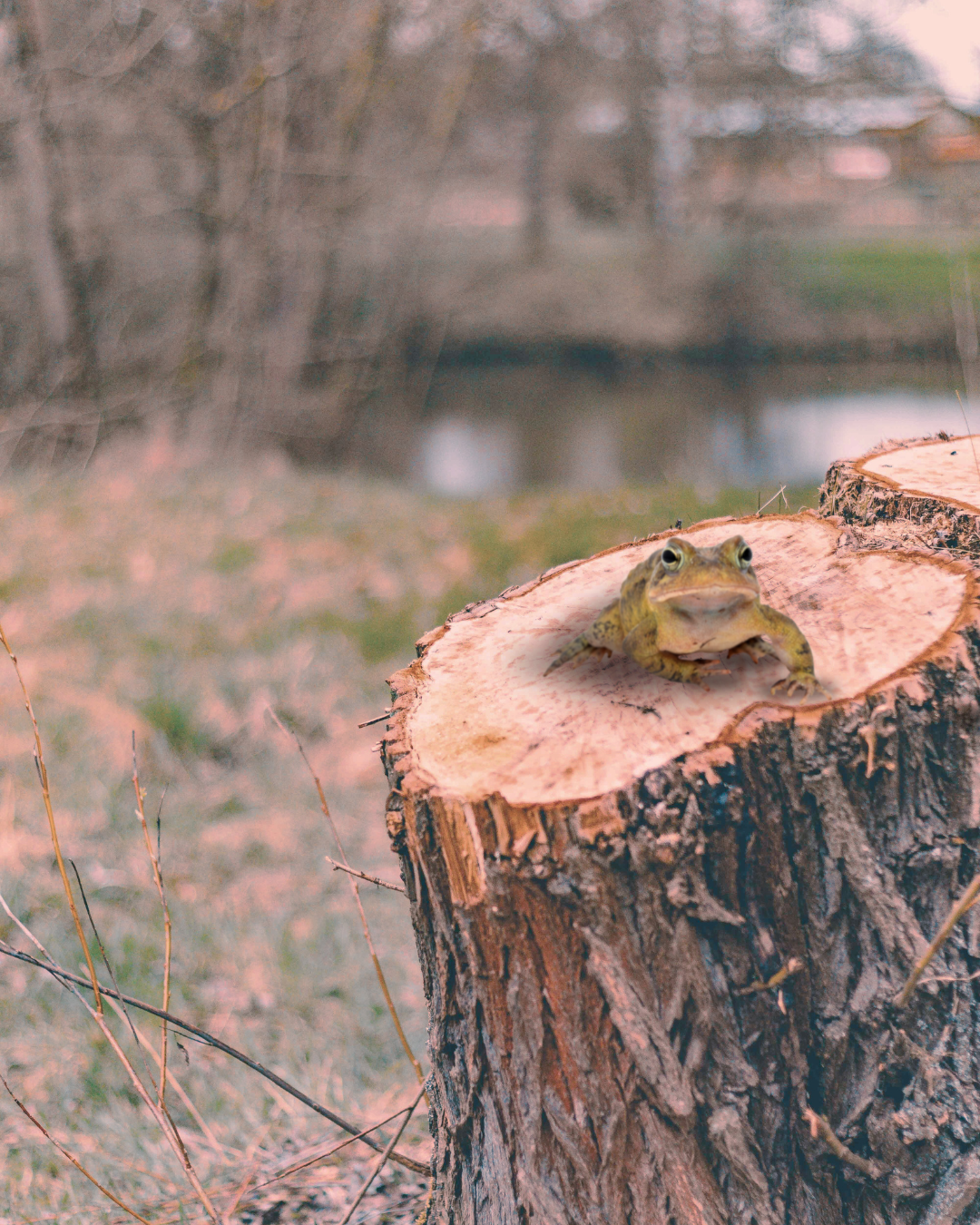
A toad sitting on a stump at the edge of a forest

An Acorns Flash Fiction Feature

By: James Hobbs

The toad squirmed in my pocket as I knocked on the witch’s door. Her name was Granny Hexham, an old, withered woman, so hunched that her body was practically a hoop. She couldn’t move around too fast, so there was a lot of grumbling, banging, grunting, and growling before the door creaked open. Her watery eyes squinted at me as she scratched one of the hairy warts on her cheek with a long, moldy, yellow fingernail.

“Well, well, well, well, sweet, little boy, did you bring my fee?”

I was too scared to speak, so I just nodded, reached into my pocket, and held out the bundle I’d made from my handkerchief. You could see the toad inside kick and struggle as Granny Hexham brought it to her nose, almost as lean and crooked as her body, and took a long sniff.

She licked her skinny lips and hissed, “Yes, yes, sweet boy, this’ll do nicely.”

She ushered me into her crooked little cottage and hurried me to sit on a stool. It was dark except for the needles of light that poked through the gaps in the crooked boards of the walls. Then knotty fingers unwrapped the bundle, grabbed the toad by the leg before it could hop away, and slammed its head against the table until it stopped trying to escape. Then she took stock of the rest of her payment: a blue-shelled beetle; two small green apples; six hairs from the tail of a three-legged dog; and a small stone I’d kept in my shoe for three days and three nights.

“So, little man, you wanted someone cursed.”

“My new school teacher, Mr. Cospwattle. He yells at me all the time, when I can’t do my ciphering or forget my grammar lessons.”

She nodded, a look of exaggerated sadness twisting her wrinkled face. “A dreadful shame to be so cruel to such a dear, young child.”

She pulled a dented frying pan off the wall, tossed a pat of butter into it, lit a fire in her stove, and started frying up the toad with a pinch of salt and pepper.

“I…I don’t want you to kill him or turn him into a worm or anything. I just need you to chase him away, so they have to get a new teacher.”

Granny Hexham cackled to herself as she tossed the toad in the pan. “Yes, yes, yes, yes, I know many spells to vex him.” She flipped the toad onto a plate and started frying some eggs to go with it. “I can make it so that every time a Thursday falls on the seventh day of the month, if he wears black or green, a sparrow will drop its dung on his shoulder. I can cast a spell that will make his left wrist tickle perniciously before it snows. I can make him unable to spell the word ‘social.’ I can cause him to drop his favorite mug, so that it shatters into a thousand pieces, as long as that mug doesn’t have diagonal stripes on it. Do any of these little tricks strike your fancy, hmm?”

“Umm…” To see Granny Hexham, I had braved the dark forest, which my parents had told me in no uncertain terms never to enter. “Is there anything else you can do?”

She whirled around and glared at me. “I have other curses, little man. I can make him sneeze any time he meets the eyes of a two-year-old hog. If he has a fondness for fruit, I can cause pears to taste like slightly rotten apples. If that is not cruel enough for you, I can cause the knot of his favorite cravat to come untied twice as often as usual. Are any of these wicked enough for you?”

“Well…”

I have never in my life seen anyone take fried eggs from a pan with so much malice. She slammed her plate onto the table across from me and grabbed a two-tined fork so long I was afraid she’d skewer me with it, not her supper.

“Ungrateful boy. Don’t be so choosy. I haven’t tasted toad and eggs in a long time. I would rather eat them in peace.”

“Those curses are all really very wicked, but I thought—”

She stabbed the toad and bit off its head so forcefully that I shut my mouth with a snap.

After the lump of chewed toad made its way down her skinny throat, she licked her lips and said, her voice suddenly less hissing and mysterious, “Listen, I don’t know what you expect to get for a toad and a few measly trinkets. If you want better curses, you can go see another witch, but I can promise you nobody’ll cast a curse for cheaper than me.”

“But I’ve heard all about you. They said you were the wickedest witch this side of Glarmsby.”

She sighed and hunched over so far that her long nose almost dipped into the runny yolks of her eggs. “I was, little man. I was, but that was many years ago. In my prime, I could’ve had your teacher’s house eaten by termites or struck by lightning or given him the old yalping cough; howling aches; and the foul fustian flux. I could’ve filled his bed with hedgepigs and his breadbox with bog worms. I’d vex him. I’d well and truly addle him.” Then her voice rose and her jowls shook with anger. “But I’d like to see you do a better job of casting a curse when you’re a hundred and two, and your eyes don’t work, your back aches, and you set things down one minute and can’t remember where you left them the next. And for only the price of a toad.”

I wasn’t quite sure how to respond to her sudden outburst, so I fidgeted with the buttons on my coat and said, “What if I brought you another toad? Could you cast two curses for me?”

“Another toad, another stone from your shoe, and a fly’s left wing.”

I didn’t like the idea of walking around with an uncomfortable stone in my shoe for three more days, and flies are hard to catch, so I said, “My mom’s tomatoes are ripe. I can pick a couple of those to eat with your toad and eggs.”

She took another bite of toad and chewed thoughtfully for a minute, before saying, “You’ve got a bargain.”

So I went home and stole two oblong tomatoes and scoured the forest and splashed around until I had caught another toad and tied it up in my handkerchief. She told me she cast curses on Mr. Cospwattle that made his leg itch whenever he ate peas and that gave him a splitting headache in the morning of any day in October when a bird had sat on the roof of the schoolhouse the previous night. I guess it worked. I think I noticed Mr. Cospwattle scratching his leg sometimes as he ate his lunch out of a tin pail, and he did seem especially irritable in October from then on, but it didn’t drive him away. I doubt he noticed anything had changed. Finally, he got offered a better paying job teaching in the city and left. As for me, I never made another bargain with a witch. As far as I can tell, it’s not worth the trouble.

About the author:

Originally from Kansas City, Missouri, James Hobbs is currently a PhD student at the university of York, studying early modern history. He writes as a hobby in between doing research.

Posted on

Of Lost Boys and Stars and Sharks and Other Impossible Things

An Acorns Flash Fiction Feature

By: Alyson Tait

From low tide of the pirate cove all the way back to our camp, me and Peter ran, ignoring everything except each other and the traps we’d set because those weren’t for us. They were for grown-ups and other beasts: bear traps, swinging nets, and hidden pits with sticks we’d spent weeks sharpening. We didn’t stop until we reached our home tree. Staccato laughter punctuated gasps of air.

Peter boosted me, my foot pushing off his hands so I could grab a branch and climb. He jumped as if he weighed nothing and beat me to the top where we lay next to each other on thick branches and planks of wood, gulping air.

When we could breathe again, he turned to me, grinning. “They thought—” The rest of his sentence vanished beneath roaring laughter.

It’s impossible to know how long we stayed there laughing, catching our breaths, and talking in half-finished sentences about the raid on the pirates. The only marker of time was the sun disappearing, and in its place, the moon arrived, bringing friends with it. A hundred thousand million stars, and those were just the visible ones.

I asked Peter how many stars he thought there were. “Not just the obvious ones. How many total in all the universe?”

He shrugged. “Who cares? Wendy, you should leave that kinda stuff to the philosophers.” He stood and climbed down the tree, whistling a tune as if he didn’t have a care in the world.

And really, he didn’t. It was the best thing about him.

He didn’t care that he’d lost when we played cards that night, numbers barely visible in the moonlight—even when I’d played the queen of hearts. He never cared. Maybe because he never got tired, injured, or lost anything of great importance.

Sometimes, I wondered if he considered me of great importance. Was I worth him getting upset about? Would he grab that play sword of his and swing it at a pirate? Or a canyon if I fell in?

I almost asked but I knew what he’d say. The same thing he always said about questions like where the other kids were, how many stars there were, or why we never grew.

Leave it to the philosophers.

I didn’t need the philosophers for that one though—I just wanted his attention.

When dawn came, he didn’t sleep. Instead, he suggested we go swimming after breakfast.

The sun was bright overhead when our toes dipped into the water. I sat on the sand, nursing a stitch that pinched at my side because we’d traveled from one end of the island to the other with no dreams in between.

“The water’s warm!” Peter sang—taunted—from chest-deep in the lagoon.

“The water’s always warm!” I yelled back.

He shook his head. I could hear his thoughts. “Stop thinking so much.”

“So swim with me,” he said instead and grinned.

There was never any arguing with him, and I didn’t want to, I liked him too much.

So I swam.

We splashed and called out for the mermaids that liked to play sometimes and ignored everything else until my arms got tired and heavy.  When I was halfway to the shore, Peter yelled. I assumed it was about me leaving his game, but something sharp scraped against my leg.

I picked up my pace.

The sharpness came again. A thin burning pain ripped across my calf from some wayward shark that’d ventured into the shallower water.

My fatigue drained away—my tiredness vanished as if it had never even been there.

Water splashed behind me, and impossibly, my aching arms pumped faster despite my lungs burning from the effort until I was safe on land.

“Peter!” I screamed, voice cracking.

I didn’t see him anywhere. Not a limb, finger, or single strand of hair.

The water went still.

I held my breath.

“Come up.” My heart thundered in my ears.

Panic came in waves. My vision went dark at the edges.

I’d escaped. Was it because the shark had feasted on Peter instead?

That meant my guide—my best friend—was gone.

A choking sob left my throat.  “What do I do?” The thought was unfinished, swept out to sea with my heart and lungs.

Only the wind moved.

“Always so many questions, Wendy,” a laughing voice said behind me.

A startled scream tore out of me before I turned.

There he was.

My chest tightened and he grinned, as if the ocean hadn’t just threatened to take us away from each other. I slapped his arm for always scaring me.

His grin widened. “Too many questions, actually. Save some for the—”

“Maybe I’m the philosopher!” I said although I wasn’t sure what it meant. Not really.

I wanted to push him back into the water so he could feel fear too.

But then Peter laughed, and just like always, the sound took all my anger away.

When he caught his breath, we ran.

I ignored the scrape in my leg, and we ran all the way from the lagoon back to our tree. We didn’t slow down, not even to take a breath or watch the beasts that ran by. We tagged each other’s shoulders anytime the other got too far ahead, and both of us jumped over hidden pits, and we veered around the traps along the way so we didn’t get hurt because injuries meant less adventures—the worst possible thing to happen on Peter’s island.

When we reached the tree again, we flopped onto the grass, Peter laughing like always while I watched the sky. Clear, blue, and endless, like the ocean had been flipped upside down above us.

How many days of careless running did we have left? I glanced over, catching him staring at me with a grin. Maybe he was right. Maybe I didn’t need all the answers if I could still run with him, and maybe I should leave all those hard questions to the grown-ups.

And so with a grin, I decided I would.

About the author:

Alyson Tait was born and raised in the Southwest USA, where she walked alongside cactuses and scorpions before moving to Maryland. She now lives among the crabs with her partner, daughter, and multiple judgmental pets. She has appeared in (mac)ro(mic), HAD, and Pseudopod. She has chapbooks published by Querencia Press, Bottlecap Press, and Fahmidan Publishing, one book forthcoming with Graveside Press, and several novellas on Amazon.

Posted on

The Last Time I Saw You

An Acorns Flash Fiction Feature

By: Jake Stein

I called him by the waterfront, where the black river reminded me what I loved about the city and hated about the world. “I’m sorry for doing… what I did,” I said, between vaping my chemicals.

(Yeah, they were the bad kind of chems, but not the really bad kind.)

“Relax about it,” Beo said over the phone—always over the phone these days. “Nothing to apologize for.” And I could hear his wolfish grin, almost see it.

Almost.

I walked through the night alongside restless waters, puffing clouds. I chose not to check the reflection of my new haircut in a passing store window. “Well, just know… I won’t ever say those magic words again.”

“Never?” Beo sounded disappointed. “It’s not bad for me, at least.”

The spotlight of a streetlamp crawled past on the sidewalk, and I gazed down at the fading “X” on my wrist—an entry stamp from the last time Beo was in town, when I went to see his karate competition. But I couldn’t stare at that “X” on my skin, couldn’t think about what it meant, or I’d start crying again. “I just hate being this far away. I miss your face, and your hair. All of your hair—”

Ahead, someone stepped out of the shadows.

“Speaking of hair,” said this big stranger, who was attempting to block my path, “I really like yours.”

First off, I’m quick. You better believe I skirted around him, no problem.

Keep walking, keep walking.

But his footsteps grew louder. He was coming after me.

“Something wrong?” asked Beo, still on the line.

“Same old crap,” I muttered, picking up my pace. A glance over my shoulder told me Mr. Creep was fully giving chase, barreling through a cloud of his own chems—which, judging by the smell, were the reallybad kind.

“Get out of there,” Beo said, but I was already running.

“Didn’t you hear me?” the creeper called after me. “I love your hair! Can’t you take a compliment?”

Inhaling my chems, I turned onto a main street and waved down a cop, but he drove past. Probably figured there was no point in wasting his time on some chemmed-out low-life.

“Hey you!” This asshole was whistling and everything. “Don’t even turn around, I love how you look when you’re running away!”

Beo was panicking in my ear. “Talk to me. What’s going on?”

I didn’t answer, too focused on escaping this lunatic. Tearing along the waterfront, through an intersection, cars honking. No matter how much I tuned out the shouting behind me, I couldn’t tune out the footsteps, getting closer…

From thousands of miles away, Beo said, “The magic words. Say the magic words!”

I knew he was right, but as I swung around a corner, I blurted, “I can’t. It hurts me.”

“Hurts?”

“I mean, to only see you for…” But I was lost now, shooting through dark alleys, the kind where people don’t exist, only echoing sounds like the sound of the creep gaining on me.

He called out, “Don’t make me hurt you!”

And yeah, that was it. I took Beo’s suggestion.

Spinning on my heels, I dragged my chems, filling every little pocket inside me with sweet vapor—and released the cloud in my pursuer’s direction. In that split-second I felt like a dragon; I felt amazing. For once.

Before he even knew what hit him—or should I say, who—I spoke the words. The incantation I’d stumbled upon; the spell which was, I hoped, about to save my life.

The voice which fell from my lips was not my own, but the voice of a thousand sorrows, the not-sound before a car crash.

“I don’t want to call you my ex.

For a second, reality refused to break. My cloud merely floated past my assailant, dissipating around him. No spell.

Backpedaling, I found myself up against a wall. This alley was a dead-end.

The big guy was close enough that I could smell his wheezing dumpster-breath. He had that chemmed-out look of a festered turd with raggy skin, and his bloodshot eyes were crawling all over me. “Don’t wanna call me your ex, huh? That’s skipping a few steps. I haven’t even told you I love you yet…” But he trailed off, glancing over his shoulder.

My exhaled cloud was reappearing, expanding to fill the alley like fog. From those vapors a shape emerged, taking humanoid form. The eyes appeared first, yellow and leering. Then came the snout, the ears, the whiskers. The lean-muscular body covered in hair. He was standing on two legs, tail whipping angrily, drool hanging from snarling lips. He looked even more like a monster than usual.

My monster.

“What the—” And that’s all this creep could say, as Beo emerged from the mist.

I don’t think it would have taken more than two punches, but Beo gave him three. Beo, the wolfman I’d met in a different city where we both used to live. The black belt who’d been waiting for this moment his entire life.

I didn’t blame him for taking the third swing.

It was enough to send the creep off with a limp and a trail of blood. Darkness swallowed him, and in that instant it was like he’d never existed. A passing shadow of a night which could have gone so much worse… a night which would probably never leave me. But I would pretend—until arriving home, locking the door behind me, and stepping into a hot shower—that this attack had been nothing more than a nightmare, no more real than this version of Beo standing before me.

Beo’s mist-copy turned and smiled, massaging his fist. “Funny, it stings like I’m actually there.”

“Thank you,” I managed, and that was all. My throat knotted with tears. Looking at the doppelganger of my boyfriend was like poking a raw wound inside me.

Always hurts to see someone you love when you know they’re about to disappear.

Indeed, Beo’s cloud was already beginning to fade. It never lasted long. “Hey, don’t cry,” he said, even as he evaporated. “I’m gonna call you right back, okay? This won’t be the last time I see you.” And his vicarious presence wrapped his arms around me.

But I felt no embrace, only condensation.

“I do these chemicals to fill the space between us,” I said suddenly, shocked by the truth of it.

“We are too far away, I agree.” His voice was becoming quieter, quieter. “But I can’t afford to move out there, and with your mom, you can’t come out here…” And the cloud finally dispersed, those last wet tendrils of my breath-spell slinking away.

Eventually I found the river again and followed it. Beneath a streetlamp I studied my hand, trying to find the “X.” But the ink seemed to have completely faded now, like my chem vapors had washed the stamp away.

Beo called me, but I didn’t answer. I was thinking about how he hadn’t mentioned my haircut. Maybe hadn’t noticed.

I took another hit of my chemicals, the bad kind, and kept walking.

About the author:

Jake Stein’s work has appeared or is forthcoming in Lightspeed Magazine, Ellery Queen Mystery Magazine, and Aurealis.

Posted on

The Orange Tree

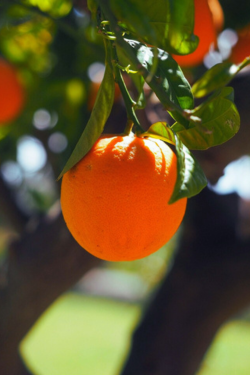
A single orange hanging in a tree

An Acorns Flash Fiction Feature

By: Luc Diamant

Yes, child, here. Yes, I know what I have taught you. No, you need not worry. This place is different. Why? I do not think I can answer that. But I can tell you how it came to be so. It started with the sprouting of an orange tree.

***

No one knew where it came from. Oranges are not native to this region, not with the summer rains and the winter snow. What’s more, that year, no oranges had been imported to the region due to a trade embargo caused by the latest war. All the same, there it was, a tiny sprout outside the house where the girl with the deep brown eyes lived.

When the villagers asked, she said she did not remember planting it. She was not in the habit of planting, preferring to let her garden grow as it would, only maintaining the paths she needed to get around.

No one in the village remembered having had an orange seed, either. Even the boy who always lied was clearly telling the truth; his denial was not vehement but confused.

And who would lie about it? The villagers would not have punished a person for idly burying an orange seed. They would simply have been relieved to have an explanation. But no one remembered being in possession of an orange seed, much less planting it, and so the tree remained unexplained.

This did not bother the villagers too much. It was spring, and strange things sometimes grow in spring. The tiny sprout of citrus would live through the summer if it was lucky, then freeze to death in the winter, along with the herbs and the wasps and the villagers’ hopes of the war ending the next year.

***

But the tree did not die. Deep snow covered the village, and when it melted, the orange tree was still there, right among the snowdrops.

The girl with the deep brown eyes did not seem surprised by this—but then she rarely seemed surprised by anything. The villagers did not act surprised either, though they were. It must have been a fluke, they concluded. The winter had been somewhat less harsh than usual, come to think of it. Next year, when the real cold came, the tree would surely perish.

But the real cold came and went, and the tiny tree remained. And grew. And by the third year, the villagers no longer expected the orange tree to die. Some decided that it was not so strange, after all—that perhaps orange trees were hardier than they are generally given credit for. Others suspected that there was something unusual about this particular tree, but they mostly kept these thoughts to themselves.

***

Either way, the tree did not bear fruit, even after three more years, and the villagers all agreed that this was bad. The trade embargo held, and if an orange tree was going to grow here against all sense, this should at least result in oranges. Now, the villagers whispered, it was just a useless, discordant thing at best, a painful reminder of all the war had taken from them at worst.

They told the girl to cut it down, but she shook her head. The villagers tried to argue. The tree looked out of place, they said; it was the wrong shade of green compared to the other things that grew there. The tree grew too slowly. The tree was in an inconvenient spot, so that she had to reroute her small garden path. Surely, the villagers reasoned, she would be happier without it.

But the girl with the deep brown eyes shook her head, and the tree was on her property, so that was that.

***

That was that, until another three years later, when the tree—still small, but no longer tiny—grew a single orange. The villagers did not believe it at first, but as the fruit grew, there was no denying it: the orange tree was growing an orange. It was not the size of the oranges the villagers remembered from before the war. It was not even the size of a plum. It was, in fact, barely bigger than a grape. But it was an orange nonetheless.

Those who had previously whispered that there was something unusual about the tree now began to murmur it. This orange, small as it was, might well have special properties. The tree’s appearance and its subsequent refusal to die had been odd, but this was beyond strange. No, the villagers speculated, this was no ordinary fruit.

***

One day, some of these villagers went to the girl’s house to try and buy the orange. They offered good money for it, more than one could reasonably hope to sell a single citrus fruit the size of a grape for. More, frankly, than they could afford to buy a single citrus fruit the size of a grape for. But the girl with the deep brown eyes shook her head, and the tree was on her property, so the villagers slunk away.

The other villagers, upon hearing this, wondered. Many had been skeptical about the orange’s alleged properties, but this lent credence to the theory. After all, why would anyone turn down good money for an ordinary piece of fruit, in times like these no less? No, the orange must be special after all.

***

More villagers went to the girl’s house to offer more money. Each time, the offer increased, and each time, the girl refused. And the more money she refused, the more convinced the villagers became that the orange must be magical.

One by one they came to make offers, and to demand an explanation when their offers were refused. What powers did this orange possess, that the girl must keep it at all costs? And why was she hoarding the secret of this magic? Before long, the entire village was gathered around the girl and her orange tree.

***

The girl with the deep brown eyes looked around, sighed, then reached out and plucked the tiny orange from the tree. As the villagers watched breathlessly, she peeled it with delicate fingers, revealing the flesh of the fruit within. She held the small orange up to the crowd before putting it in her mouth and swallowing it whole.

Instantly, her eyes widened. Her breathing grew ragged. The villagers saw her hands reach up to her throat, but none dared to move until she fell to the ground. By the time someone rushed forward, the life had already left her deep brown eyes.

Among the villagers, the conclusion spread first as a whisper and then like wildfire: The orange tree was not just magical, it possessed the strongest kind of dark magic. Its own defiance of death would come at the cost of the life of whoever dared to come near it. This turned from theory to truth in moments. If anyone suggested that the girl with the deep brown eyes might have simply choked on a seed, no one heard.

***

The girl with the deep brown eyes was buried under the orange tree—or as close to it as the villagers dared dig. In the year that followed, the tree seemed to grow much faster than before. And the next summer, it grew not one but three small oranges. In another three years, thirty mid-sized oranges. Another three years and the oranges were too big and too many to count from the distance the villagers kept from the tree, and more tiny orange trees were starting to spring up. Over time, what had been the property of the girl with the deep brown eyes became an orange grove that to this day none of the humans dare touch. Even in the final years of the war, those faced with the choice chose starvation over the oranges.

***

And this is why we have come here, my child, so close to a human settlement. You are quite right: Normally this would be far too risky. You have learned very well how we only eat the fruit that grows in the very depths of the woods where the humans do not venture—or if a single one does get lost there now and then, who is to believe their tales when they come back? But this, my love, is the exception. The humans in this village are more afraid of this orange grove than of what lurks in any forest. They would not enter it for the world. And if they hear our laughter or catch a glimpse of the fluttering of our wings, well, it will only convince them further that this place is not for them. In fact, in a hundred years or so, when you are grown, there may not be a village here at all. Look: Already the orange grove has taken over some of the houses. And its fruit—why, it is the sweetest you will taste in all your life.

About the author:

Luc Diamant is a Pushcart-nominated writer from Amsterdam, where he lives with his partner and child and their imaginary pets. By day, he teaches Dutch as a second language. His writing has appeared in Small Wonders, Canthius, and Clarkesworld, among others. When not writing, he enjoys spending time with his family, watching the plants on his balcony grow, and thinking about lemurs. You can find him on social media @lucdaniel94.

Posted on

Yellowing

An Acorns Flash Fiction Feature

by: Amanda Pica

              Mabel wished the window would open farther, to let in a better breeze. She tapped her fingers along her collarbone, feeling for the fabric there that stifled her skin, but when she found nothing to tug on, she let her arm fall back into her lap.

            Evening light cut a line across the floor tile and bathed Cliff in marigold and amber. Mabel wished to embrace him. Wished for his arms to circle her waist again, carefree and weightless like those after-school days in the apple grove. She’d been slight and wispy, and he’d hoist her up with such ease she’d swear for a split second she’d taken flight. Mabel’s frame had filled itself out over the years, first through her baking skills and then through menopause, but had once again become slight. Had ground the life out of itself. Had once again become wispy, but this time, without the sun-kissed strength of youth.

            A single butterfly squeezed into the room through the small gap where the window should have met the sill. It fluttered around Mabel’s face, patterns of lemon and butter laced with black webbing, and she giggled, then rubbed her nose where its wings had tickled her.

            “She’s a sweetheart, isn’t she?” said the butterfly.

            “That’s my Mabel.” Cliff patted her knee and she turned her face to him to warm herself in his glow.

            The butterfly flapped, a papery sound followed by scratching. Mabel tilted her head but didn’t follow the sound.

            “Can she bathe herself, Cliff?”

            More scratching. Mabel furrowed her brow and let the smile on her face dip before pulling it back up. Inquisitive little insect. Cliff’s voice rumbled on in his beautiful butterscotch baritone, overlayed by a slight waver that had started a few years ago. She wished to talk to him about how some things should remain private, between a husband and a wife.

“How about toileting? Can she do that on her own?”

Mabel blinked a few times. Such an intrusive insect. The evening light shifted and the bright splotches on the butterfly’s wings shifted too, morphed with the light until they shimmered. Translucent now. Elongated.

            Mabel froze, not that she’d been moving much before. The warmth of the evening sun had tricked her. The 5 o’clock angle had been wrong, wrong, wrong. 6 o’clock. That was the time of fact. Even more? 6:30. Once the sunline had crossed to the opposite wall, that was when the canary sun sang its truth. That had been no butterfly. All this time, flitting about their room, masquerading in a beauty that didn’t belong to it. It was a mosquito, with too many skinny lines and not enough color, and a proboscis the size of a garden hose. Two drinks and Mabel would dry up into one of those mummies Cliff had taken her to see in Chicago.

            Sandpaper raked up the inside of Mabel’s throat and a dreadful noise filled the room. The mosquito in butterfly’s clothing focused its horrible eyes on her. Lens after lens after lens, layered like fish scales, glimmered a sickened chartreuse with the setting sun. 

            “Is this the beginning of one, Cliff?” asked the wretched mosquito.

            The beginning of what?! Swat it, Cliff! Swat it before it bites!

            The words stuck tight. Mabel shoved at those stone monoliths in her brain but they refused to slide toward her mouth where she could speak them. Instead, they slipped toward the ever-growing drain hole in her mind, where thoughts got eaten up and never came back. She threw herself at the immoveable words and her body trembled in response. The horrid noise infected the air, filled all the cracks and footholds between her and Cliff and left nowhere for her to grab on. She couldn’t get to him. Mabel flung her head back in a desperate try at dislodging the stubborn words, and when her head struck the back of the chair, golden sparks shot across her vision.

Cliff stood next to her now, one hand pressed to an ear and the other, somewhere else.

Where?

            Missing. Missing.

Cliff’s arm was gone, melted into nothing, digesting in mosquito bile. Mabel twisted in her chair and her arms flapped up and down, left, right, left again. She had never been good at swatting insects. Cliff would laugh at her unseemly pliés and leaps, rolled newspaper in hand, until he’d finally take it from her and with one whack, splat the offending bug into a jaundiced smear of guts.

            Her breath came in bursts and her own hands flitted about her head, sometimes bouncing off her own cheeks. How could he save her this time? One hand wasn’t enough. A newspaper wouldn’t be enough.

            The mosquito flew close and Mabel struck out, missing it like always, the clumsy ballerina who never hit her mark. And then, through the screeching noise, something else.

            Something doleful and sweet, a bite of mango sorbet that soothed her aching throat.

            “…you make me happy, when skies are grey. You never know, dear, how much I love you…”

            Cliff’s lovely voice didn’t waver, not even once through the song. He’d taken his hand off his ear and tugged her saffron dress back down over her knee. The terrible noise faded and when she felt Cliff’s other hand on her back, the screeching cut off entirely. He rubbed her spine with a light touch, just enough to know he was there. His arm was there. A miraculous touch, as he’d reattached it. He’d saved it. Saved them. Her Cliff could move mountains.

            “…please don’t take my sunshine away.” Cliff’s voice hitched on the last phrase of her little song and Mabel smiled at him. A breeze outside blew through the black-eyed susans that covered the trellis just off the window, and with it, the mosquito had blown away.

            Cliff met her eyes and her thoughts pooled together into a pot of warm honey.

“I love you, my dear. With all my heart. Excuse me for a moment? I need to attend to something, but I’ll be just outside the door.”

            Mabel smiled at Cliff, and wished to say she loved him too, just as she had in the apple grove that first time, when the words had brought lightning with them. She turned her head again to the window, where the buttercups danced in the grass. Someone spoke outside the room, but the muffled words wove into straw and cornsilk and caught themselves in the doorway.

            “I think she’ll be content with us, Cliff. We can manage her care, and she’ll grow to know our facility as home.”

            “I’ll miss her.”

            “Of course you will. You’re welcome to visit as often and for as long as you want.”

            Cliff’s voice wavered, in bigger swoops than before. “Could I paint her room yellow? It’s always been her favorite, after all.”